Analytics
Read the signal faster so the next post is sharper than the last one.
THREADS GROWTH LIBRARY
Read practical breakdowns on how to schedule Threads posts, plan content calendars, batch ideas, pick better posting times, use analytics, and turn stronger posts into a repeatable growth system.

FEATURED GUIDE
A policy-by-policy look at engagement pods: what the rules say, what LinkedIn's 2026 crackdown changed, the time cost nobody counts, and a migration ladder toward growth that survives algorithm review.
2026-09-20 · 11 min readRead the guide →START WITH THE WORKFLOW
Read the signal faster so the next post is sharper than the last one.
Build a repeatable posting rhythm without recycling tired hooks.
Practical playbooks for creators, brands, coaches, and operators.
COMPLETE LIBRARY · 78 GUIDES
Browse the full library. Each new article should answer a distinct search intent instead of competing with an existing guide.

A decision framework for product-only brand deals: real costs, US tax treatment, counteroffer scripts, and Threads disclosure mechanics.
Read guide →
Threads reply approvals let you review every reply before it appears under your post. This guide covers how the per-post setting works, what approve and ignore actually do, how the setting interacts with fediverse sharing, and a decision framework for when screening is worth the workflow.
Read guide →
A cost-first decision guide for solo creators weighing branded short links against free UTM-tagged links, with real plan prices and exit risks.
Read guide →
A documented comparison of mute, restrict, block, and hide on Threads, with a decision path for annoying-but-harmless, bad-faith, and harassment situations.
Read guide →
Most negative comment advice is written for brand teams with monitoring budgets. This is a triage system for solo creators: five comment types, one decision rule each, real reply language, and the Threads controls that handle the worst of it without you typing anything.
Read guide →
Every scheduler prices AI differently, and the sticker plan price hides the number that matters. A field guide to credit metering across Metricool, Later, Buffer, SocialBee, Hootsuite, and Publer, with worked math at three posting volumes.
Read guide →
You cannot check out inside Threads. This playbook shows how to turn posts into profile visits, one clear link, and an external checkout without turning your feed into ads.
Read guide →
Deleting feels like one button, but it behaves differently for replies, fediverse copies, and your own history. Here's how to remove Threads posts in the right order.
Read guide →
Small creators don't lose brand deals because of follower count. They lose them because they pitch like everyone else. Here's the system: evidence-based targets, a defensible rate floor, a four-email sequence, and a scam filter.
Read guide →
Most welcome email advice shows you pretty screenshots. This is the fill-in version: five blocks, three worked creator examples, subject lines, and the legal floor, ready to paste into your email tool.
Read guide →
The honest difference between deactivating and deleting a Threads profile, what happens to your posts and handle on each path, and the checklist to run before you commit.
Read guide →
When people share your content inside private messages, Slack channels, or text threads, web analytics labels them as direct visitors. Here is how independent creators can spot those quiet recommendations without burning out on untrackable numbers.
Read guide →
Follower counts are rented reach. Here is the audit, export habit, and conversion routine that builds an audience no platform change can take from you.
Read guide →
There is no single best Typefully alternative. The right pick depends on why you're leaving: billing structure, free-tier limits, a Threads-first workflow, or team scale, and each reason points to a different tool.
Read guide →
A one-page media kit built for creators, not magazines: the seven blocks sponsors actually read, how to fill them with honest numbers, and how to present packages without invented benchmarks.
Read guide →
A one-page media kit built for creators, not magazines: the seven blocks sponsors actually read, how to fill them with honest numbers, and how to present packages without invented benchmarks.
Read guide →
Most client reports are metric dumps the client has to interpret alone. This is a five-block structure that ties three numbers to agreed goals, adds a commentary layer you can copy, and covers the month everything went down.
Read guide →
Threads communities are not created by users. They grow from topic tags that reach critical mass, then Meta activates them. Here is how formation works, what joining makes public, and the exact behaviors that earn champion recognition.
Read guide →
A four-window capture system for turning client praise into stored, permissioned testimonials you can repurpose into Threads posts and other proof content.
Read guide →
Google Analytics 4 can show you which social posts actually send readers to your site. Here is the first-week setup, the three reports worth opening, and an honest reading of the messy parts.
Read guide →
Storytelling in social media fails when a full arc gets compressed into a summary. This is the fix: one moment, one concrete detail, and four micro-arc shapes built for posts of a few hundred characters.
Read guide →
Threads does not verify accounts itself. This guide explains the only two paths to a badge, the identity-match rules that come with it, the four ways people lose it, and an honest test for whether paying makes sense for your account.
Read guide →
A phase-by-phase migration checklist for creators leaving X for Threads: what transfers, what doesn't, and the exact order of steps that keeps your audience with you.
Read guide →
Threads will not let you spam your way to leads, and that is the opportunity. This guide walks through a permission-based pipeline: useful posts earn profile visits, your profile earns clicks, and a tagged destination page turns clicks into contacts you can actually follow up with.
Read guide →
Threads MCP servers connect AI assistants to your Threads account through Meta's official API. This guide explains what they expose, how to audit one before connecting, and when a managed scheduler is the better path.
Read guide →
UTM tracking, sized for one person: tag only click-job links, keep a frozen naming convention, fix the direct-traffic mystery, and read one report a week.
Read guide →
Most call to action advice is button copy pasted into feeds. This guide replaces it with a two-question matching framework, a strength-tiered CTA library, platform norms for Threads, Instagram, LinkedIn, and X, and a measurement loop for whether the ask worked.
Read guide →
An evidence-first teardown of bought followers: what you are actually buying, what Threads, Instagram, X, and TikTok rules say, what breaks first, and a real cleanup protocol for accounts that already bought.
Read guide →
The Threads API publishing workflow explained as an operator's runbook: two-step container publishing, rate limits, media specs, token lifecycle, and retry rules that prevent double posts.
Read guide →
A style guide that fits on one page and keeps your voice consistent when you batch, cross-post, delegate, or come back from a break.
Read guide →
A switch guide for Metricool users: what the free plan really limits, when alternatives actually cost less, and how to test and migrate without losing your queue.
Read guide →
One post can count as 3.0%, 2.5%, or 1.71% engagement depending on the formula, and every major benchmark study uses a different one. Here is how each study measures engagement, the six distortions that mislead, and a four-step protocol for fair self-benchmarking.
Read guide →
Threads now has 500 million monthly users, a publishing API, and open ad inventory. That does not mean your business should be there. Here is an honest fit check, a starter content mix, and a 30-day go/no-go test you can run with one hour of setup.
Read guide →
Text audiences buy differently. Here is a practical system for choosing a product your readers already ask for, building a three-layer funnel, and understanding what checkout actually costs before you launch.
Read guide →
What brands actually pay for, how published UGC rate guides frame pay in 2026, and a week-by-week plan to build a portfolio and start pitching without the hype.
Read guide →
Most accessibility guides are written for universities and government agencies. This one is built for creators who post every day: a practical checklist covering alt text, captions, contrast, emoji use, and a pre-publish routine that takes about a minute per post.
Read guide →
A creator-first comparison of Threads and X: format economics, API costs, discovery mechanics, and a four-week test protocol for choosing your primary platform.
Read guide →
A structural comparison of Buffer and Later: per-channel pricing versus social sets, real cost math at 3, 6, and 16 channels, platform coverage, post limits, API access, and a three-question decision test.
Read guide →
A repeatable system for generating social media content ideas from four sources: audience questions, your own work, existing content, and real-time signals. No more staring at a blank screen.
Read guide →
Most engagement advice is a list of tactics. This is a diagnostic system: find your specific engagement gap, apply four levers you can control, and measure inputs instead of hoping for luck.
Read guide →
Most Threads creators default to text because it is fast. But the data shows media posts earn higher engagement. Here is a decision framework for choosing the right format for each post.
Read guide →
Stop building fictional buyer personas. Use a three-source discovery system to find who actually reads your content, what they struggle with, and where they spend time.
Read guide →
Stop copying generic posting schedules. Build your own with a platform-fit matrix, per-platform cadence dial, and weekly grid you can actually sustain.
Read guide →
A creator-first consistency system: find your minimum viable cadence, prevent the streak-and-crash cycle, and recover fast when life interrupts.
Read guide →
The best Buffer alternative depends on why you're leaving. Match your specific frustration to the right category of tool instead of reading another vendor listicle.
Read guide →
A practical system for auditing and optimizing every field on your Threads profile so profile visits convert into follows. Includes worked examples and a measurement protocol.
Read guide →
A Threads hook is the first 80 to 100 characters of your post. It earns the tap, the read, or the reply. Here is how to write one that works, with seven hook types, annotated examples, and a testing protocol.
Read guide →
Most content distribution guides are built for enterprise marketing teams with paid budgets. This one is for solo creators and small businesses: a source-first system for getting your work seen across the channels where your audience already spends time, without spraying identical posts everywhere.
Read guide →
Most social media audit guides tell you to list your accounts and check your bio. That helps brands. Creators need something different: a content-level performance review that reveals which posts earn attention, which themes carry weight, and what to make more of next month.
Read guide →
A practical reply strategy for Threads creators: why replies drive reach, five reply types, a daily workflow, and how to measure what matters.
Read guide →
A lifecycle system for building, scheduling, refreshing, and retiring evergreen social media content so your feed keeps working between new posts.
Read guide →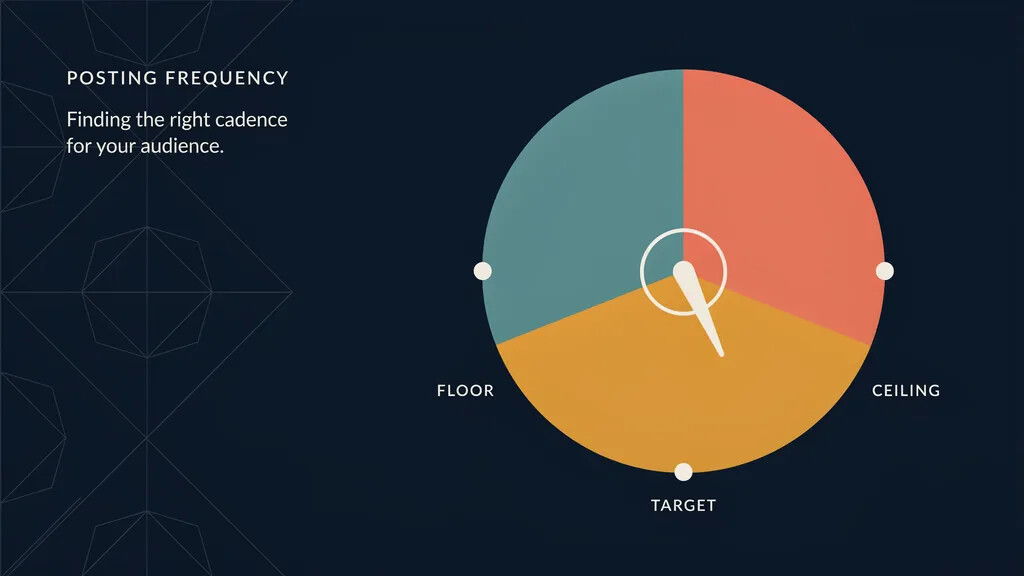
A testing-based framework for finding your ideal Threads posting frequency instead of relying on contradictory magic numbers from tool vendors.
Read guide →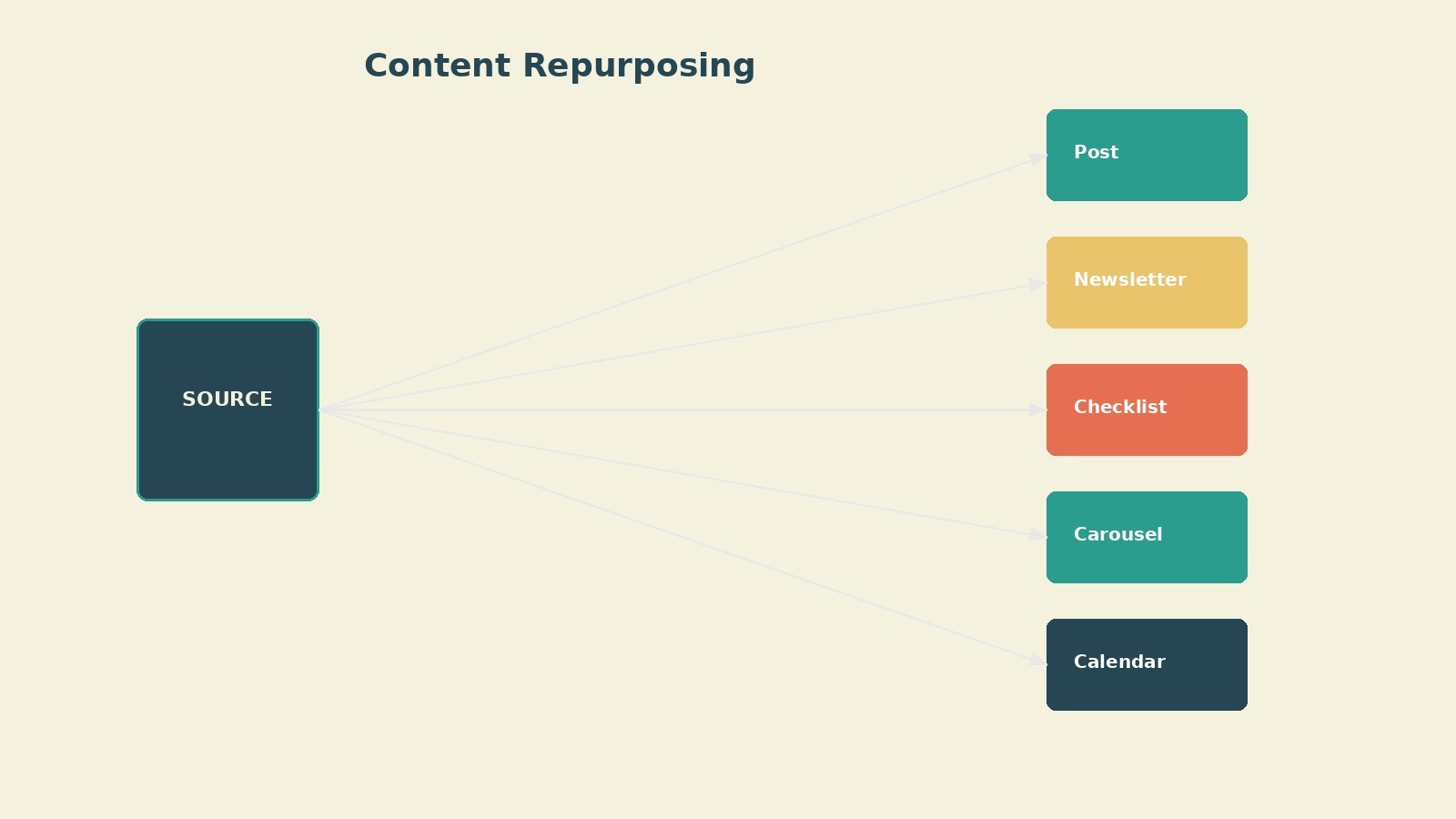
A practical system for turning one finished piece of content into multiple platform-native formats, with source selection criteria, a worked example, and measurement guidance.
Read guide →
A decision framework for choosing a social media scheduler based on platform coverage, publishing reliability, analytics, team collaboration, API access, pricing transparency, and real total cost of ownership.
Read guide →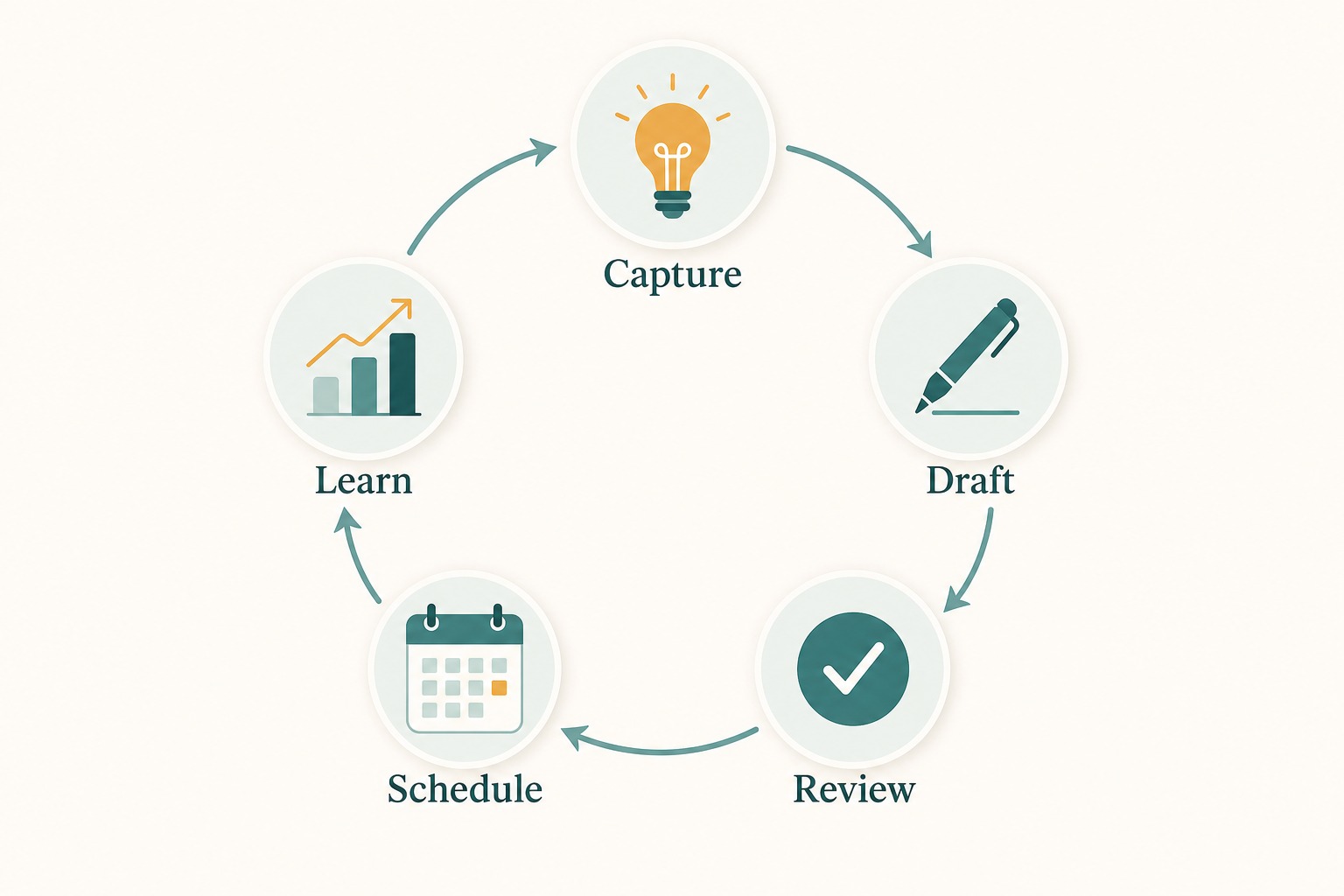
Strategy and pillars decide what to post. Batching is how you produce. This is the operating system between them: Capture, Draft, Review, Schedule, Learn, with solo and small-team variants.
Read guide →
A structured five-phase production system for content batching that addresses the real reasons batch sessions fail: perfectionism, energy crashes, and scope creep.
Read guide →
A practical personal branding system for creators and solopreneurs: define your identity, position it per platform, build a voice library, and measure controllable inputs instead of vanity metrics.
Read guide →
A reality-first framework for earning from Threads without spam, stale bonus advice, or engagement manipulation. Five real income paths, a decision guide, and an anti-hype measurement plan.
Read guide →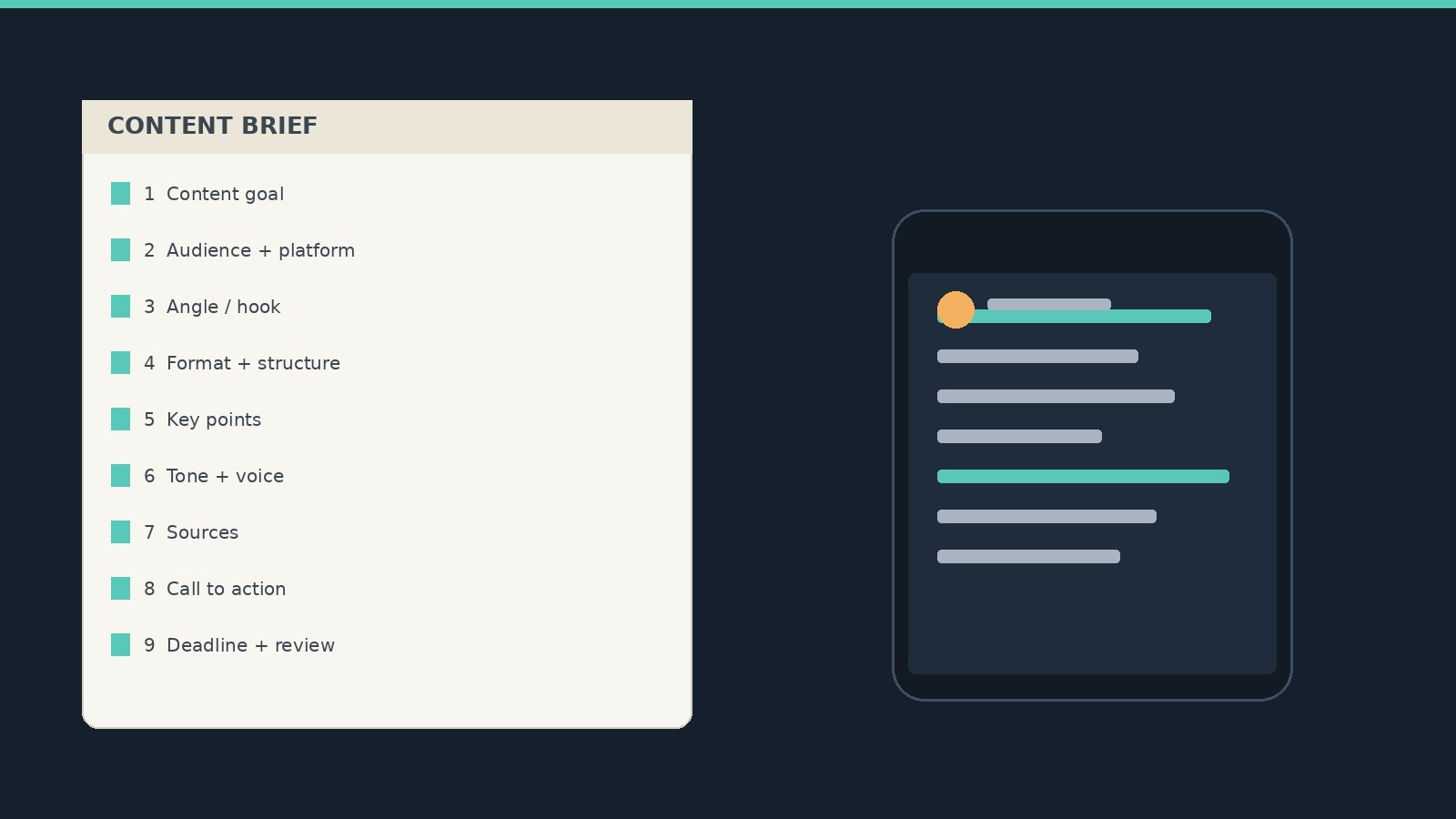
A lightweight content strategy system built around a one-page canvas, a weekly review habit, and a filter for deciding what not to post.
Read guide →
A source-backed breakdown of how Threads ranks content in 2026, including the five prediction signals Meta documents, new Dear Algo and Your Algorithm controls, and a decision framework for creators.
Read guide →
Threads replaced hashtags with topic tags: one per post, no # symbol, multi-word phrases. Learn how they work, how to choose the right one, and what actually moves reach.
Read guide →
A UGC playbook built for creators and small brands, not enterprise ecommerce. Text-first content types, an invitation framework, a rights and permissions workflow with copyable templates, FTC and Meta disclosure rules, and platform-by-platform tactics for Threads, Instagram, LinkedIn, and TikTok.
Read guide →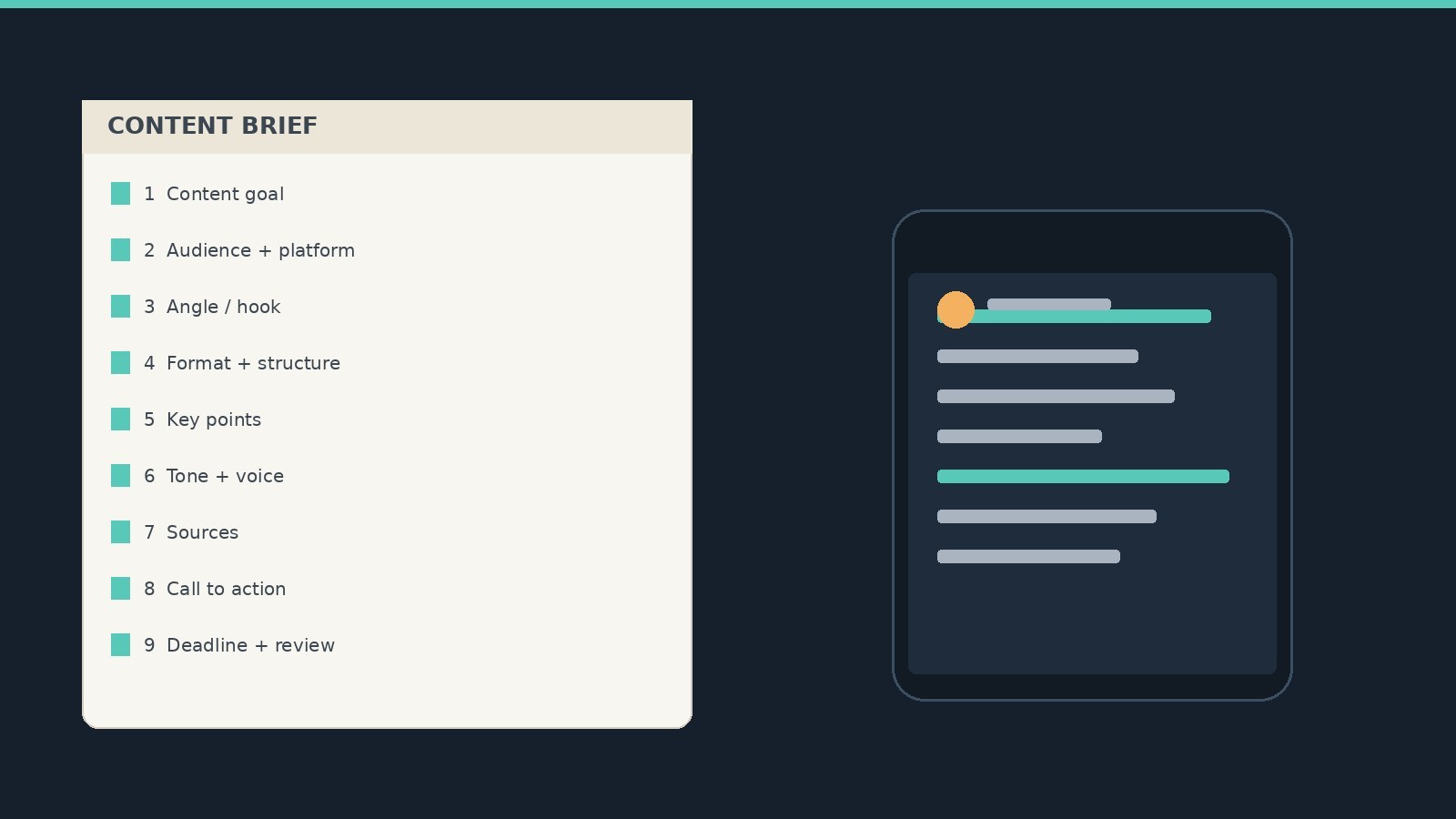
A content brief template built for social media creators and small teams, not SEO blog factories. Nine fields, a filled Threads example, and a handoff workflow.
Read guide →
A decision framework for cross-posting social media without sounding like a bot. Includes an identical-vs-adapt matrix, a per-platform adaptation table, a worked example, and a pre-flight anti-clone checklist.
Read guide →
The most shared best-time-to-post-on-Threads studies contradict each other. This guide explains why universal averages mislead your specific account and walks through a repeatable test you can run with your own Threads Insights data.
Read guide →
A practical, risk-tiered approval workflow for small social media teams. Covers post states, SLAs, a small-team RACI, and a Threads-specific application so you can protect quality without slowing routine publishing.
Read guide →
Content pillars are the core themes that structure everything you post. Here is how to pick the right ones, turn them into a repeatable content system, and measure whether they actually work.
Read guide →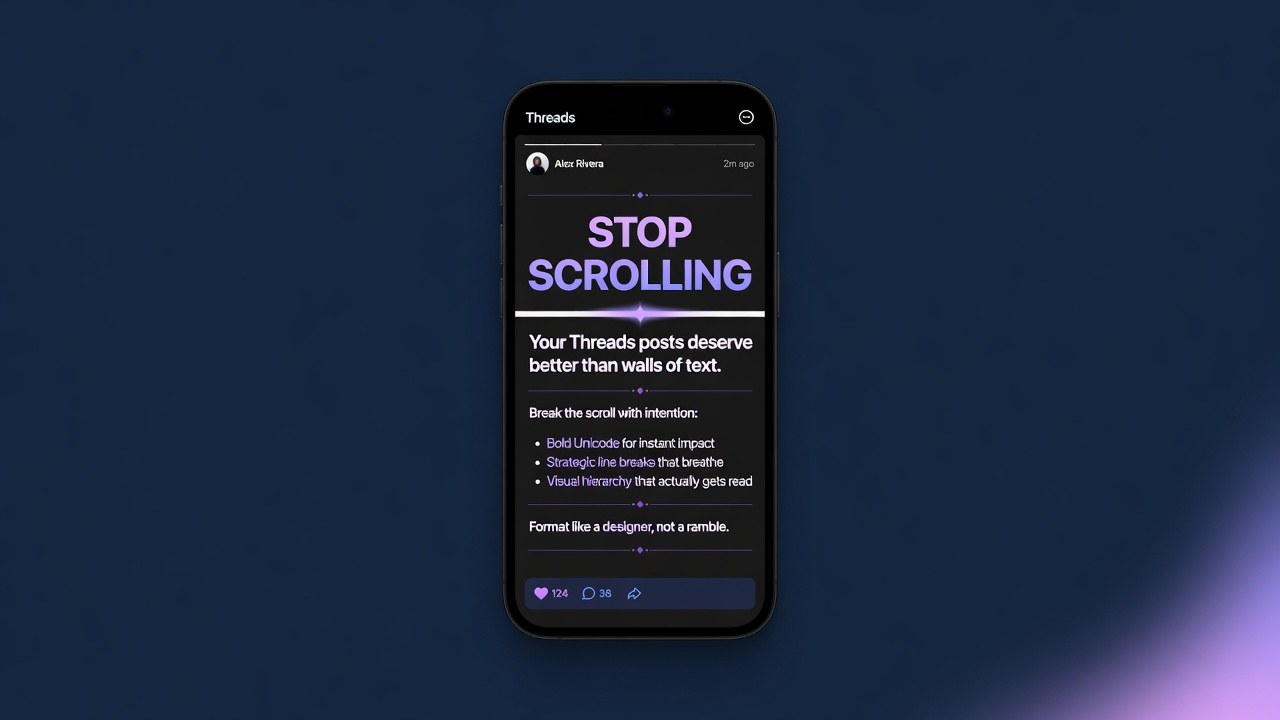
A mobile-first formatting guide for clear Threads posts without fabricated engagement formulas.
Read guide →
Affiliate marketing on Threads works when you protect tracking, recommend fewer products with more context, and measure clicks to commissions instead of vanity engagement.
Read guide →
A source-backed guide to the standard 500-character post, longer text attachments, and readable formatting.
Read guide →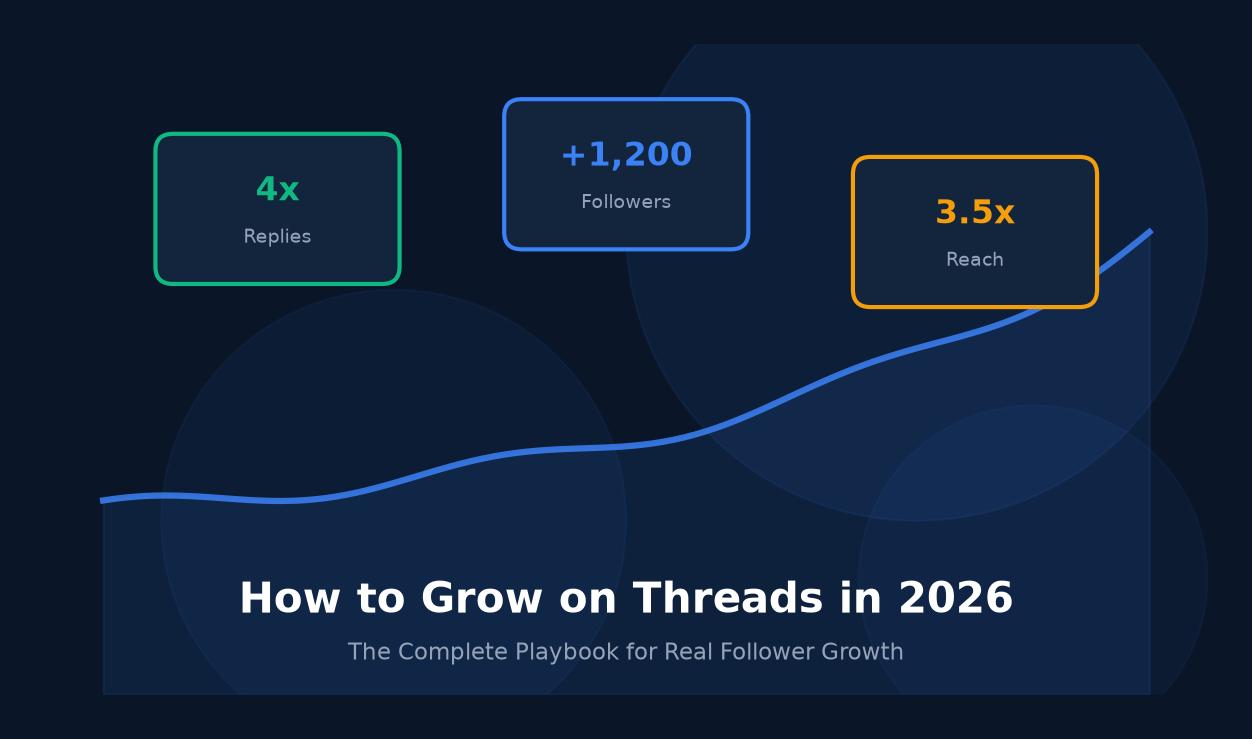
A practical growth system that separates controllable work from unpredictable distribution.
Read guide →
Fifty adaptable Threads prompts organized by the job each post should do.
Read guide →
A flexible weekly Threads planning template built around purpose, evidence, and approval.
Read guide →
A practical guide to reading Threads insights without turning small samples into false conclusions.
Read guide →
A transparent buying guide to the features that matter in a Threads scheduling tool.
Read guide →
A practical, source-backed scheduling workflow for creators and teams using Threads.
Read guide →
You cannot check out inside Threads. This playbook shows how to turn posts into profile visits, one clear link, and an external checkout without turning your feed into ads.
Read guide →WRITE BEFORE YOU SCHEDULE
Try the public generator for two copy-ready drafts a day, then move into the full workflow when you need a queue.
Try the free Threads post generator →