
What this guide is really about
You wrote the post, recorded the video, finished the thread. You hit publish. Then you waited. And the views trickled in while content from accounts half your size took off. The gap between good content and seen content is rarely about quality. It is almost always about distribution.
Content distribution is the deliberate practice of placing your finished work on the right channels, in the right format, at the right time, for the people most likely to care. It is not the same as creation, repurposing, or cross-posting. It is the deployment layer that decides whether your effort compounds or disappears.
This guide gives solo creators and small teams a distribution system that works without an ad budget, a marketing department, or a viral following. You will get a channel-fit decision matrix, a native adaptation protocol, a repeatable weekly rhythm, and an audit you can run on your own content today.
A content distribution strategy is a plan for where, when, and how your finished content reaches your audience. For creators and small businesses, the most effective approach is source-first: create one strong piece of content, adapt it natively for each channel where your audience already spends time, and deploy it on a consistent rhythm. Focus on three to five channels you can maintain well rather than spraying ...
A channel-fit decision matrix that tells you where to publish each content type
A native adaptation protocol so your posts fit each platform instead of looking pasted
A repeatable 7-day distribution rhythm you can run solo in under an hour per day
A six-question distribution audit to find what is leaking reach right now
Distribution is deployment, not duplication. Each channel needs a version that fits its format, length, and audience expectations.
Pick three to five channels you can maintain consistently. A half-active channel hurts more than a channel you never started.
The best distribution channel is the one where your specific audience already spends time and engages with content like yours.
Measure distribution success by controllable signals: posts shipped per week, channel-native quality, reply and save rates. Follower counts lag and mislead.
Earned distribution (shares, mentions, community features) scales further than anything you can post yourself, but it requires content worth sharing first.
What Content Distribution Actually Means for Creators
Content distribution is the process of publishing, sharing, and promoting your content so it reaches the people who need it. The Content Marketing Institute frames it around three channel categories: owned channels you control (your blog, newsletter, social accounts), earned channels where others amplify you (shares, mentions, community features), and paid channels where you spend to reach more people. That framework is useful as a map, but it was built for marketing teams with budgets and staff.
For a solo creator or small business, the owned/earned/paid split obscures the real question: where does your audience already consume content like yours, and how do you show up there consistently without burning out? You do not need all three categories. You need the right three to five channels, adapted to your content and your capacity.
Distribution is also distinct from the other content systems you may already run. If you have built content pillars, those define what you talk about. If you have a content strategy, that defines why you create and who you serve. Distribution answers a different question: once the content exists, how does it travel to the reader. Confusing distribution with repurposing is the most common mistake. Repurposing reformats a source into new shapes. Distribution deploys those shapes across channels with intentional timing and native fit.
The Channel-Fit Decision Matrix
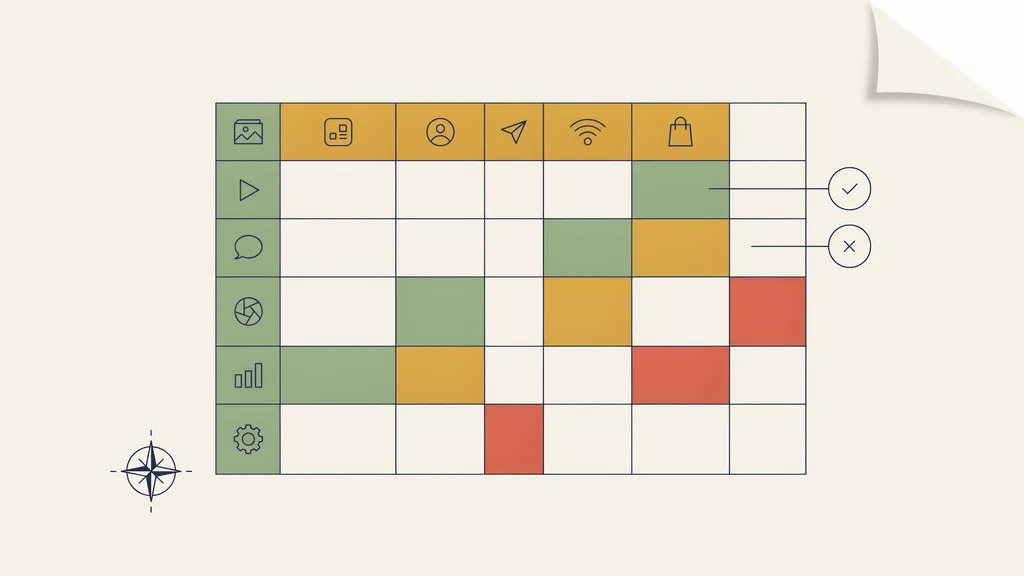
Not every channel fits every content type. A long-form essay fits a blog or newsletter but dies on a platform built for 30-second attention spans. A punchy opinion fits Threads or X but feels thin on LinkedIn. The channel-fit decision matrix helps you match content type to platform before you waste time adapting something that will not land.
Start by listing the content types you produce regularly. Most creators work with five to seven formats: text posts, threads or micro-essays, short video, long-form articles, newsletters, images or carousels, and audio. Then rate each of your active channels on three criteria: does your audience actively consume this content type there, can you produce a native version without excessive effort, and does the platform reward this format with reach or engagement signals.
A channel scores green when all three criteria are met. It scores yellow when one criterion is weak. It scores red when two or more fail. You ship content to green channels first, test yellow channels selectively, and leave red channels alone until something changes. This is the difference between strategic distribution and the spray-and-pray approach that leaves creators exhausted with nothing to show for it.
If you are unsure whether your audience consumes a content type on a given channel, spend one week observing before posting. Look at what earns replies, saves, and shares from accounts similar to yours. The data you gather from watching is more reliable than generic best-platform lists.
Native Adaptation: Why Identical Posts Fail
The fastest way to waste a distribution effort is to paste the same post across every platform. Audiences can smell a copy-paste job instantly, and platform algorithms increasingly favor content that looks native rather than cross-posted boilerplate. Native adaptation means reshaping your source content so it fits the format, tone, and length expectations of each channel.
A practical native adaptation protocol has four steps. First, identify the core message of your source content in one sentence. Second, choose the format each channel expects (a thread on Threads, a polished paragraph on LinkedIn, a hook-plus-body on X, a visual quote on Instagram). Third, rewrite the opening for that platform so the first line earns a stop-scroll. Fourth, trim or expand the body to match the platform attention span.
This is where content distribution overlaps with cross-posting, but the two are not the same. Cross-posting without sounding robotic is a tactic within distribution. The cross-posting decision framework helps you choose whether to adapt, post identically, or skip a channel entirely. Distribution strategy sits above that decision, coordinating timing, sequencing, and measurement across all your channels.
The rule of thumb: if a reader could not tell the post was adapted from another platform, the adaptation worked. If the formatting, tone, or length feels slightly off for the platform, it did not.
Posting identical content across every channel. Each platform rewards native formatting and punishes copy-paste boilerplate. Adapt first, deploy second.
Being active on too many channels. Five half-maintained channels perform worse than three channels getting consistent native effort. Cut before you add.
Treating distribution as a post-publish afterthought. If you have not planned where and how content will deploy before you create it, your distribution is reactive and inconsistent.
Chasing follower counts instead of engagement signals. Replies, saves, and shares tell you whether distribution is working. Followers lag and do not predict reach.
Ignoring earned distribution entirely. If no one ever shares your content, the problem is usually the content's shareability, not the number of channels you post on.
A 7-Day Distribution Rhythm You Can Run Solo
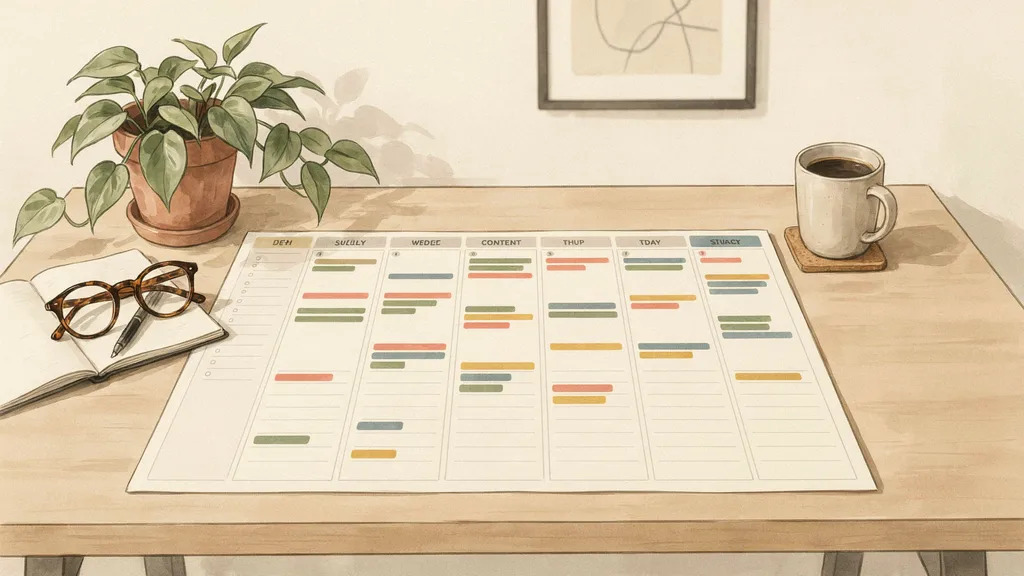
Distribution fails when it is treated as a one-time push after publishing. It succeeds when it becomes a weekly rhythm with defined tasks for each day. The goal is consistency without overwhelm. If you can commit roughly 45 to 60 minutes per day, this rhythm will outperform sporadic multi-hour pushes.
Day one: publish your primary source content on your home channel and announce it natively on one secondary channel. Day two: adapt the source into a short-form version for a different platform and post it with a fresh hook. Day three: engage with replies and comments from the first two days, and share a related snippet or quote. Day four: distribute a supporting asset (a visual, a stat, a behind-the-scenes note) to a channel that values that format. Day five: pitch one earned distribution opportunity, such as a community feature, a newsletter mention, or a collaboration. Day six: repurpose the source into a different format for a channel you have not hit yet. Day seven: audit the week, note what earned the most engagement, and plan next week's source content.
This rhythm works because it front-loads creation on day one, spreads adaptation across the week to avoid audience fatigue, and reserves time for earned distribution, which is where compounding reach happens. You do not need to hit every channel every day. You need each channel to receive native content on a cadence its audience expects.
If you produce more than one source piece per week, run a compressed version: publish day one, adapt and distribute days two through four, engage day five, audit day six. The structure matters more than the exact schedule. If your content workflow is already defined, this distribution rhythm slots in as the deployment layer. To keep the rhythm sustainable, you can schedule Threads posts and other channel-native content in advance so deployment runs even on busy days.
Earned Distribution: The Multiplier You Cannot Fake
Owned distribution (your channels) gives you control but limited reach. Paid distribution gives you reach but costs money and stops working the moment you stop spending. Earned distribution is the category where other people choose to share, mention, or feature your content. It scales further than anything you post yourself, and it carries trust that owned and paid cannot buy.
Earned distribution is not luck. It happens when your content is genuinely useful, surprising, or identity-affirming enough that sharing it makes the sharer look good. The Content Marketing Institute reports that short articles and posts remain the most widely used content format among B2B marketers, with 92 percent using them, which means the competition for attention in that format is intense. The content that earns shares is content that gives the sharer social capital: a framework they can reference, a take they agree with publicly, a resource their audience will thank them for.
To earn more distribution, engineer shareability into your source content before you publish. Ask: would someone screenshot this and send it to a friend? Would someone quote this in their own post? Would someone bookmark this for later? If the answer to all three is no, earned distribution will not happen regardless of how many channels you post on. If you want to try generating shareable post ideas quickly, the Free Threads Post Creator can help you draft hooks and formats designed for engagement.
The Distribution Audit: Find What Is Leaking Reach
Most creators distribute content for months without stepping back to ask whether the system is working. A distribution audit answers six questions that surface leaks fast. You can run it on your last month of content in under 30 minutes.
First: which channel consistently drives the most meaningful engagement (replies, saves, profile visits, not just likes)? Second: which channel gets posts but almost no response? Third: are you adapting content natively for each channel or pasting identical versions? Fourth: how long after publishing does engagement peak on each channel, and are you present to respond during that window? Fifth: did any content this month earn external shares or mentions, and what did it have in common? Sixth: which channel feels like a drain on your time relative to the return it generates?
The audit reveals two common patterns. Pattern one: you are active on too many channels and none of them gets enough native effort to perform. The fix is cutting back to three to five channels and concentrating. Pattern two: you are active on the right channels but posting identical content across all of them, so each platform sees stale, ill-fitting posts. The fix is running the native adaptation protocol before each deployment.
Once you have answers, prioritize one change for the next month. Do not try to fix everything at once. Distribution improves through focused iteration, not simultaneous overhauls. If you already run a content audit for your overall performance, the distribution audit is a narrower lens that zooms in on the deployment layer specifically.
Worked Example: One Source, Five Channels
Imagine you wrote a 600-word newsletter about a lesson you learned from three months of consistent posting. Here is how that single source distributes across five channels using the native adaptation protocol. This example is illustrative, not a claim about specific results.
On your newsletter, you publish the full 600-word piece as the canonical version. On Threads, you extract the single sharable insight and write it as a 200-character standalone post with a question that invites replies, then post a second standalone follow-up the next day with a different angle from the same piece. On LinkedIn, you adapt the core lesson into a 150-word professional reflection with a concrete example relevant to your industry. On X, you compress the takeaway into a punchy one-liner and thread a short reply chain with two supporting points. On Instagram, you pull a quotable sentence and design it as a simple text graphic with minimal styling.
Notice what did not happen: you did not paste the newsletter link into five places. You did not write five separate pieces from scratch. You extracted one source, adapted it natively for each platform, and deployed across the week using the 7-day rhythm. The total additional effort beyond the original newsletter is roughly 90 minutes of adaptation. The reach multiplies because each channel received content shaped for its format and audience.
This is the source-and-spread model in practice. It works because it respects each platform's conventions, sequences deployment to avoid fatigue, and concentrates your effort on adaptation rather than creation from zero. If you already repurpose content systematically, distribution is the layer that takes those repurposed formats and deploys them with intent.
Action checklist
Use this as the practical next pass after reading the guide.
- +List your content types and rate each active channel green, yellow, or red using the channel-fit matrix
- +Choose three to five channels to focus on and pause or drop the rest for the next 30 days
- +Write a one-sentence core message for your next source piece before adapting it for any channel
- +Run the native adaptation protocol (identify core, choose format, rewrite hook, trim or expand) for each target channel
- +Block 45 to 60 minutes per day for the 7-day distribution rhythm, front-loading creation on day one
- +Run the six-question distribution audit on your last month of content and pick one change to make

Conclusion
Content distribution is the layer that decides whether your work compounds or vanishes. For creators and small businesses without ad budgets, the winning approach is not posting everywhere. It is picking the right channels, adapting natively, deploying on a consistent rhythm, and earning shares through content that is genuinely worth passing along.
Start with the channel-fit matrix and the 7-day rhythm. Run the audit after 30 days. Cut what is not working and double down on what is. Distribution improves through focused repetition, not frantic volume.