
What this guide is really about
If you have ever stared at a blank post composer wondering what to publish today, you already know the problem content pillars solve. Social media content pillars are the three to five recurring themes that every post on your accounts falls under, giving your strategy structure instead of leaving it to daily improvisation.
The idea is simple in theory but harder in practice. Most guides stop at definitions and examples. They tell you what content pillars are but not what to do with them Monday morning. This one covers the full implementation: how to choose pillars that fit your audience, convert them into a repeatable weekly content workflow, cross-post without sounding robotic, measure which pillars earn attention, and fix the planning mistakes that quietly waste your time.
Whether you are managing a personal brand, a small business account, or multiple platforms at once, the same principle applies. A defined set of pillars turns random posting into a system. You stop reinventing your content strategy every week and start building on themes your audience already responds to.
Social media content pillars are 3 to 5 core themes that organize every post you publish. Pick themes your audience already cares about, align each pillar to a content goal like education or community, then rotate through them on a weekly calendar. The right pillars cut planning time, keep your posting consistent across platforms, and make it obvious which content earns engagement versus which fills space.
Choose content pillars that match your audience and goals
Turn pillars into a repeatable weekly content plan
Cross-post across platforms without duplicating
Measure pillar performance so you can adjust
Content pillars are 3 to 5 themes that structure every post you publish across social media
The best pillars come from audience needs and business goals, not random topic brainstorming
A weekly rotation system turns pillars into a predictable production workflow that prevents blank-post paralysis
Cross-posting means adapting tone and format per platform while keeping the pillar theme intact
Tagging posts by pillar in your analytics is the only way to know which themes earn engagement
What Are Social Media Content Pillars?
Content pillars are the core themes that every piece of social media content fits into. Think of them as categories that define what your account talks about on a recurring basis. Instead of deciding topic-by-topic what to post, you define your pillars once and then generate multiple posts under each one.
Most accounts work best with three to five pillars. Fewer than three and your content feels one-dimensional. More than five and the themes start overlapping, making it harder to maintain a clear identity. Sprout Social recommends this same range in their guide to social media content pillars, noting that too many pillars dilute your brand message.
Each pillar should connect to a specific goal. A common setup for creators and small brands includes one educational pillar (teach something useful), one community or engagement pillar (start conversations), one behind-the-scenes pillar (build trust and personality), and one promotional pillar (highlight your work or offers). The exact mix depends on your audience and what you want them to do.
The structural analogy matters. Pillars hold up a building, and in the same way, content pillars hold up your posting strategy. Without them, every post is a one-off decision that drains creative energy. With them, you have a framework that tells you what to create, why it matters, and how it connects to the content around it.
How to Choose the Right Pillars for Your Account
Start with your audience, not with brainstormed topics. List the questions your followers ask most often, the problems they mention, and the content formats they engage with. Your pillars should map directly to those needs. If you sell a product, include a pillar that helps people use it or understand the problem it solves.
Next, audit what you already post. Pull your last 20 posts and sort them into buckets. You will likely find natural clusters already forming. These emergent themes are a strong starting point because they reflect what you naturally create and what your audience already responds to. Understanding what drives engagement on each platform matters here, similar to the measurement-first principles in how to grow on Threads.
Then look at your business or creative goals. If you want to build authority in a niche, at least one pillar should be educational. If you want to drive sales or signups, one pillar should connect to your offer without being purely promotional. The goal is balance: not every post should sell, but your pillars should collectively support where you want your account to go.
Finally, pressure-test each pillar against three criteria: Does this serve a real audience need? Does it support a business or creative goal? Can you produce content for it consistently without burning out? If any pillar fails one of these tests, replace it. A pillar you cannot sustain is worse than having fewer pillars.
Turning Pillars Into a Weekly Content System
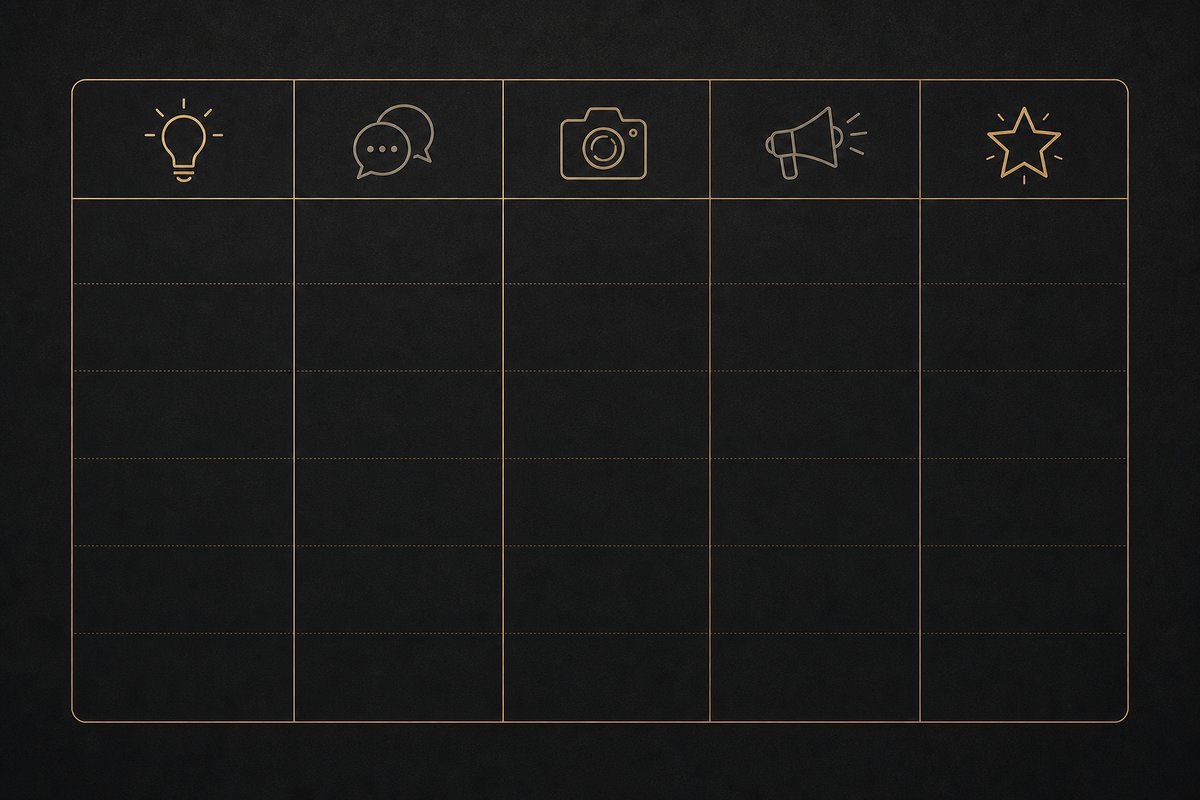
Pillars only work if they drive a production system. The goal is to reach a point where you know which pillar you are posting for each day of the week, so you never face a blank composer without direction. A simple approach is to assign one pillar per day on a five-day rotation.
For example, Monday is educational, Tuesday is community-focused, Wednesday is behind-the-scenes, Thursday is promotional, and Friday is a wildcard or trend response. This rotation means you always know what type of content to create, which reduces decision fatigue and makes content batching far more efficient.
Batch your pillar content in one focused session rather than creating daily. Pick one day per week to draft all five posts. Draft text first, then create or source visuals, then schedule. Many creators aim to batch a full week of content in a single focused block, often under two hours once pillars and templates exist. You can use a Threads content calendar template as a starting structure for any single-channel rotation.
The batching workflow itself has a predictable rhythm. Start by reviewing which pillars are due that week and jotting down a hook or angle for each. Then write all five drafts before touching any visual assets. Creating text first keeps you focused on message quality rather than design decisions. Once the drafts are done, batch the visuals: shoot or source images, format them per platform, and attach. Finally, load everything into your scheduler with the correct dates and times. This approach also makes it easier to involve a collaborator or review your own work with fresh eyes. When all five posts sit in a draft queue, you can spot repetition, check tone consistency, and make sure each pillar is pulling its weight before anything goes live.
Choosing more than five pillars, which dilutes focus and makes consistent production harder
Creating abstract pillars like lifestyle or inspiration that do not guide specific content creation
Never reviewing or adjusting pillars, even when audience interests and platform algorithms shift
Tagging posts by pillar but only tracking vanity metrics instead of goal-aligned engagement
Copy-pasting identical posts across platforms instead of adapting format and tone per platform
Cross-Posting Pillars Across Platforms Without Copy-Paste
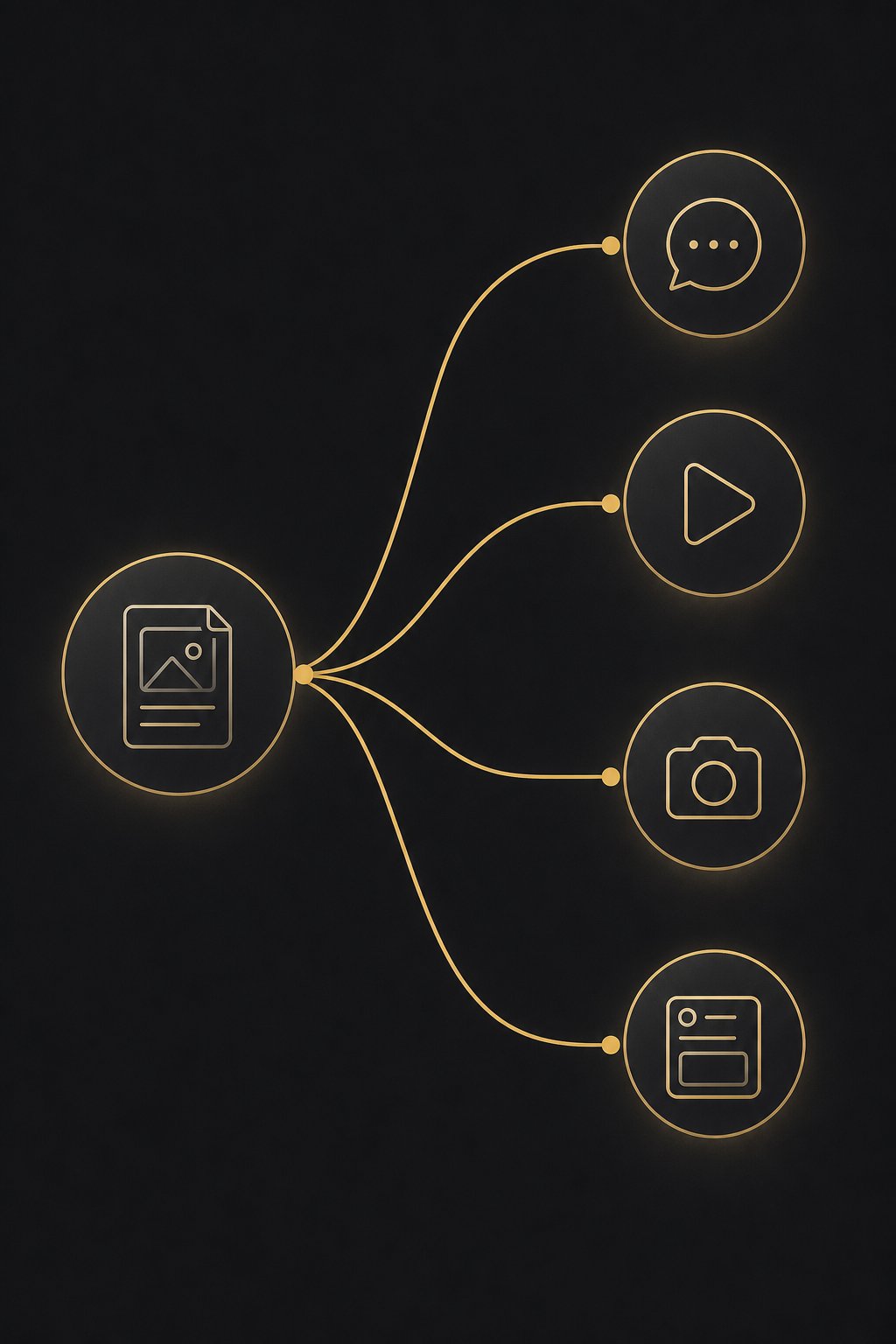
Content pillars travel well across platforms because the theme stays the same even as the format changes. Your educational pillar might be a tutorial video on TikTok, a step-by-step carousel on Instagram, a text breakdown on Threads, and a longer reflection on LinkedIn. Same pillar, different expressions.
The mistake to avoid is posting identical content everywhere. Each platform has different audience expectations, format constraints, and engagement patterns. Adapt the hook, length, and visual treatment to the platform while keeping the pillar theme intact. For text-based platforms, knowing how to format Threads posts with proper line breaks and bold text makes the same pillar idea more readable.
A practical workflow: write your pillar idea as a core message first, then produce platform-specific versions from that single source. This repurposing strategy means one pillar concept generates four to six posts across platforms, each tailored to where it appears. For platforms like Threads specifically, you can draw from varied Threads post ideas organized by content goal to keep each pillar fresh across formats.
Think about what changes per platform and what stays the same. What stays the same is the core insight, tip, or story. What changes is the wrapper: the opening hook, the length, whether you use video or text, and the call to action. A TikTok audience wants you to get to the point in under 15 seconds. A LinkedIn audience expects more context and a professional framing. Instagram rewards visual polish. Threads rewards conversational tone and reply-worthy hooks.
Measuring Which Pillars Actually Perform
Without measurement, content pillars are just organized guesswork. The fix is to tag every post with its pillar and track engagement metrics per category over time. If your scheduler supports tags or labels, use them. If not, a simple spreadsheet with post URL, pillar name, and weekly metrics works.
After four to six weeks of tagged posting, patterns emerge. One pillar will likely outperform others in reach or replies. Another might drive more profile visits or link clicks. This data tells you whether to rebalance your rotation, retire an underperforming pillar, or double down on what works. Reading your Threads analytics without drowning in vanity numbers is a practical example of focusing on the metrics that connect to goals.
Avoid vanity metrics as your only signal. A pillar that gets likes but no meaningful engagement or conversions is not necessarily your best one. Look at the metrics that connect to your goals: saves and shares for educational content, comment depth for community content, click-throughs for promotional content. The approach of tagging posts by pillar and analyzing which themes resonate with audiences is documented in Socialinsider's guide to Content Pillars Explained.
Set a recurring review cadence. A weekly check-in keeps you aware of what is happening, but meaningful trends need a longer window. Monthly reviews give you enough data to see which pillars are consistently strong and which are fading. Use those reviews to decide whether to adjust the rotation, experiment with new pillar ideas, or retire themes that are no longer pulling engagement.
Common Content Pillar Mistakes and How to Fix Them
The most frequent mistake is choosing too many pillars. When every topic is a pillar, none of them function as a structural theme. If you have more than five, consolidate. Merge overlapping themes into broader categories that still feel specific enough to guide creation.
Another common error is treating pillars as permanent. Your audience evolves, your goals shift, and platform algorithms change. Review your pillars every quarter. Replace any that no longer serve a clear purpose. A quarterly review keeps your content relevant without constant restructuring.
The third mistake is creating pillars that are too abstract. Pillars like lifestyle or inspiration sound meaningful but do not guide actual production. Make each pillar concrete enough that you can list five specific post ideas for it immediately. If you cannot, the pillar needs sharpening.
A fourth mistake is skipping the measurement step entirely. Some creators define pillars, build a rotation, and then never check which themes perform. Without that feedback loop, you are guessing. The pillars that felt right in theory might not be the ones your audience actually engages with. Tag your posts and let the data inform your decisions. Finally, avoid letting pillars make your content feel formulaic. Pillars are a planning tool, not a creative constraint. If every educational post sounds the same or every community post follows the same template, your audience will notice. Use pillars as a starting point, then vary the angle, format, and voice within each theme.
Action checklist
Use this as the practical next pass after reading the guide.
- +List the top five questions or problems your audience mentions regularly
- +Audit your last 20 posts and group them into natural theme clusters
- +Choose 3 to 5 pillars that pass the audience-need, goal-alignment, and sustainability tests
- +Assign each pillar to a specific day in your weekly posting rotation
- +Batch-create one week of pillar content in a single focused session
- +Tag every post with its pillar and review performance after four weeks
Conclusion
Content pillars solve the most common social media problem: not knowing what to post. By defining three to five themes tied to audience needs and goals, you create a system that makes planning faster, posting more consistent, and performance easier to measure.
The real value shows up when pillars drive a weekly production workflow. Assign themes to days, batch your content in one session, adapt each post to its platform, and tag everything by pillar so your analytics tell you what works.
If Threads is one of your pillar channels and the bottleneck is drafting, approving, and scheduling there, JoltSage is a Threads-native workspace for planning and queuing posts without treating every network as the same feed.