What this guide is really about
The pitch is everywhere: a few dollars, a few thousand followers, delivered before dinner. Search for follower services and you will find sponsored listicles ranking them, Reddit threads debating them, and vendor sites promising "real, active" accounts. Almost nobody explains what actually happens to your account after the purchase.
This guide walks through the parts that matter: what you are really buying, what the official platform policies say (including the one Threads page almost nobody cites), what tends to break first, the arithmetic that makes bought followers self-defeating, and a step-by-step cleanup protocol if you have already bought some.
Bought followers are bot, sock-puppet, or churned accounts that break platform rules. Meta may remove that engagement, limit parts of your Instagram or Threads profile, or disable the account; X and TikTok strip fake signals and can escalate to bans. Your engagement rate falls, then purges cut the count again. If you already bought: change your password, revoke connected apps, and rebuild on real replies.
Know exactly what follower-selling services deliver behind the marketing
See the official policy position of Threads, Instagram, X, and TikTok in one place
Understand which consequences hit first and which are exaggerated
Get a concrete cleanup protocol for an account that already bought followers
Bought followers come from bot networks, sock-puppet accounts, or follow churn, not real people who chose you. Selling them was found to be illegal deception in the first US law-enforcement action of its kind.
Every major platform prohibits bought engagement in writing. Meta documents profile limits, removed engagement, and possible disabling for Instagram and Threads; X threatens suspension; TikTok removes fake signals.
The first damage is usually quiet: your engagement rate collapses because your count grows while real engagement stays flat. That number is what brands and collaborators actually check.
Login-sharing follower apps are a security hole. Meta's own help pages describe complete account access, spam posting, and friend-data exposure.
Cleanup works partly: change your password, revoke connected apps, remove followers where the platform allows, and stop buying. Purged counts recover only through real engagement.
What You Are Actually Buying
Follower-selling services market two things: a number that goes up and the word "real." The New York Attorney General's office looked behind that marketing in its investigation of Devumi, at the time a major seller. The 2019 settlement found the followers came from computer-operated bot accounts or sock-puppet accounts run by one person pretending to be many. Some copied real people's names and photos without consent, which the office called illegal impersonation. It was the first law-enforcement finding in the country that selling fake engagement is illegal deception.
Devumi shut down in mid-2018 once the investigation went public, but the industry adapted rather than disappeared. Hootsuite's experiment buying Instagram followers documented the shift: after Instagram closed its public posting API to third-party apps in 2018, services stopped requiring your login for basic packages and started describing every follower as "real" and "active." The claims got softer in wording and no truer in substance.
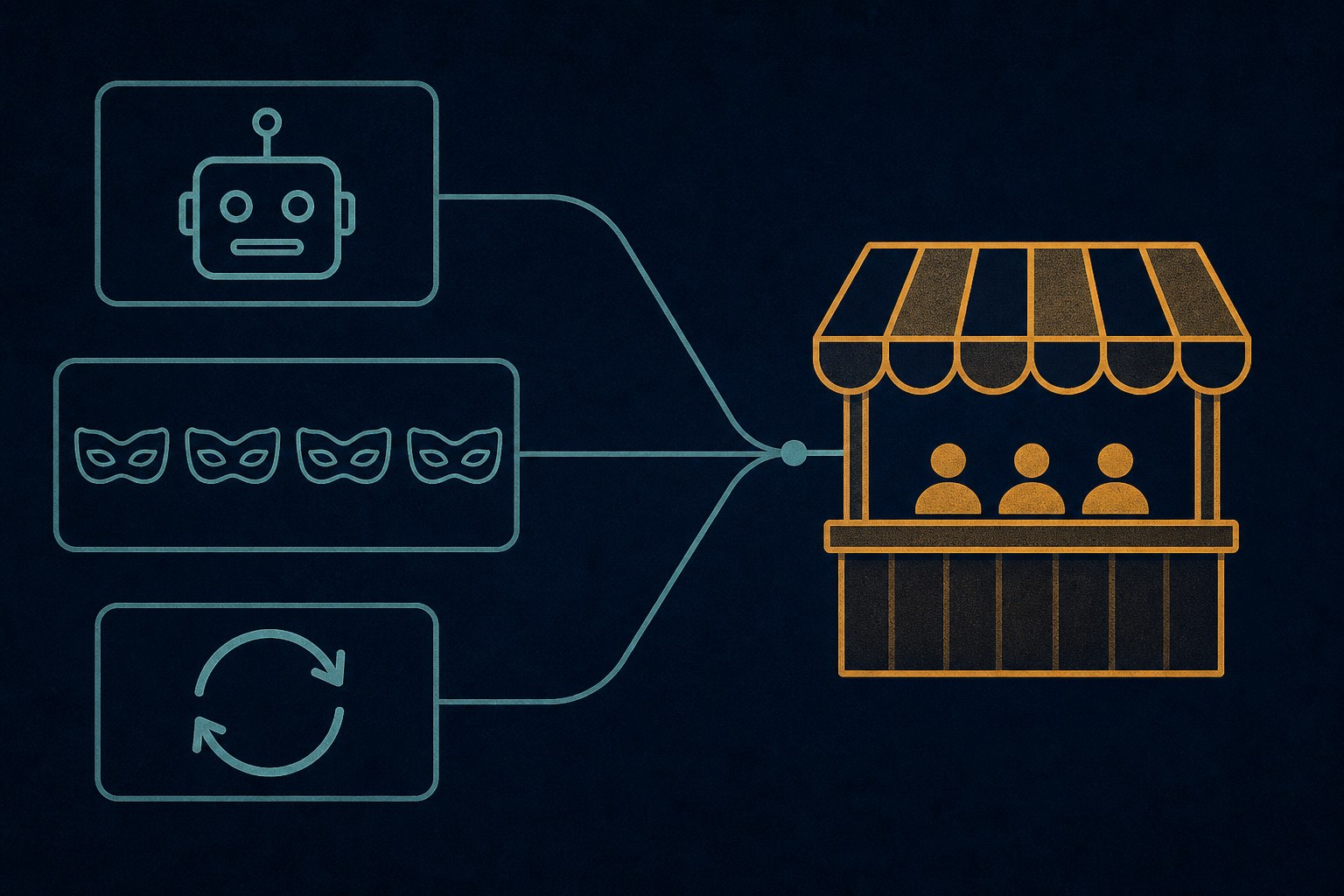
There are only three real supply channels for cheap followers. Bot accounts created at scale by software. Sock-puppet accounts operated by one person or a crew. And follow churn, where accounts follow you to trigger follow-backs, then unfollow in bulk. X's platform manipulation policy names all of these patterns explicitly. None of them involve a human who saw your work and chose to follow you, which is the only follower that ever interacts, buys, or refers anyone.
What Platform Rules Actually Say
Every major platform prohibits bought engagement in writing, and the policies are more specific than most blog posts admit. Threads has its own help page on this, which almost no article in this space cites. Meta's warning about follower apps on Threads states that these services are not affiliated with the platform, that giving them your login grants complete access to your account, and that accounts generating inauthentic activity violate Community Standards. Meta says it may remove the engagement those apps generated, that parts of your Instagram account or Threads profile may be limited, and that your account may be disabled or terminated.
Instagram carries the same policy, with the same consequences, plus a page explaining why your counts change: when inauthentic activity is discovered, it gets removed, and follower totals also shift as Instagram routinely deletes disabled accounts. That is why bought counts bleed out over weeks and months rather than vanishing in one announcement.
X's Authenticity policy (updated April 2025) prohibits trading or compensating others for metric inflation across likes, replies, reposts, and follows, including follow churn and the use or promotion of third-party services that do any of it. The enforcement ladder runs from deleting content and temporarily locking accounts to permanent suspension, and X reserves permanent suspension at first detection for severe violations. TikTok's Integrity and Authenticity guidelines, effective September 2025, ban the trade of services that artificially boost engagement or trick the recommendation system, and state plainly that when fake metrics are detected, TikTok removes fake likes, followers, and other inflated signals.
Notice what is documented and what is not. Removal of fake engagement, profile limits, account disabling, and suspension are all in official writing. Vague claims like "the algorithm will shadow-ban you forever" are not in any of these policies, so treat them as unverified. The documented consequences are serious enough without inventing extra ones.
What Breaks First
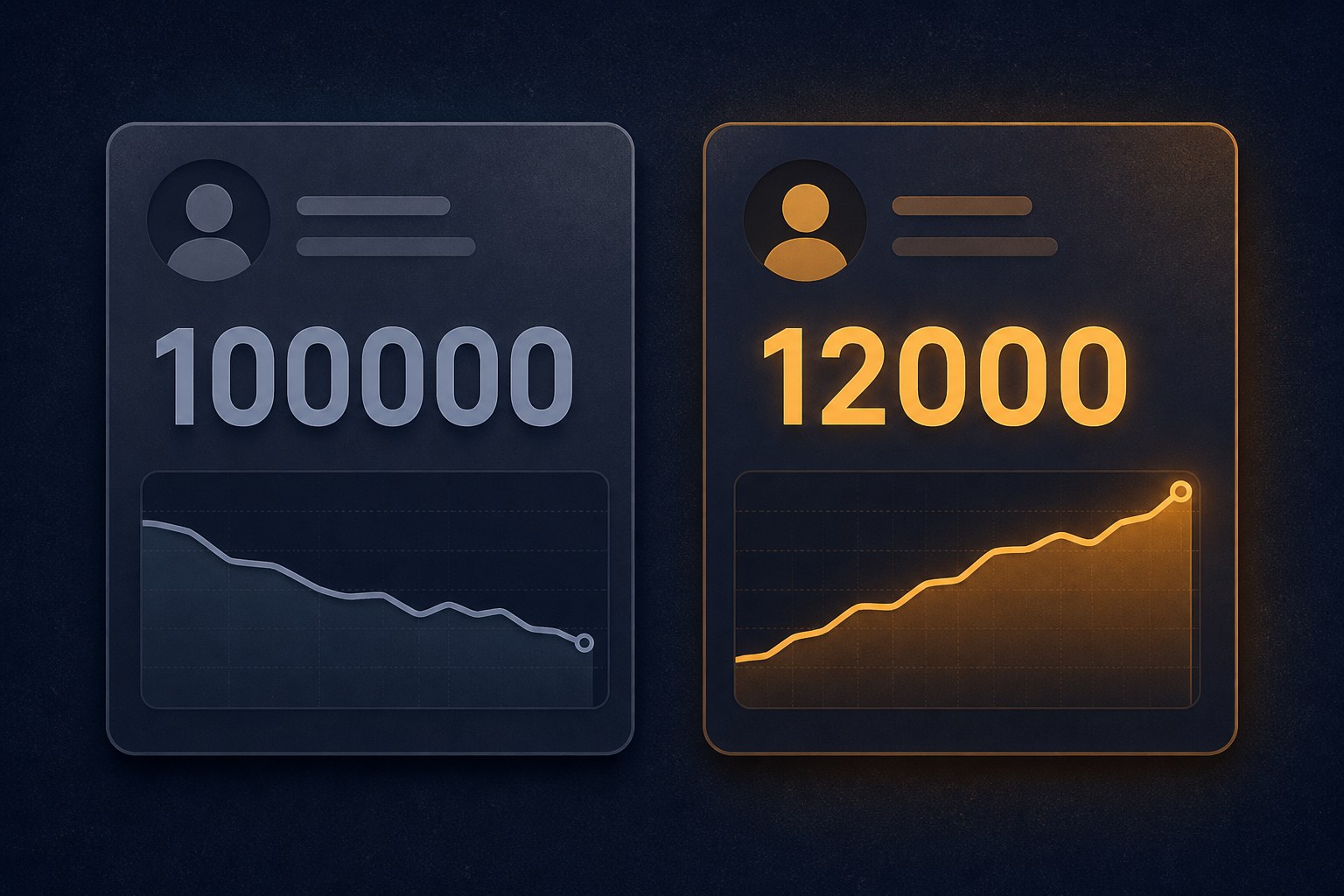
The first consequence is not a ban. It is arithmetic. Suppose you run a text-first account on Threads with 1,000 real followers and about 60 engagements per post, a 6 percent rate. You buy 10,000 followers. Your next post still earns roughly 60 engagements, because bots do not read. Your rate is now 0.55 percent. Anyone who checks your profile with a free audit tool sees the mismatch instantly, That is why what is a good engagement rate only means something on a real audience: a padded count against flat conversation is visible to anyone who checks the ratio.
The second break is the quiet purge. When platforms detect and remove inauthentic activity, your counts move in the wrong direction. This is documented behavior, not a theory. Counts often move in later removals, so the number you paid for can decay while the real engagement never rises to match it.
The third break only happens if you used a login-sharing service, and it is the worst one. Meta's help pages describe exactly what these apps can do once you hand over credentials: read your messages, collect information about your friends, and post spam from your profile. If that describes a service you used, treat your account as compromised, not just padded. The cleanup protocol below starts there for a reason.
One more thing that breaks is easy to miss: your own feedback loop. While your dashboard shows a fat follower count, the signal you need, which posts real people respond to, drowns in noise. You cannot improve what you cannot read honestly. A small real audience with clean data beats a big fake audience with garbage data every time.
Judging the purchase by the follower count instead of the engagement-rate collapse that follows it
Handing your login to a growth service to get "better quality" followers, trading an account takeover risk for a bigger number
Using purge apps that demand your credentials to remove fake followers, repeating the original security mistake
Expecting a single dramatic ban as the only consequence, and reading the absence of one as proof the purchase was safe
Deleting the account and starting over when a cleanup plus honest engagement would have kept the real audience
The Cleanup Protocol
If you already bought followers, you can limit the damage, though you cannot fully undo it. Work through this in order, because security comes before cosmetics.
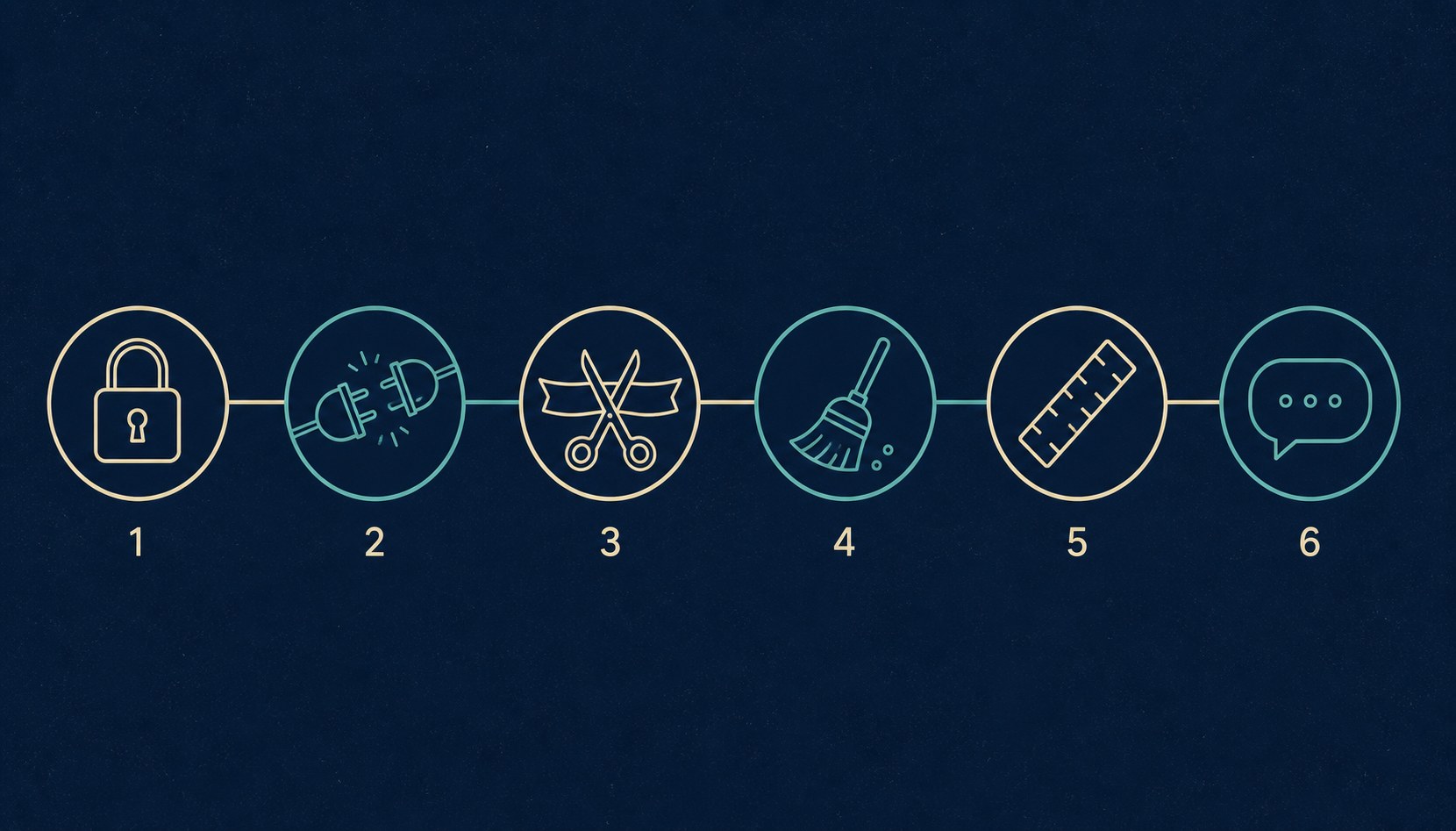
Step 1: change your password, everywhere the account lives. If you ever gave a follower service your login, Meta's guidance is direct: change your password to protect the account. For Threads, that means changing the password on the Instagram account it is built on, since they share credentials. Step 2: revoke every connected app you do not actively trust. Both Instagram and Threads let you review and remove connected apps in settings, and Meta's help page on follower apps points there explicitly. Anything from a growth vendor goes.
Step 3: stop the bleeding. Cancel subscriptions, auto-refills, and "engagement packages." Every new delivery restarts the clock on detection. Step 4: remove followers where the platform allows it. Instagram lets you remove individual followers from your follower list, which is slow but real for small batches; Threads and X offer block-then-unblock or soft-block flows that force an unfollow. There is no official bulk tool for purchased followers on any major platform, so be skeptical of "purge apps" that ask for your login. They reproduce the exact security mistake you are trying to fix.
Step 5: rebase your metrics. Note your follower count and average engagement per post now, and judge the next 90 days against that baseline, not against the inflated peak. Step 6: rebuild with the levers you control. On a text-first platform that means replies: a reply-first growth strategy puts your work in front of real people who are already talking about your topic, and 20 focused minutes a day of replies is the part you control, because every follower it earns is one who chose you.
What Works Instead
The honest alternative to buying followers is slower to move the count and does not wreck the rate. Start by finding your engagement gap: which of the four real interaction types (replies, shares, saves, profile visits) is weakest, and which controllable lever fixes it. Then run a proper content audit to see which topics and formats your real audience already responds to, and do more of that on purpose.
For platform-specific growth, stay with mechanics you can observe on your own posts: conversation and whether people finish or reply. On Threads that means writing posts that earn replies, using hooks that earn the tap, and showing up in other people's replies with something worth reading. If you are rebuilding after a cleanup, the how to grow on Threads playbook covers the full system, from profile conversion to reply habits.
None of this requires a budget. It requires consistency, which is the actual scarce resource. If empty-calendar panic is what pushed you toward shortcuts, draft the next few posts with the free Threads post creator, then put them in whatever scheduler you already use. Real growth is unglamorous: publish, reply, learn, repeat. The followers it brings stay through the next purge, because they were never purchased to begin with.
Straight Answers to the Common Questions
A few questions come up every time this topic does, and the honest answers are shorter than the myths. Will one purchase get you banned? Not as a documented automatic first step. Official pages say platforms may remove the fake engagement, limit profile features, or disable or suspend the account, especially if the behavior continues. Do bought followers ever engage? Not meaningfully; their defining feature is that they did not choose you. Can you delete them all? Not with any official bulk tool, only manual removals and soft-blocks. Is it illegal to buy? The landmark case made selling illegal deception; buyers have not been the enforcement target, but you would be paying an industry built on stolen identities and fraud.
The question underneath all of them is whether follower count matters at all. It matters a little, as social proof when a real person lands on your profile. It matters vastly less than engagement per post, because that is what collaborators, brands, and platforms actually measure. If you remember one thing: a number you bought is rented, a reader you earned is owned.
Action checklist
Use this as the practical next pass after reading the guide.
- +Change your password on the account (and the Instagram login behind Threads) before anything else
- +Review connected apps in settings and revoke everything from growth or follower vendors
- +Cancel every subscription, refill, and engagement package so no new deliveries arrive
- +Remove purchased followers manually or via block-and-unblock where the platform allows
- +Write down today's follower count and average engagement per post as your new baseline
- +Replace the daily scrolling you would have spent worrying with 20 minutes of genuine replies
Conclusion
Bought followers fail on their own terms. The count decays in purges, the rate collapses on contact with arithmetic, the policy violations are documented in writing on every platform you would post to, and the money funds an industry a state attorney general already called illegal deception.
Clean up honestly, rebase your numbers, and spend the same energy on replies and posts real people choose to follow. Slower first month, stronger every month after, and nothing to hide when someone checks.