
What this guide is really about
You ran an account through a fake follower checker and got a number like 23 percent suspicious. The tool showed you a progress bar, maybe a chart, and then a button to buy the full report. What it did not show you is what that number actually means, or how much you should trust it.
The free checkers you will find are vendor pages, and most of them end in a trial for an influencer suite. Some publish a short method. None of them is a neutral lab report. Here is how to read the score, why two tools disagree, and how to audit an account from public data without handing anyone your login.
You do not need an account on any platform to follow along. Everything in the manual audit works on public data, and it takes about five minutes per account.
Fake follower checkers estimate how much of an audience looks inauthentic by matching public proxy signals like follower spikes, default profiles, and weak engagement ratios. They cannot name specific fake accounts, so scores vary between tools: read them as screening estimates, not verdicts. Pair any score with manual engagement math and comment checks, and never enter your login.
Know what a fake follower score is actually made of
Cross-check any score with a five-minute manual audit
Vet collaborators without unfairly accusing them
Handle a bad score on your own account calmly
A fake follower score is an estimate built from proxy signals, not a list of fake accounts.
Two tools can disagree by wide margins because their samples and thresholds differ; compare like with like.
Engagement arithmetic and comment quality are free checks that can contradict the tool number, so read them before you decide.
Never enter your login to check followers; platform policy pages warn that third-party apps carry real account risk.
Platforms remove inauthentic and disabled accounts themselves, so a dropping count is not automatically a penalty, and it is not automatically harmless if a follower app had your login.
What a Fake Follower Checker Actually Measures
A checker you can run from a public handle has to work from public signals. Typical clues vendors describe are follower growth shape, the ratio of followers to following, default avatars and numbered handles, how engagement sits against audience size, and how comments read. The tool compares those clues with patterns it treats as inauthentic and reports a share that looks suspicious. It is not reading a platform flag.
What no tool can do is name a specific follower as fake, because platforms do not publish that flag. Instagram's own page on why follower counts change says counts move when inauthentic activity is removed and when disabled accounts are deleted. You see the total change. You do not get the list. Read that page before you treat a third-party score as the same thing.
Vendor pages still want a signup. Modash's fake follower check is a limited free look at an influencer suite, and it does publish a method you can read: it says it samples followers, sorts them into real people, mass followers, influencers, suspicious accounts, and bots, and counts only suspicious plus bots as the fake rate, with mass followers kept separate. That is still an estimate you cannot reproduce from the outside. Useful context, not a verdict.
Ask what the percentage includes before you argue with it. Automated bots, dormant humans, and real people who follow thousands of accounts and barely engage are three different groups. Only the first is deliberately fake. If the tool does not say whether quiet humans are inside the number, a high score on a slow-grown account can be counting legitimate readers. The label is not the finding.
Why Two Checkers Give Two Different Scores
Run the same handle through two tools and the percentages may not match. Picture one tool at 12 percent and another at 31 percent. That gap does not require a conspiracy. Tools differ in what data they can reach, how large a sample they score, which signals they weight, and where they set the suspicious threshold.
The denominators differ too. One tool scores the full audience, another scores the most recent few thousand followers. One counts dormant accounts as fake, another separates dormant humans from active bots. Same account, different question, different answer.
This is the same problem you meet when comparing published engagement rate benchmarks that disagree: the inputs and definitions shift under your feet, so the numbers cannot be compared directly. The practical fix is identical. Compare scores only within one tool, against accounts you already know are clean, and treat cross-tool comparisons as noise.
Scores are also snapshots, not properties. Bot operators rotate tactics, platforms purge in waves, and audiences churn, so the same account can measure differently next month. When a number matters, record the tool, the date, and the score side by side, and re-run the pair before making an expensive decision on old data.
The No-Login Audit: Signals You Can Check Yourself
Start with engagement arithmetic, because it is free and you can show your work. For each of the last ten posts, add the public reactions that post shows, divide by follower count, then average those ten rates. Do not add the ten posts together and divide once. That multiplies the rate by the number of posts. On Threads, sanity-check a single post with the Threads engagement rate calculator, which uses likes plus replies plus reposts, divided by followers or by views, then multiplied by 100. It does not audit Instagram, TikTok, or YouTube. An illustration, not a measured account: 80,000 followers and 40 likes plus replies on a post is 40 divided by 80,000, which is 0.0005, or 0.05 percent. Compare that with similar-size accounts you already trust. There is no universal bar.
Then read the comments. Twenty generic one-liners under recent posts, emoji-only strings, or the same praise copied word for word under unrelated accounts are a stronger public clue than the percentage. A score cannot show you whether the thread responds to the post. You can.
Sample the follower list next. Strings of default avatars, handles like user4482917, and profiles with no posts and a long following list, clustered on the same pages, are a clue. A growth line that jumps vertically over a few days is another clue if a public tracker or an archived snapshot actually shows it. If the account is your own Threads account, read views and replies in Threads analytics instead of treating the checker as your weekly report. Those insights do not vet someone else's Instagram.
Two seconds of profile reading settles most doubtful cases. A comment that says nice pic under a text-only post, praise that names no detail from the post itself, or an account whose entire reply history is three-word encouragement across unrelated niches is doing bot work whether or not a human owns it. Conversely, disagreements, follow-up questions, and jokes that only land with the post's context are expensive to fake, which is exactly why they count.
Treating one tool's percentage as a verdict on a person or an account
Comparing scores across different tools as if they shared a method
Judging large or quiet accounts by raw engagement rate without context
Entering your login into an unknown checker or follower cleanup app
Confronting a creator publicly based on a single score
Reading a Score on Someone Else's Account
Most people run these checks before a collaboration or a sponsorship. This is where a score does the most damage if you treat it as a verdict on a person. Use it as one input. It is not the decision.
Read the number as triage. A clean score plus healthy manual signals means proceed. A borderline score deserves a conversation: ask for native analytics screenshots, which show real reach that third-party tools cannot fake. An alarming score paired with hollow comments and follower-list oddities is your walk-away signal.
Ask for screenshots the way you would ask any professional for evidence: plainly and without accusation. Something like, before we finalize, could you share a screenshot of your reach and audience data from the app, plus your follower growth chart. Native views of reach, follower demographics, and the growth line are first-party data, and they are still screenshots, so read them next to the public comment thread. A creator who already has those screens can send them without a long delay. Silence is a reason to pause, not proof of fraud.
If you are about to pay for access to that audience, the seller-side finding still matters as context. New York's attorney general announced a 2019 settlement it called the first in the country to find that selling fake followers and likes is illegal deception. The release is about the sellers. Your decision is whether the audience in front of you is the one you meant to pay for.

If the Alarming Score Is Your Own Account
A bad score on your own account does not mean you bought followers. Follower apps with broad permissions were common for years, an old agency may have inflated numbers before you knew, or the tool may be counting quiet readers. What happens when you buy followers is documented separately, including why the damage outlasts the purchase, and the cleanup protocol there applies if the fakes were purchased or inherited.
A shrinking count is not, by itself, a confession. Instagram documents that follower totals change when it removes inauthentic activity and disabled accounts. That is a different event from an account limit. The risk worth acting on is credential exposure: the Threads policy on follower apps warns that third-party apps granted full access can get accounts limited, disabled, or terminated. The same page tells you to change your password and, separately, remove connected apps. A password change is not described as revoking every access token by itself.
Do not hire a cleanup service that asks to log in as you. That repeats the access risk the Threads page warns about. If the score reflects a purchase or an old follower app, use the cleanup protocol on the buy-followers page instead of improvising one here. A bad checker score, by itself, is not a reason to hand anyone your password.
Once you know which signals are real, measure from that base. The follower-based rate on people who can still see the work is the number worth keeping. Do not expect it to rise just because a tool score fell.
What Checkers Cannot Tell You
Ground truth sits with the platforms. Device signals, login patterns, and behavior histories are what actually identify inauthentic accounts, and none of that is public. Checkers infer from the outside, which is why their estimates age poorly as bot operators learn to look normal.
Coverage is uneven. The free checkers you will find are built for Instagram influencer vetting first. TikTok, YouTube, and X scores, where a tool offers them, rest on thinner public data, so treat them as looser screening estimates. Platform removals also change the audience those tools are scoring. The platform manipulation rules on X prohibit engagement spam, follow churn, and third-party services that artificially inflate metrics. TikTok's integrity policy bans the trade in fake engagement and says detected fake followers can be removed. A score from last month can describe an audience the platform has already changed.
And remember who built the ruler. The free checkers that push a trial exist to convert you into a customer for a vetting suite. That does not make the estimate useless. It means you should read it the way you would read any vendor's own benchmark table, not as a neutral lab result.
A Five-Minute Audit You Can Repeat
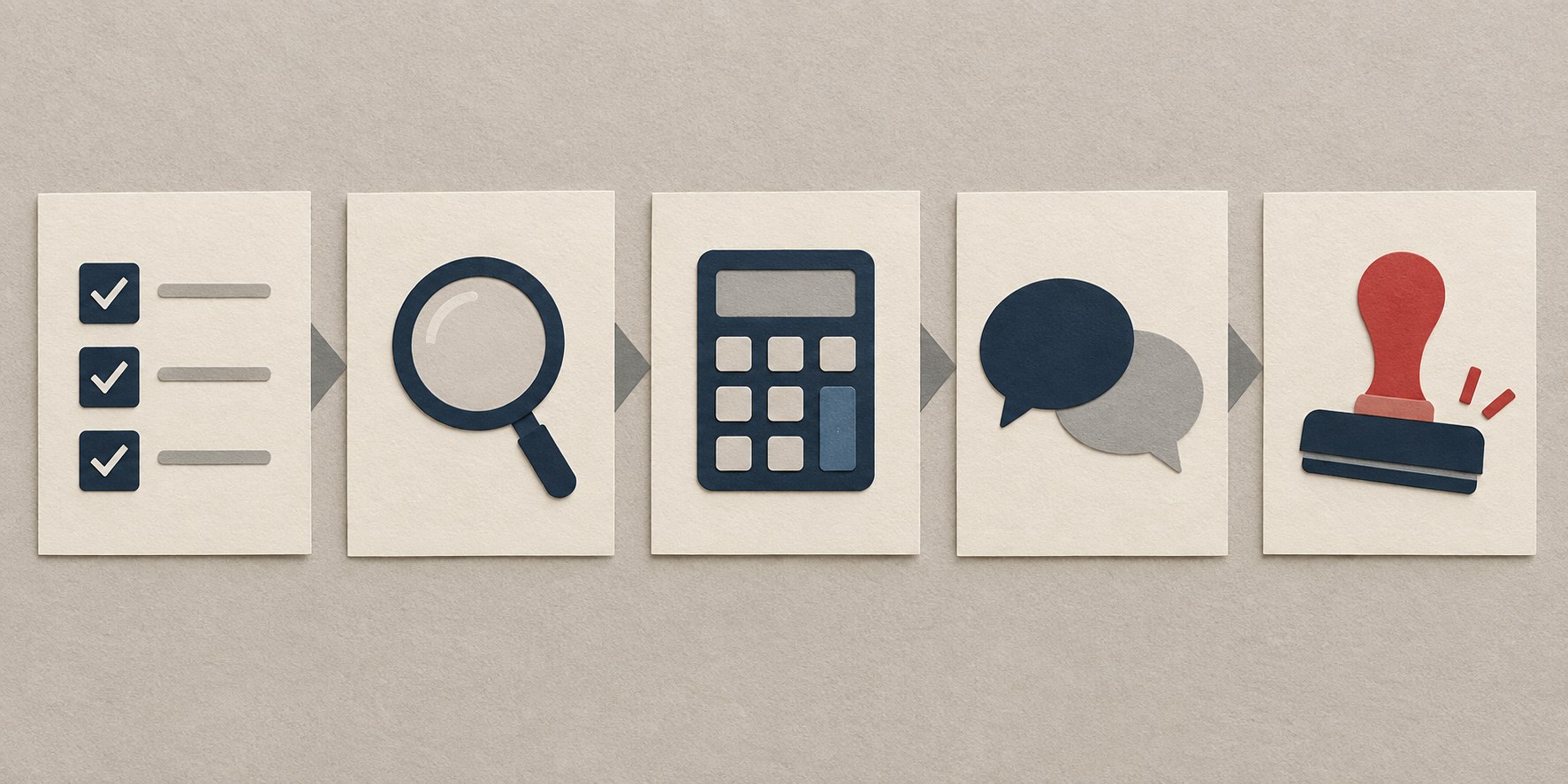
Step one, run one checker you can name, and write down the method it claims to use. Step two, average the per-post engagement rate over the last ten posts. Step three, read twenty recent comments and count how many could sit under any post on the platform. Step four, open the follower list and scan the first thirty entries for default avatars and numbered handles. Step five, decide only when at least two signals agree: proceed, ask for native analytics, or walk.
Run the arithmetic on a made-up account so the method is visible. Hypothetical only: 50,000 followers, and the last ten posts average 30 likes and 8 replies. Per post, (30 + 8) / 50,000 = 0.00076, or 0.076 percent. If every post matches, the ten-post average is the same figure. Comments are pure praise with no detail from the post. You now have a rate you can compare with similar-size accounts, plus a comment thread that ignores the work. Decide from those two signals. The tool number is the third input, not the grade.
Repeat the audit quarterly on the accounts that matter to you, yours included. Audiences churn, scores drift, and the manual signals catch drift that a single tool snapshot misses.
Action checklist
Use this as the practical next pass after reading the guide.
- +Run one checker and note the methodology it claims
- +Average the per-post rate across the last ten posts, instead of summing them
- +Read twenty recent comments and count the generic ones
- +Scan the first thirty followers for default avatars and numbered handles
- +Look for sudden follower jumps in archived snapshots or trackers
- +Decide only when two independent signals agree
Conclusion
A fake follower score is an estimate wearing the costume of a measurement. It is still worth having, because a rough screening signal beats a guess, as long as you know what it is made of, why two tools disagree, and what your own eyes can verify for free.
That is the whole skill: one tool number, engagement arithmetic, twenty comments, thirty follower profiles. Five minutes, no login, no suite required, and a decision you can defend.