
What this guide is really about
If you search for how to make money on Threads, most results still reference a creator bonus program that Meta quietly shut down. The advice is stale, the screenshots are from 2024, and the income claims are either inflated or borrowed from other platforms entirely. The reality is simpler and less glamorous: Threads does not pay creators directly in 2026.
That does not mean the platform is useless for income. It means every real earning path runs through something you build off-platform: a product, a service, a newsletter, or a relationship. This guide separates the five income paths that actually work from the hype that wastes your time, with a decision framework and a measurement plan so you can tell whether your effort is paying off.
Threads has no direct monetization program in 2026. Meta shut down the invite-only creator bonus in early 2025, and the platform offers no ad revenue sharing, subscriptions, or tipping. All real income from Threads is indirect: you use posts to drive traffic to something you own or sell elsewhere, such as a digital product, a service, a newsletter, an affiliate offer, or a brand partnership. The fastest sustainabl...
Understand exactly what Threads does and does not pay for in 2026
Get five real income paths with honest effort expectations
Learn which path fits your current assets and audience
Avoid the spam tactics and hype advice that waste months
Threads has zero direct monetization in 2026. The creator bonus program is dead. Do not plan around it.
All Threads income is indirect: posts drive attention to an offer you control elsewhere.
The five real paths are digital products, services and consulting, affiliate recommendations, newsletter and list building, and brand partnerships.
You do not need a huge following to start. A few hundred engaged readers who trust you beat tens of thousands of passive followers.
Measure leads and conversions, not impressions. Vanity metrics will tell you the platform is working when your bank account says otherwise.
The Threads Bonus Myth: What Actually Happened
When Threads launched in 2023, Meta ran an invite-only creator bonus program that paid selected creators for hitting view and post targets. Payouts ranged from small amounts up to several thousand dollars. The program was never open to everyone, was US-only, and had opaque eligibility rules that Meta never fully documented.
In early 2025, Meta quietly shut down the Threads bonus program. Tech journalist Matt Navarra confirmed the shutdown, noting that Meta ended payouts with no public explanation. Since then, Threads has offered no direct monetization: no ad revenue sharing, no subscriptions, no Stars, no Gifts, no creator fund. If a guide tells you to sign up for a Threads bonus or chase payout thresholds, that advice is at least a year out of date.
The practical takeaway is this: you cannot earn money from Threads content itself. Every dollar comes from somewhere else, and Threads is the top of the funnel, not the register. Before chasing income tactics, it helps to have a growth playbook that builds real audience trust first.
Five Real Income Paths That Do Not Require a Bonus Program
Since Threads does not pay you directly, every income path uses your posts to move people toward an offer. Here are the five paths that work consistently, with honest notes on what each requires.
Digital products: templates, guides, presets, courses, or downloadable tools. You write posts that demonstrate expertise, then point readers to a Gumroad, Stan Store, or your own site. This works well for creators who already have a skill worth packaging. The effort is front-loaded: building the product takes time, but each sale after that is close to passive. The risk is building something nobody wants, so validate demand with free posts before you build.
Services and consulting: coaching, freelance work, design, writing, strategy. Threads works as a portfolio and proof-of-expertise channel. You share insights, answer questions publicly, and let potential clients see how you think. Income per client is higher than digital products, but it does not scale the same way. You trade time for money unless you productize the service later.
Affiliate recommendations: you recommend tools, books, or products you genuinely use, and earn a commission when someone buys through your link. The FTC requires clear disclosure of affiliate relationships, and Meta's branded content policies apply if you are promoting a partner. This path works when your recommendations are selective and trustworthy. Promote everything and you lose the trust that makes affiliate income possible. Newsletter and list building: you use Threads posts to drive signups for an email newsletter, then monetize the list through sponsorships, paid tiers, or your own offers. This is the path many creators report working most consistently because you own the audience. Platform algorithms change; an email list does not disappear when engagement drops. Brand partnerships: sponsored posts or ongoing relationships with brands that want access to your audience. On Threads, this is still emerging. Most deals flow through Instagram connections or direct outreach rather than a dedicated marketplace. Rates vary wildly based on your niche, audience size, and engagement quality. A creator with 3,000 engaged followers in a specialized B2B niche can charge more than someone with 30,000 generic followers. If you run these partnerships across platforms, a solid cross-posting framework helps you adapt each sponsored message without sounding robotic.
Which Income Path Fits Your Situation
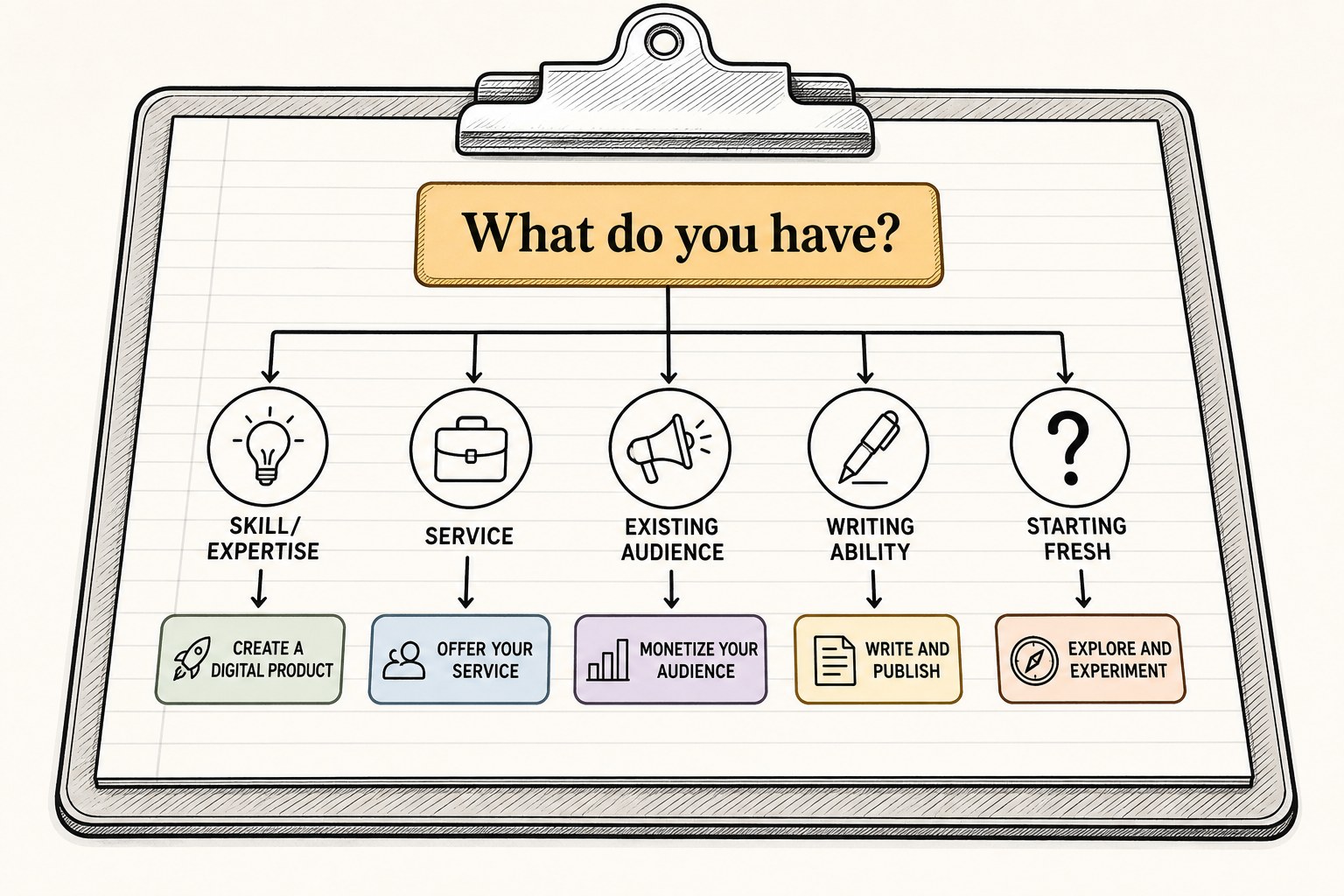
Choosing a path before you have the assets for it is the most common mistake. Here is a simple decision guide based on what you already have.
If you have a skill or expertise worth teaching: start with digital products. Write ten posts that solve real problems in your niche. If people save them, ask questions, or DM you for more, you have demand validation. Build a small product around the most-requested topic.
If you have a service business or freelance practice: use Threads as a visibility and trust channel. Share case studies (without naming clients unless permitted), answer common questions publicly, and post your thinking on industry trends. Add a simple booking or contact link in your bio.
If you have an audience on another platform but are new to Threads: start with newsletter list building. Repurpose your best long-form content into Threads posts, link to a lead magnet, and grow the list. You can layer products or services on top once the list is warm. If you have no product, service, or audience yet: focus on building expertise in public first. Pick one topic, post about it consistently for 90 days, and see which of the five paths naturally emerges from the conversations you have. Trying to monetize before you have something to offer is how people end up pushing low-quality affiliate links nobody clicks. Structuring your topic focus around clear content pillars keeps your expertise visible and consistent.
Believing the Threads creator bonus still exists and planning income around a dead program
Posting affiliate links to products you have not personally used or verified
Chasing impressions and followers instead of tracking bio clicks, signups, and conversions
Trying to monetize before you have demonstrated expertise or built something worth offering
Relying entirely on Threads for your audience instead of building an owned email list
The Threads-Aware Funnel: A Simple Workflow
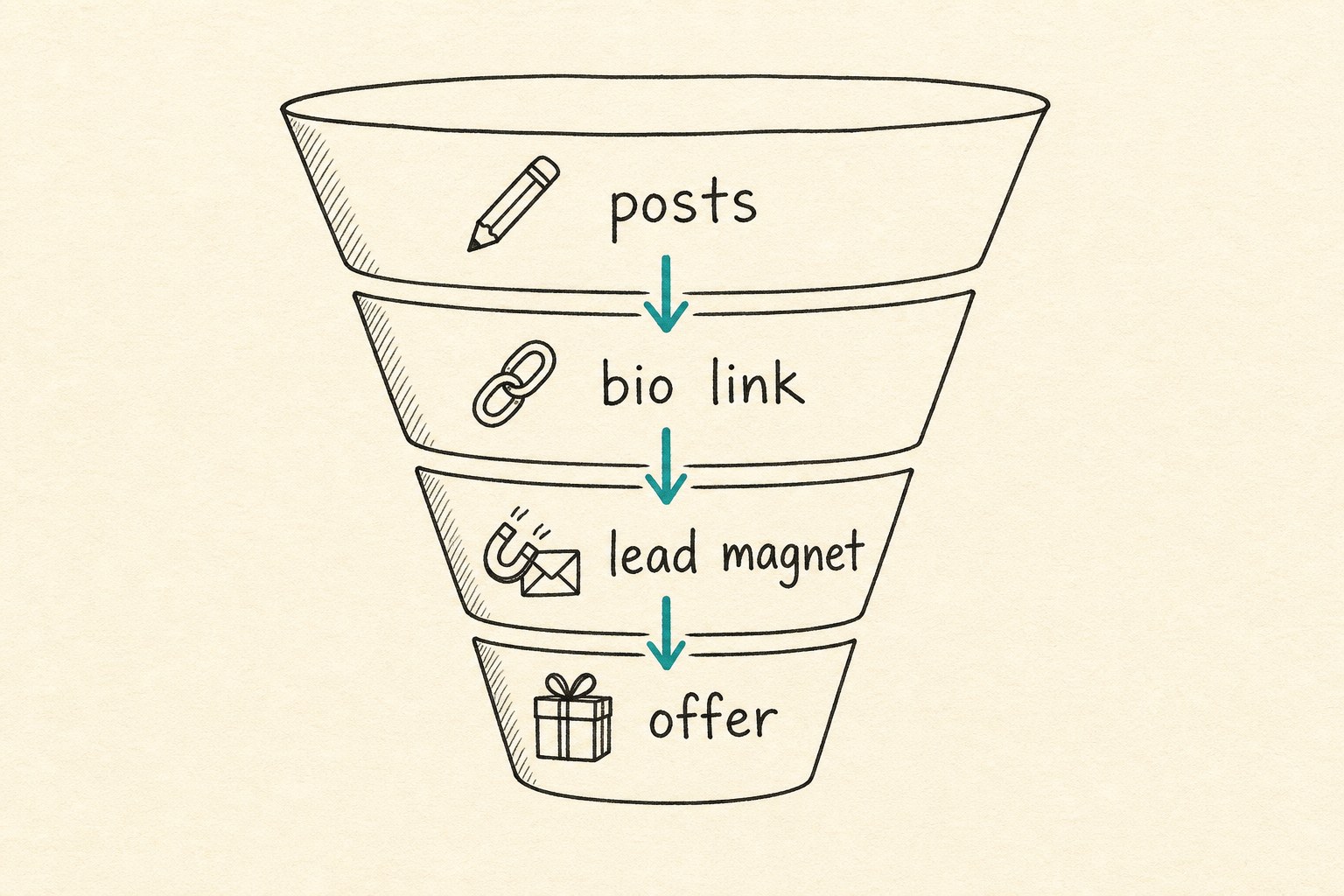
Most monetization advice stops at post a link in your bio. That rarely works because a cold reader has no reason to click. A funnel gives them a reason by trading value for attention before you ask for anything.
Step one: write posts that solve a specific problem your target reader has. Not inspirational quotes, not vague takes. Specific, useful, immediately actionable advice. If you sell a Threads scheduling product, post about scheduling mistakes. If you offer writing coaching, post about hook structures. Your posts are the top of the funnel.
Step two: offer a free lead magnet in your bio link. A checklist, a template, a short guide, a resource list. It should be directly related to what you post about and valuable enough that a stranger would trade their email for it. This is where casual readers become known prospects.
Step three: nurture the list with useful emails, then introduce your offer. Do not pitch on the first email. Deliver value for a few messages, then make a genuine offer that solves a problem your readers have told you about. You can also use the Free Threads Post Creator to draft and test which topics resonate before you write the full email sequence. Step four: measure. Track how many bio link clicks you get per week, how many signups, and how many eventually convert. If clicks are low, your posts are not compelling enough or your bio link copy is weak. If signups are low, your lead magnet is not valuable enough. If conversions are low, your offer or nurture sequence needs work. Each step has its own metric, and fixing the right one saves months of guessing. Learning how to format Threads posts for readability directly affects whether readers reach the end and click through.
What to Avoid: Spam, Hype, and Trust-Killers
The monetization SERP is full of advice that will damage your account and your reputation. Here is what to skip.
Do not chase engagement manipulation. Buying followers, using engagement pods, or posting engagement-bait (reply with a word to get a DM) inflates numbers but destroys the trust that makes any income path work. Threads deprioritizes content that looks like spam, and real readers can tell when you are farming replies instead of helping them.
Do not promote affiliate links you have not tested. If you recommend a tool that turns out to be broken, expensive, or misleading, your readers blame you. The short-term commission is not worth the long-term trust damage. Meta's branded content policies also require disclosure when you have a material relationship with a brand you are promoting.
Do not post income claims you cannot support. Screenshots of Stripe dashboards, claims of passive income while you sleep, and promises about how much someone can earn are the fastest way to lose credibility. If you share results, share your real process, your real effort, and the context that made those results possible. Hypotheticals should be clearly labeled as examples. When in doubt about sponsored content, remember that Meta's branded content policies require disclosure for any material brand relationship. Do not rely on a single platform for your entire income. Threads can change its algorithm, limit reach, or shut down features at any time. If your only audience lives on Threads, a single algorithm change can cut your income overnight. Always build toward owning your audience through a newsletter or direct customer list.
Measuring Whether Your Monetization Effort Is Working
Vanity metrics will lie to you. A post with 50,000 impressions and zero bio clicks is not helping your income. A post with 800 impressions and 12 signups is working beautifully. You need to measure the metrics that connect to revenue, not the ones that feel good.
Track these four numbers weekly. First, bio link clicks: how many people clicked through from your Threads profile. This tells you if your posts are driving action. Second, lead magnet conversions: how many of those clicks became signups. This tells you if your offer is compelling. Third, email open and reply rates: are people engaging with your nurture sequence. Fourth, offer conversions: how many people bought something or booked a call.
If any number is low, fix that step before worrying about the others. Low clicks means better posts or better bio copy. Low conversions means a better lead magnet. Low opens means better email subject lines and content. Low offer conversions means a better offer or nurture sequence. This diagnostic approach saves you from the most common trap: posting more when the problem is downstream.
Set a minimum viable baseline before you scale. If you cannot get 10 signups from Threads in a month, do not build a complex product funnel. Fix the top of the funnel first. Once you have a reliable flow of interested readers, then invest in the offer. This is the opposite of what most monetization guides suggest, and it is why most creators stall. Pair this with your Threads analytics to see which post types drive the most bio clicks week over week.
Action checklist
Use this as the practical next pass after reading the guide.
- +Pick one income path that matches your current assets (skill, service, audience, or none yet)
- +Write ten posts that solve specific problems for your target reader
- +Create a free lead magnet related to those posts and add it to your bio link
- +Set up a simple email signup and a three-message nurture sequence
- +Track bio clicks, signups, and conversions weekly for four weeks before adjusting
- +Add affiliate or brand disclosure to every post where it applies

Conclusion
Threads does not pay creators directly, and pretending otherwise wastes time. What it does offer is a text-first platform where expertise, consistency, and genuine helpfulness can drive real traffic to offers you control. The creators earning from Threads are not gaming a bonus system. They are using posts as the top of a funnel that leads to a product, service, newsletter, or partnership they built deliberately.
Start with one path that fits what you already have. Validate demand with free content before you build anything. Measure the metrics that connect to revenue. And protect your audience by avoiding the hype, spam, and stale advice that dominate the search results.