
What this guide is really about
Search for a social media audit and you will find the same advice everywhere. List your accounts. Check your profile photos. Review your bio links. Compare follower counts across platforms. The guides come from enterprise social media tools, and they solve enterprise problems: brand consistency across dozens of profiles, team access management, compliance reporting.
That advice barely helps a solo creator or a two-person content team. You already know which accounts you have. Your problem is different. You publish posts every week and you cannot tell which ones are worth repeating. You have content pillars but no idea if they actually perform. You suspect half your output does nothing, but you do not know which half. A profile-level audit will not answer those questions.
This guide flips the audit around. Instead of checking whether your bios match, it evaluates your actual content: which posts earned real engagement, which themes carried the weight, which formats fell flat, and what you should make more of in the next thirty days. It is built for creators, solopreneurs, and small content teams who need to improve their output, not their brand governance.
A creator-focused social media audit reviews content performance, not profile branding. Work through five zones: profile positioning, content patterns, topic breakdown, format signals, and audience quality. Sort every recent post into keep, kill, or refresh. Then rebuild your next thirty days around what actually earned attention.
A five-zone audit framework built for individual posts, not brand profiles
A keep-or-kill decision matrix you can apply to every post you have published
A clear path from audit results to your next thirty days of content
Enterprise audits check profiles. Creator audits need to evaluate individual post performance and content patterns.
Sort your last thirty to sixty posts into five zones: positioning, performance, topics, formats, and audience signals. Patterns emerge that monthly averages hide.
Every post gets one of three verdicts: keep and repeat, kill and stop, or refresh and rework. No post gets a maybe.
An audit without action is just a spreadsheet. The output should directly shape what you publish next month.
Run the audit every quarter for solo creators, or monthly if you publish daily. The fresher the data, the better the decisions.
Why Most Audit Advice Misses Creators
These enterprise social media audit guides share a common origin story. They were written by enterprise social media management platforms for marketing teams running multiple brand accounts across regions. Their audit steps make sense in that context: inventory every profile, verify branding consistency, audit team permissions, benchmark against competitors, report to stakeholders. Each step assumes you have more accounts than you can track in your head and a team large enough to need governance.
Creators face a different reality. You probably run one to three accounts. You know what they are. Your challenge is not governance but quality control. You publish several times a week and you cannot easily tell which posts moved the needle. The standard audit tells you to check your profile photo, but you already know it looks fine. It tells you to compare follower growth across platforms, but follower count is a lagging metric that tells you nothing about what to create tomorrow, even when your Threads analytics show growth.
What creators actually need is a content-level audit. Instead of asking whether your profiles look consistent, it asks whether your posts perform consistently. Which topics earn replies? Which formats get saved? Which posting times correlate with reach? Which content pillars are pulling weight and which are dead weight? These are diagnostic questions about your creative output, not administrative questions about your account setup.
This distinction matters because the two audits produce completely different actions. A profile audit ends with updated bios and a permissions cleanup. A content audit ends with a concrete plan: stop making listicle-style posts, double down on behind-the-scenes content, move your publishing window to mornings, and retire a content pillar that has not earned engagement in sixty days. One tidies your accounts. The other changes what you make and reshapes your social media workflow.
The Five-Zone Creator Audit Framework
Instead of a linear checklist, work through five zones. Each zone answers a different diagnostic question about your content. You can complete all five in a single ninety-minute session if you have thirty to sixty posts to review. If you publish daily, sample two full weeks. If you publish three times a week, pull the last two months. Zone one is profile positioning. This is the only zone that overlaps with enterprise audits, and it should take five minutes. Check three things: does your bio clearly state what you make and who it is for, does your pinned or featured post represent your best work, and does your profile link actually work on mobile. If your bio reads like a generic tagline instead of a clear value proposition, fix it. But do not spend more than five minutes here. The real audit is in the next four zones.
Zone two is content performance patterns. Pull every post from your review window into a spreadsheet or document. For each post, record the type (text, image, video, carousel), the topic, the length, the time posted, and the engagement metrics in your Threads analytics or platform dashboard. On Threads and Instagram, that means replies, reposts, and likes. On LinkedIn, reactions and comments. On X, replies and reposts. You are not looking for your best post. You are looking for patterns. Do shorter posts outperform longer ones? Do question-based posts earn more replies than statements? Do posts with a specific hook structure consistently land?
Zone three is topic and pillar performance. Group your posts by your social media content pillars or themes. If you write about productivity, marketing, and personal stories, separate them. Calculate the average engagement per pillar. You will often find that one pillar earns two or three times the engagement of another, yet takes the same effort to produce. This is the most actionable finding in the entire audit because it tells you where to concentrate your energy. A pillar that consistently underperforms is not a failure of the topic. It might be a mismatch with your audience, or it might need a different format or angle. Zone four is format and timing signals. Look for correlations between format choices and performance. Did image posts outperform text-only? Did posts published in the morning earn more than afternoon posts? Be careful not to over-interpret small samples. A single viral post can skew your averages. Look for patterns that hold across at least five posts before treating them as signal. If you want to test timing more rigorously, the structured testing approach in the best time to post guide gives you a four-week protocol.
Zone five is audience signal quality. This is where most audits stop, but creators need to go deeper. Instead of counting total engagement in your Threads analytics, evaluate engagement quality. A post with fifty likes and zero replies tells you something different than a post with twelve replies and twenty likes. Replies indicate that your content provoked thought or conversation. Saves indicate utility. Reposts indicate shareability. Sort your top posts by reply count, not just total engagement, and you will find a different set of winners. The posts that earn conversation are the ones that build audience loyalty over time.
The Keep, Kill, or Refresh Decision Matrix
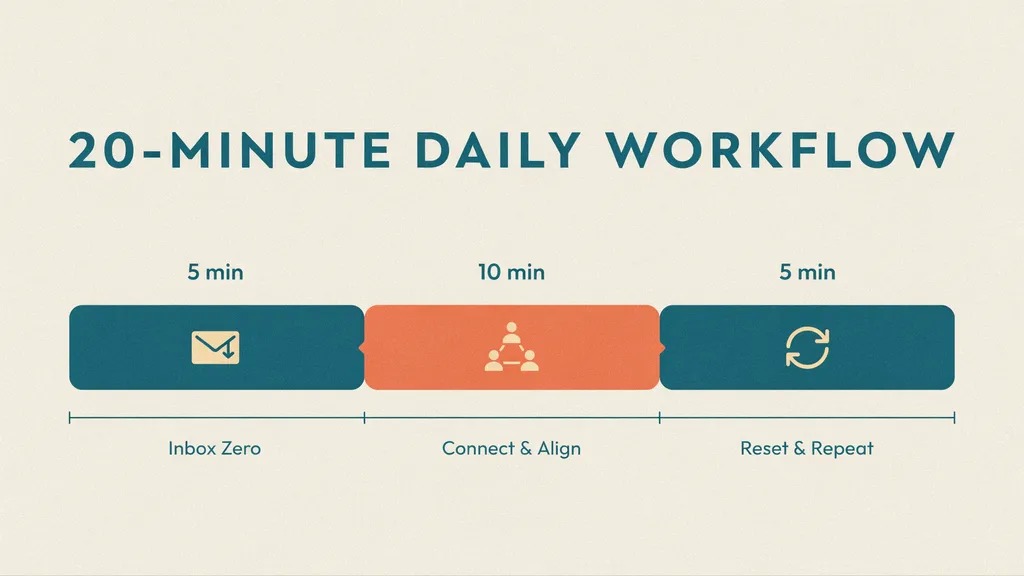
After completing the five zones, you have a spreadsheet full of posts with performance data. Now you need to make decisions. Every post in your review window gets exactly one verdict: keep, kill, or refresh. No post gets a maybe. If you cannot decide, default to kill. Indecision is what clutters content calendars and dilutes focus.
Keep means the post performed well and the format or topic is worth repeating. A keep post earned above-average engagement for its pillar, generated replies or saves, and aligns with the content direction you want to pursue. Action: add the format, topic, or hook structure to your repeat list. Next month, make a variation of this post with a different specific example or angle.
Kill means the post underperformed and the format or topic is not worth revisiting. A kill post earned below-average engagement, generated no replies, and does not align with the pillars that performed well for you. Action: remove this format or topic from your rotation. If it was a one-off experiment, note that it did not work and move on. If it was part of a recurring pillar, check whether the pillar itself underperformed across all posts before retiring it entirely.
Refresh means the post had potential but missed execution. Maybe the topic was strong but the hook was weak. Maybe the format was right but the post was too long. Maybe the idea was good but it needed a concrete example to land. Action: identify the specific weakness, note the fix, and schedule a revised version. A refresh is not a rewrite. It is a targeted improvement to one element of the post while keeping what worked. The evergreen content lifecycle guide walks through a structured refresh cycle for posts worth revisiting over time, and your content repurposing system can turn refreshed posts into new formats.
Auditing too many posts at once: anything beyond sixty creates decision paralysis. Break longer periods into quarterly chunks.
Treating total engagement as the only signal: viral outliers skew averages. Weight reply quality and saves alongside raw numbers.
Running the audit but skipping the action step: insights that never reach your calendar change nothing. Write three specific changes before closing the document.
Killing a content pillar based on fewer than five posts: give every theme enough samples to prove itself before retiring it.
Spending too long on profile setup: bio and branding checks should take five minutes, not fifty. The real value is in content performance.
From Audit to Action: Rebuilding Your Next Thirty Days
The audit is worthless if it does not change what you make next. After sorting your posts into keep, kill, and refresh, you should have three lists. The keep list tells you what to repeat. The kill list tells you what to stop. The refresh list tells you what to rework. Now translate those lists into a concrete plan.
Start by examining your keep list for patterns. If your top five posts were all behind-the-scenes stories, your next month should include more behind-the-scenes content. If your best-performing format was short text posts with a question at the end, build that structure into your weekly rotation. The keep list is your evidence-based content direction. Trust it over your assumptions about what your audience wants.
Next, look at your kill list. If an entire content pillar underperformed, you have a decision to make. You can retire it, restructure it, or replace it. Retiring means removing it from your rotation entirely. Restructuring means changing the format, angle, or depth while keeping the topic. Replacing means substituting a new pillar that better serves your audience. Do not kill a pillar based on fewer than five posts. Give every theme enough samples to prove itself before cutting it.
Your refresh list feeds directly into your content calendar. Each refreshed post is a ready-made piece of content for next month. If you have eight posts on the refresh list, you have eight posts ready to schedule after revision. Pair them with new variations of your keep-list formats guided by your social media content strategy, and your calendar fills itself. This is where the audit connects to your production system: the content batching workflow turns audit insights into scheduled posts without starting from a blank page, and the Free Threads Post Creator can draft your next post from a keep-list format in seconds.
Thread-Specific Audit Considerations
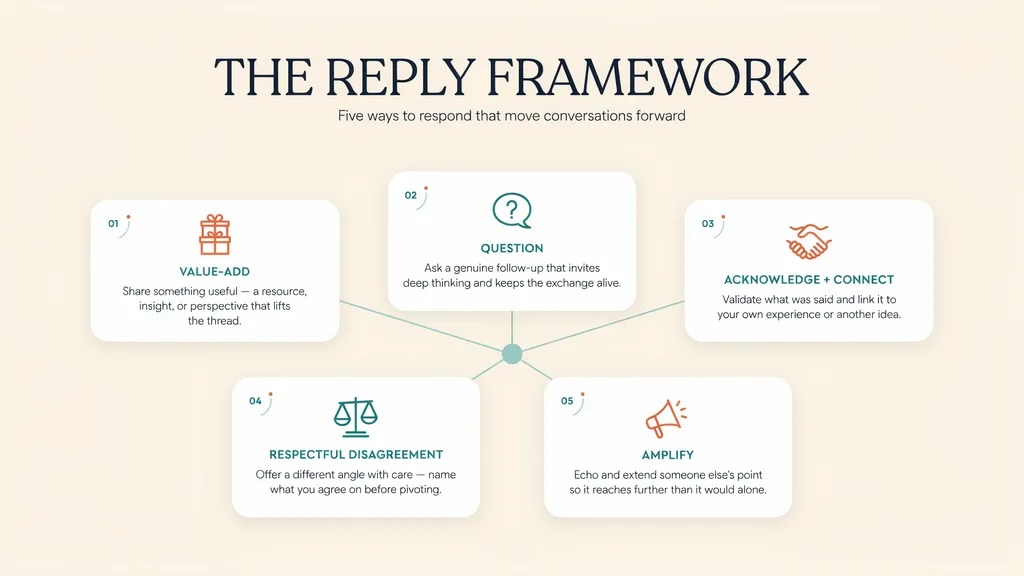
Threads rewards a specific type of content that most multi-platform audits do not account for. Because Threads is text-first and conversation-driven, the metrics that matter are different than on Instagram or TikTok. A Threads audit should weight replies heavily, because replies are the signal that your content sparked conversation. On Threads, replies account for a significant portion of total views, which means a post with twenty replies may have reached far more people than its like count suggests.
When auditing Threads content specifically, look at three patterns that the platform rewards. First, question-driven posts that invite direct responses tend to earn more replies than statements. Second, posts that take a clear position, even a mildly controversial one, generate more conversation than neutral observations. Third, posts that reply to other creators' threads build visibility through the reply thread itself, which is central to how the Threads algorithm works. Data from Buffer's Threads engagement study supports this, and the reply-first growth strategy breaks this down into a daily workflow if you want to build a systematic approach to Threads engagement.
Also audit your use of topic tags. Threads allows one topic tag per post, and it functions differently from hashtags on other platforms. Check whether your tagged posts outperform your untagged ones. If you cannot find a pattern, tags may not be moving the needle for your content, and you should spend that energy on stronger hooks instead.
Common Mistakes That Derail Content Audits
The most common mistake is auditing too much content at once. Pulling a full year of posts into a spreadsheet sounds thorough, but it produces decision paralysis. Sixty posts is the maximum useful sample for a single audit session. Beyond that, patterns blur and fatigue sets in. If you want to analyze a longer period, break it into quarterly audits and compare the results.
Another frequent error is treating total engagement as the only metric that matters. Total engagement rewards viral outliers and penalizes consistent performers. A post that earned three hundred likes because it got picked up by the algorithm tells you less than a post that earned fifteen thoughtful replies from your actual audience. Weight engagement quality alongside quantity, especially on conversation-driven platforms like Threads.
Many creators also skip the action step. They complete the audit, generate insights, and then go back to the same social media workflow they always ran. The audit changes nothing because the findings never reached the production calendar. Force yourself to write three specific changes you will make next month before closing the audit document. If you cannot name three changes, the audit was not deep enough.
Finally, avoid the perfection trap. Your audit does not need statistical significance. It needs to be good enough to spot obvious patterns and make better decisions than you would make by guessing. A rough audit that leads to action beats a meticulous audit that lives in a spreadsheet forever.
Action checklist
Use this as the practical next pass after reading the guide.
- +Pull your last 30 to 60 posts into a spreadsheet with type, topic, length, time posted, and engagement metrics.
- +Spend five minutes on profile positioning: bio clarity, featured post quality, and mobile link check.
- +Group posts by content pillar and calculate average engagement per pillar.
- +Identify format and timing patterns that hold across at least five posts, then sort top posts by reply count.
- +Give every post a verdict: keep, kill, or refresh. No maybes allowed.
- +Write three specific content changes for next month before closing the audit.

Conclusion
A social media audit done right is not a housekeeping exercise. It is a diagnostic tool that tells you what to make more of, what to stop making, and what deserves a second chance. The five-zone framework gives you a structured way to review content performance without getting lost in profile administration.
The hardest part is not running the audit. It is acting on what you find. An audit that changes your content calendar has done its job. An audit that sits in a spreadsheet has wasted ninety minutes. Before you close the document, commit to three concrete changes and put them on your calendar this week.
Run the audit quarterly if you publish a few times a week, or monthly if you publish daily. The more frequently you audit, the faster your content improves, because each cycle gives you sharper signal about what your audience actually values.