What this guide is really about
The Threads algorithm is not a mystery box. Meta's Transparency Center documentation says the For You feed is ranked by an AI system that predicts, for every post, what each person is likely to do: like it, reply to it, tap it, visit the author's profile, or keep scrolling. Those predictions decide your reach.
Most guides recycling 2024 advice miss what changed. In February 2026, Threads launched Dear Algo, which lets users publicly tell the system what they want more or less of. In June 2026, Adam Mosseri announced Your Algorithm, which lets people see and edit the topics the system associates with them. The underlying ranking still runs on the same documented predictions.
This guide covers what Meta actually documents, maps each signal to a concrete action you can take this week, and corrects the myths that waste your time. No engagement multipliers, no viral guarantees, no recycled hacks.
Threads ranks the For You feed with an AI system, not a fixed formula. The system gathers eligible posts, reads engagement signals, then ranks by predicted value. The predictions Meta documents include whether someone will like a post, reply to it, click it, click the author's profile, or scroll past. The Following feed stays chronological. You influence For You reach by earning replies and clicks and opening with...
Understand the predictions Meta actually documents
Map each ranking signal to an action you can take this week
Learn how Dear Algo and Your Algorithm change the picture in 2026
Skip the myths and hacks that waste your time
The For You feed is ranked by an AI system built on predictions Meta documents, including like, reply, click a post, click the author's profile, and scroll past.
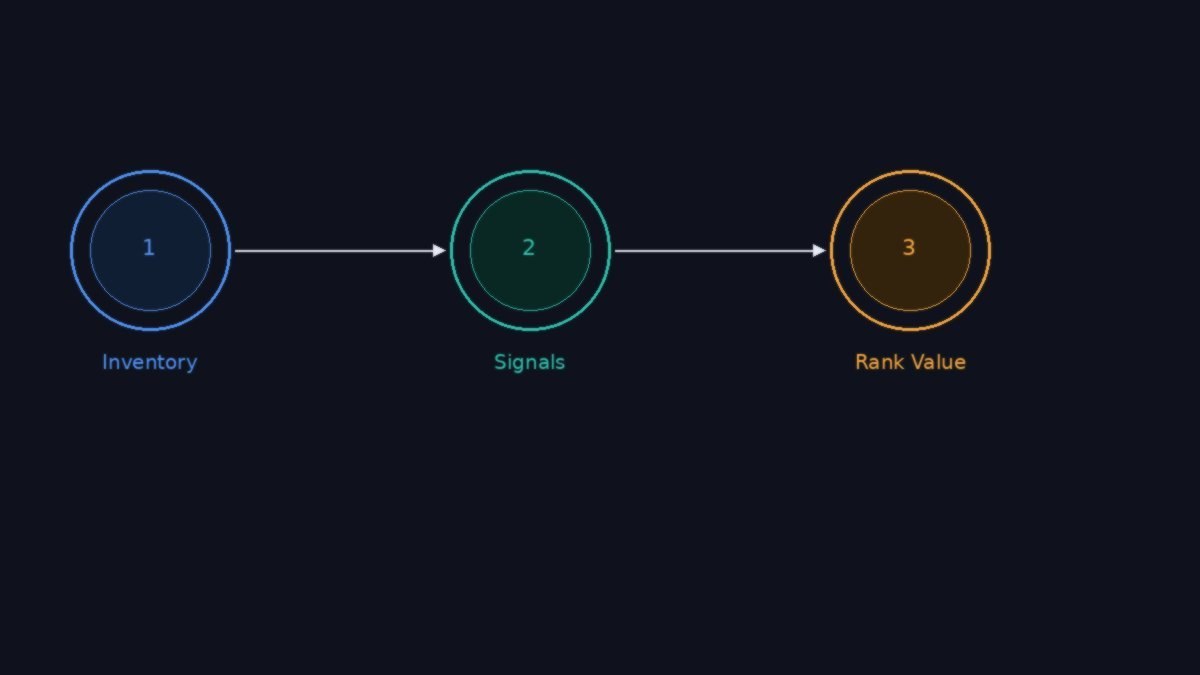
Ranking runs in three steps: gather eligible inventory, analyze engagement signals, then order by predicted value for each viewer.
Dear Algo (February 2026) lets users tune their feed for three days. Your Algorithm (June 2026) lets them see and edit the topics associated with them.
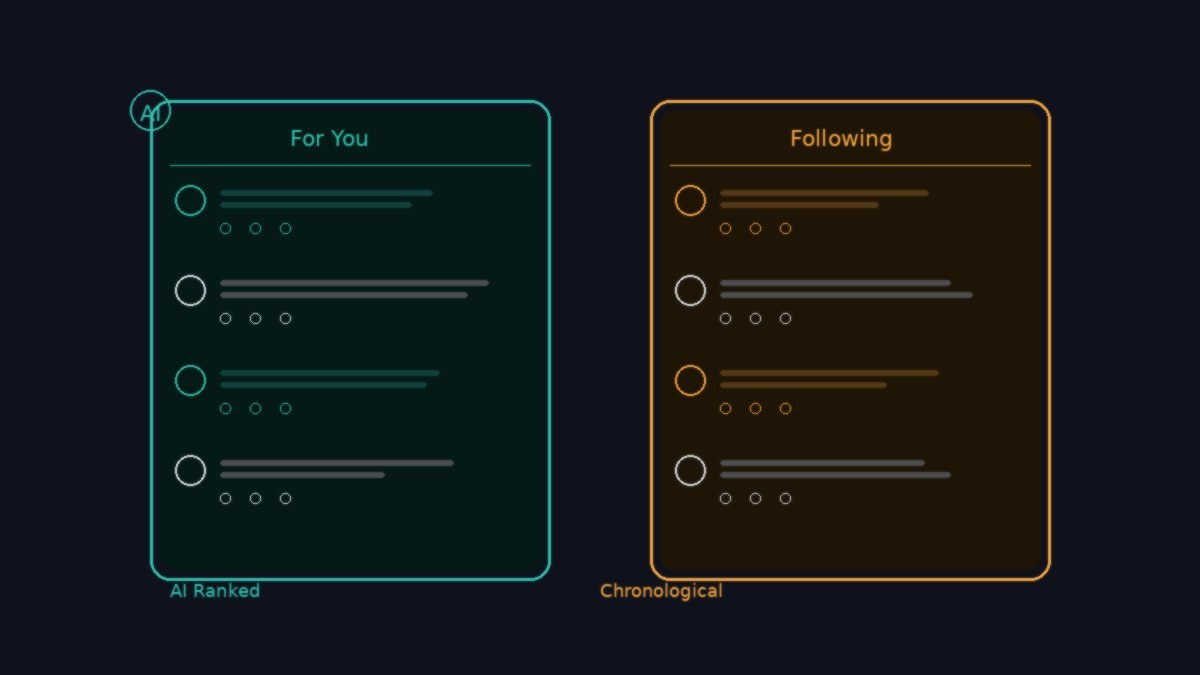
The Following feed stays purely chronological. The AI system only affects For You, which is where new readers discover you.
No documented rule suppresses links or rewards magic posting hours. Consistent, reply-earning content in one niche is what compounds.
The Predictions That Decide Your Reach
Meta's Transparency Center describes the Threads feed as an AI system that determines what shows up and in what order by predicting what you are most likely to engage with. It publishes a set of significant predictions, including how likely you are to like a post, create a reply, click a post, click the author's profile, and scroll past rather than engage. If you understand those, you understand what the system optimizes for.
Each prediction is informed by input signals Meta lists, and nearly all of them are Threads engagement: what the viewer liked recently, engagement on a post's replies, profile taps, and time spent viewing. There are no published weights. Anyone selling an exact factor list or a secret ratio is guessing.
One prediction works against you. Scroll past is the guess that this person will see the post and keep moving, so your first line has to earn a pause. Meta's own input signals for that prediction track how long people spend viewing posts, which makes the opening line the cheapest ranking lever you control.
The documented signals are more granular than most guides admit. Meta lists predictions for how much time you spend viewing a post and its permalink page, and for whether you will click a post and then click another. For replies, the input signals include engagement on replies to replies within the past hour and past six hours. In practice that means a thread that keeps generating responses keeps feeding the system, which is why working your replies matters more than the raw reply count on the original post.
Three Steps: How Threads Ranks Every Post
Before anything reaches a feed, the system runs three steps. First, gather inventory: it collects a portion of public content on Threads plus everything posted by accounts you follow, limited to posts that follow quality and integrity rules. Staying inside those rules matters more than any timing trick, because ineligible posts never compete for For You placement.
Second, leverage signals: the AI considers input signals about the content, such as how you have engaged with similar accounts, what content you interact with, and your interests. Third, rank content: posts the system predicts will provide more value to you are shown higher in your feed.
Meta describes this as an AI system in which multiple machine learning models work together, and says the models and their input signals change frequently as the system learns. A formula can be gamed. A learning system adapts, so single hacks stop working while consistent engagement signals keep compounding.
The same documentation describes the controls viewers have inside the feed: hide a post, mute an account, report spam or false information, or switch to Following for a purely chronological view. Reporting teaches the system to show less similar content, and hides remove a post from that person's feed entirely. That is worth remembering before you post something divisive for reach, because the audience it alienates can quietly tune you out.
Dear Algo and Your Algorithm: The 2026 Feed Controls
Two features rolled out in 2026 hand users a measure of control over their own feeds, and creators should understand both. Dear Algo launched in February 2026 in the US, UK, Australia, and New Zealand. You type Dear Algo in a public post describing what you want to see more or less of, and the system adjusts your feed for three days. Reposting someone else's Dear Algo request applies their preferences to your feed too.
In June 2026, Adam Mosseri announced that topic controls were expanding from Instagram across the Threads experience. Your Algorithm shows you the topics the system associates with you and lets you change them. TechCrunch covered Instagram-side testing of those controls around the same time.
Neither feature rewrites ranking. They make expressed user intent a stronger input, which raises the value of niche consistency when someone asks to see more of your topic.
Chasing a single viral hack instead of building consistent engagement signals over time
Posting across five unrelated niches so the system cannot confidently predict your audience
Ignoring replies after you post, so the thread never turns into something people will open
Treating the Following feed and the For You feed as the same thing
Believing engagement pods or reciprocal liking will fool a system designed to detect coordinated behavior
Turn Each Prediction Into an Action This Week
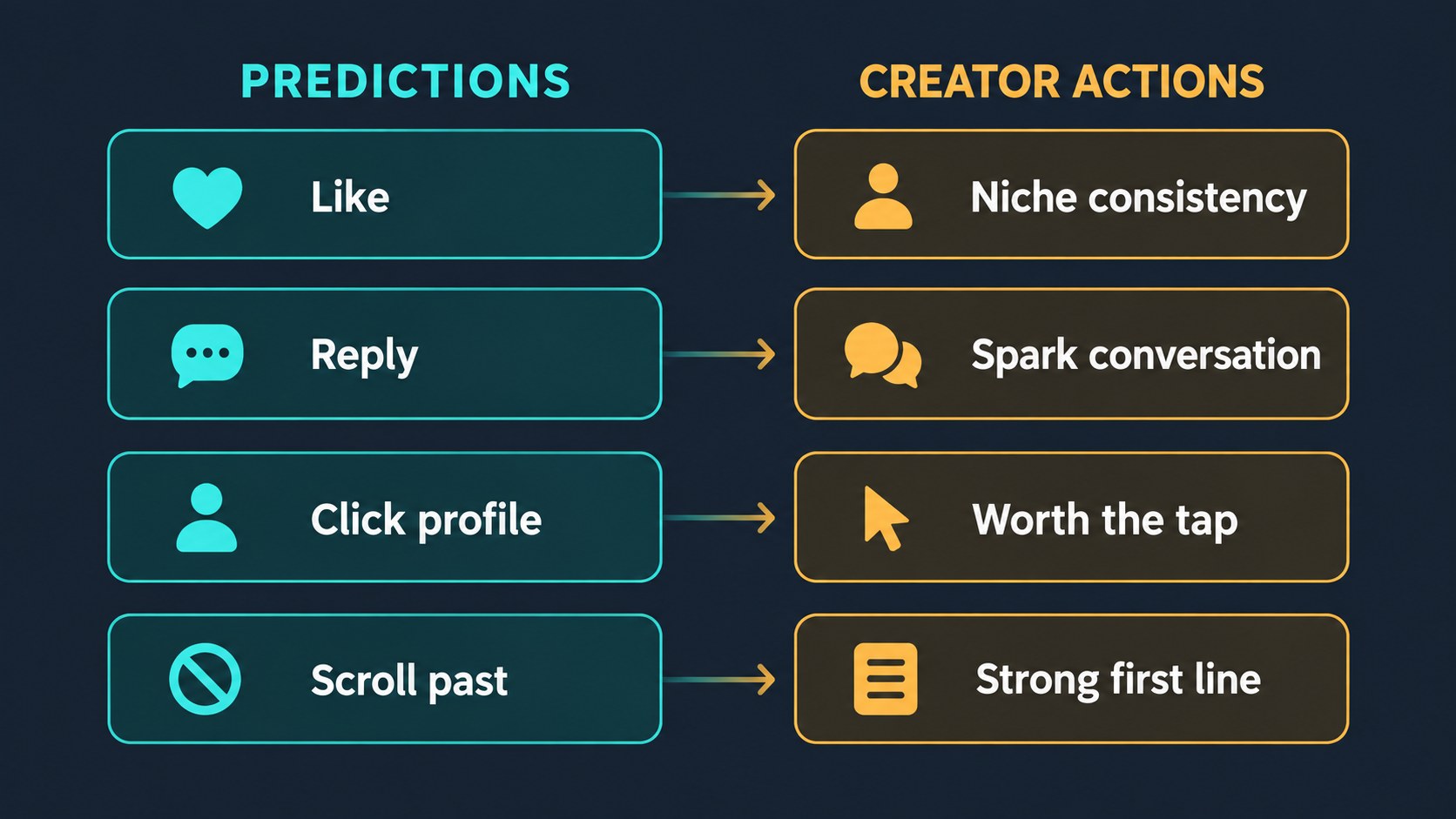
Knowing the predictions is trivia. Mapping them to actions is growth. For likes, commit to a defined set of topics so people who already engage with similar content keep seeing you, since the system reads recent engagement with similar accounts. For replies, write posts that invite a response, then work the thread using the same discipline as the 20-minute reply routine in our replies guide.
For post and profile clicks, make the tap worth it: reference a framework you use or a resource in your bio, and keep your profile clear enough that a visit can turn into a follow. For scroll pasts, draft the first line before the rest of the post and test three opening styles this week.
If you want a structured way to practice, draft a reply-inviting post in the Free Threads Post Creator, then measure what actually changes in your own account instead of following universal rules.
What the Algorithm Does Not Reward
Myth one: Threads suppresses links. No Meta documentation states that links are penalized in ranking. Some third-party analysts suggest link posts underperform because people hesitate to leave the app, but that is reader behavior, not a rule. If a link serves the reader, include it. And when reach quietly drops, check eligibility, audience fatigue, and viewers hiding or reporting your posts before assuming a shadowban, because those are the causes you can actually verify.
Myth two: magic posting hours. Universal best times fail because your audience has its own activity pattern, and testing your own posting times over a few weeks beats any generic hour list. Myth three: more posts always mean more reach. The system scores each post on predicted value, so the honest answer to posting volume is that ten low-value posts lose to one that earns real replies.
Myth four: engagement pods and reciprocal liking. A system built to detect coordinated inauthentic behavior is exactly the wrong thing to try to fool, and artificial engagement never produces the organic signals the predictions actually read.
For You vs Following: Where Growth Happens
The For You feed is ranked by the AI system. The Following feed is purely chronological, showing posts only from accounts you follow in reverse order, with no recommended content. New readers discover you in For You, and that is where the predictions matter most.
This split shapes strategy. Writing only for existing followers caps you at the chronological feed. Earning replies, profile clicks, and clear topic signals puts you in front of people who have never heard of you. Add one relevant topic tag per post as a label, which is exactly how the one-topic-tag system works on Threads.
You can see which side of that split is working. Threads insights break down views, interactions, and audience for recent posts, so check whether your impressions come from followers or non-followers before changing strategy. If almost nobody outside your follower circle sees you, the ranking signals, not your posting schedule, are the thing to work on. The walkthrough of your Threads insights shows exactly which numbers matter for growth and which ones are just vanity metrics to ignore.
Action checklist
Use this as the practical next pass after reading the guide.
- +Write down your top three content topics and commit to them for the next month
- +Craft your first sentence as a hook before writing the rest of any post
- +Reply to comments while the thread is still active
- +Update your bio so profile clicks can turn into follows
- +Test three different opening line styles this week and track which earns more replies
- +Use one relevant topic tag per post as a label, not a reach hack
Conclusion
The Threads ranking system is not a black box you need to trick. Meta documents how it works: a three-step process, a published set of predictions, and feed controls that keep giving users more say. The creators who grow are the ones whose posts consistently earn replies, clicks, and pauses instead of scroll pasts.
Pick the prediction you are weakest on and work it for a week. The system learns from what your readers do, and so can you.