
What this guide is really about
Every follower count on a social platform is a loan, not an asset. The platform owns the relationship, the delivery system, and the rules, and it can change any of the three without asking you. That is not a reason to quit social media. It is a reason to build an audience you can still reach if the terms move against you.
This guide gives you a practical system: an audit that sorts your channels into rented, leveraged, and owned; an export habit that protects your work; and a conversion routine that turns social reach into email signups without turning your feed into a billboard. Everything here works with free tools and a few focused minutes each week.
An owned audience is one you can reach without a platform's permission, usually a consented email list. Social followers are rented because reach depends on algorithms, API terms, and account standing you don't control. Audit your channels, export content quarterly, and give every profile one clear path to an owned signup. Keep posting where discovery happens; stop treating it as the only place your audience lives.
Sort every channel you use into rented, leveraged, and owned
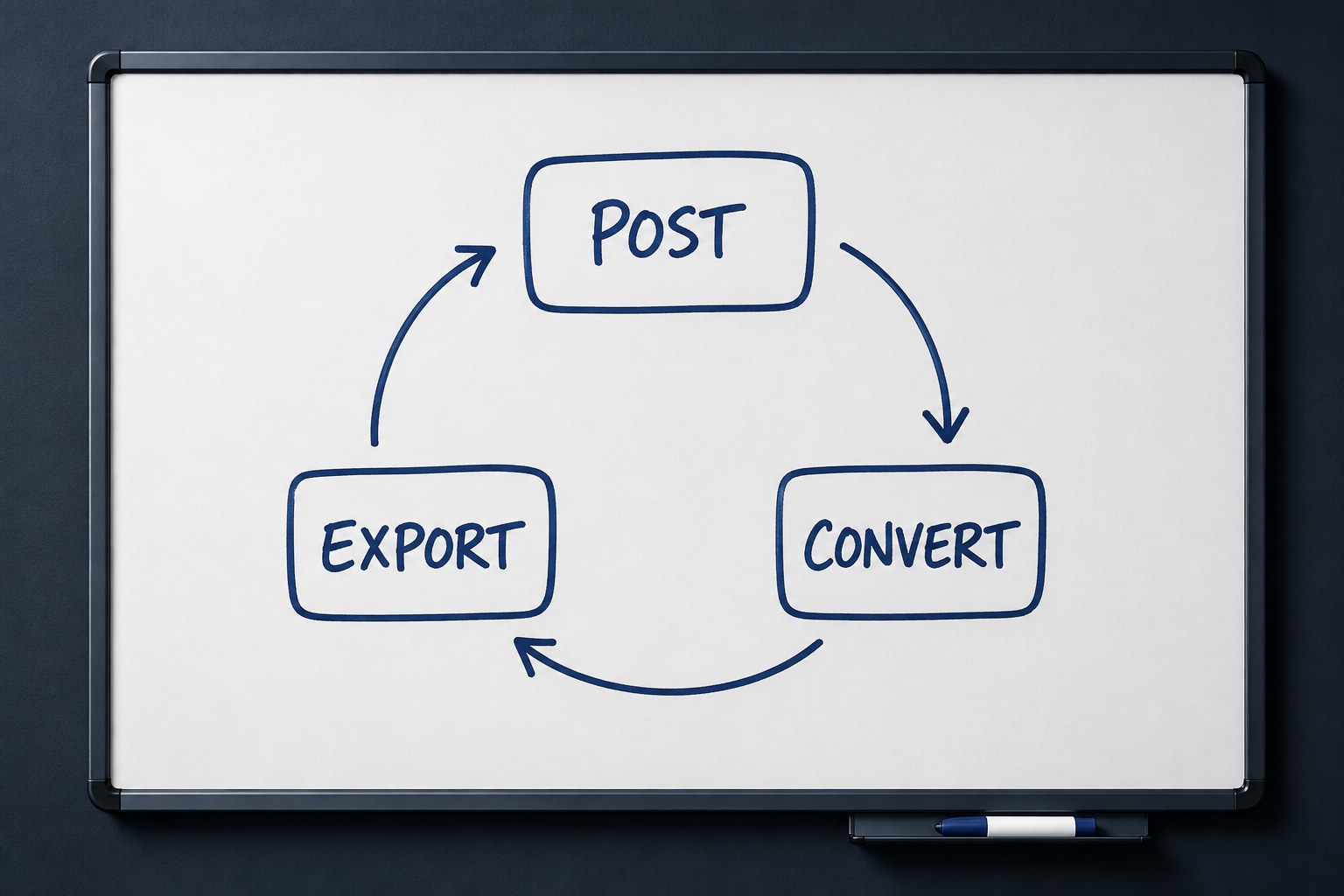
Run a quarterly export routine that protects your archive
Convert social reach into email signups without spamming your feed
Know the warning signs that say it is time to change platforms
Followers are rented reach; an owned audience is contact info plus permission you control.
Audit channels with three questions: can you export the list, what survives deletion, who controls delivery.
Export content quarterly, but remember platforms never export follower contacts.
Convert with one clear, specific signup path instead of a link in every post.
Decide migrations with written triggers and evidence, not news-cycle panic.
Why Follower Counts Are Rented, Not Owned
An owned audience answers one question: if every platform locked your account tomorrow, could you still reach the people who care about your work? If the answer is no, your audience is rented. Rented reach is still valuable. Platforms like Threads are discovery engines that put your writing in front of strangers every day. The problem is not that rented reach exists. The problem is treating it as permanent.
Platforms change terms on their own schedule. X ended free access to its API in 2023 and introduced paid tiers starting at $100 per month, then later it pulled likes and follows from the free tier entirely. Threads caps automated publishing at 250 API-published posts per 24 hours per profile. None of these changes deleted anyone's account. All of them rearranged what creators and their tools could rely on, which is exactly the risk.
The healthy response is boring and effective: know which channels you control, keep a current backup of your work, and slowly build a direct line to your readers. The rest of this guide walks through each piece in order.
The Channel Ownership Audit: Rented, Leveraged, Owned
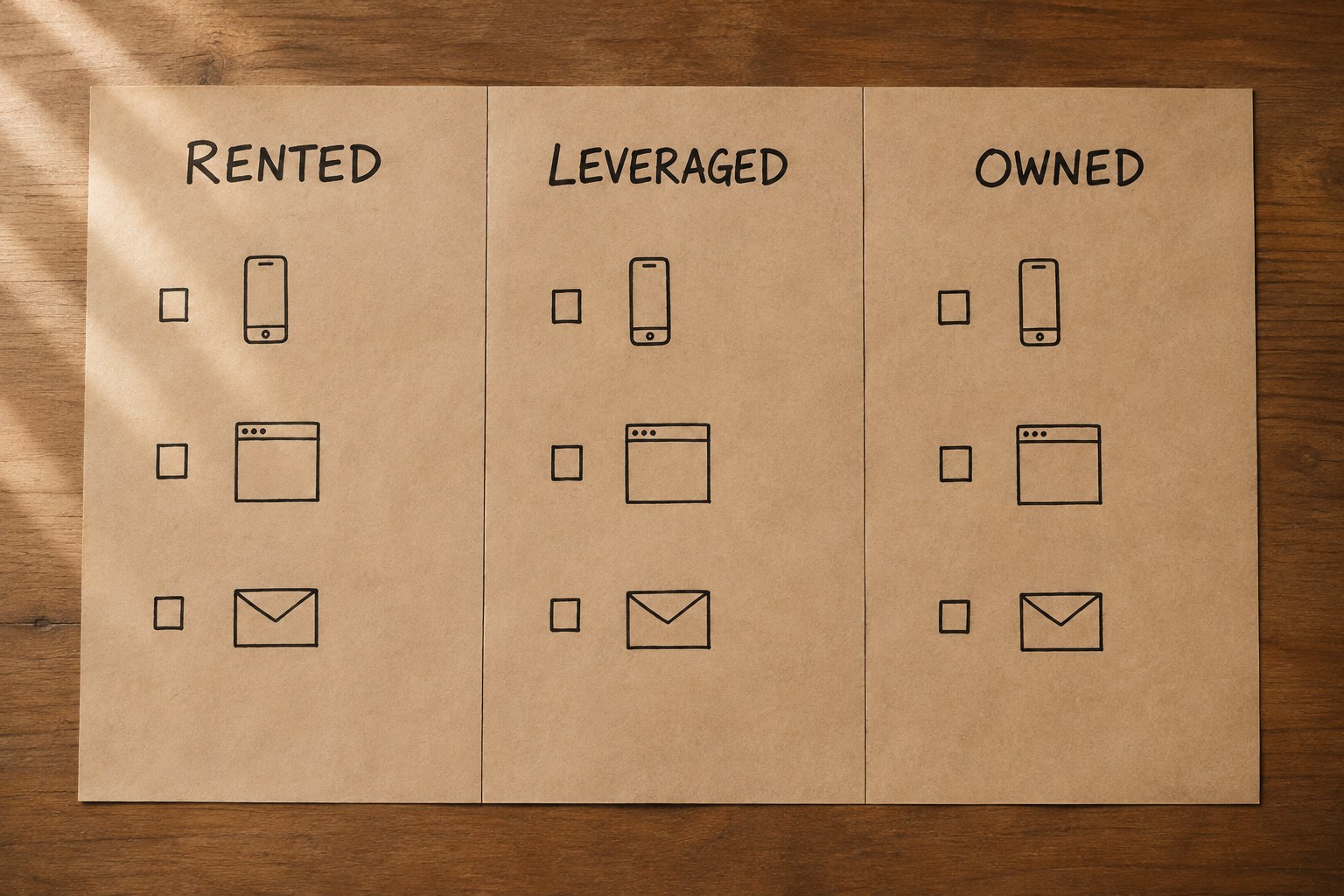
Map every channel you use into three buckets. Rented channels are accounts on platforms you don't control: Threads, X, Instagram, TikTok, LinkedIn. Leveraged channels sit in the middle: your blog on your own domain, your podcast feed, a community you host but that runs on someone else's software. Owned channels are contact lists you hold and can reach directly: email, SMS, and past customer records.
Then run three questions per channel. Can you export the subscriber list itself, not just your own content? If the account vanished tomorrow, what would survive? Who ultimately controls whether your message gets delivered? A social profile fails all three. Your blog passes two. An email list passes all three, which is why it remains the default owned asset.
If you have run a social media audit before, this will feel familiar. The difference is that you are grading ownership and recoverability instead of performance. Performance tells you what to post. Ownership tells you what would survive a bad quarter, a policy strike, or a pricing change on some API you have never thought about.
Your Export and Backup Protocol
Set a recurring calendar reminder to export your content every quarter. On Threads, you can export a copy of your Threads information through Accounts Center, including your posts, profile data, and settings, delivered as a downloadable archive. The equivalent exists on every major platform. The archive protects your writing, not your reach, and that distinction matters.
Here is the part most creators learn too late: no platform exports your followers' contact details. You can take your posts with you. You cannot take the people. That single fact is the entire argument for the conversion work in the next section, because the only way to make an audience portable is to collect permission before you need it.
Store exports somewhere boring and durable: an encrypted drive you control plus one cloud backup. When you set up landing pages or signup links, tag them so you know where signups came from. A simple UTM tracking habit shows you which rented channel actually feeds your owned list, so your conversion effort goes where it works.
Counting followers as assets: follower counts measure platform reach, not ownership. Track them as performance metrics and track owned contacts separately.
Exporting once and never testing: an archive you have never opened is a hope, not a backup. Spot-check each quarterly export.
A signup link in every post: constant asks train readers to skim. One conversion-aware touch per week outperforms a feed of links.
Buying an email list: purchased lists hurt deliverability and violate the permission logic that makes email valuable.
Announcing an exodus you do not complete: half-migrations split your audience and your data. Decide with triggers, not temper.
Email Is the Default Owned Asset, and It Comes with Rules
Email earns its default status for one reason: you hold the list and the delivery decision. Newsletters also force a quality check, because people unsubscribe from boring email faster than they unfollow a quiet account. If you have been putting off starting a list because it feels like another channel to feed, start with a promise you can keep, like one useful message per month.
Owning the channel does not mean operating without rules. If your messages are commercial and you send them to a US audience, the CAN-SPAM Act applies: identify yourself honestly, avoid deceptive subject lines, include a working opt-out mechanism, and honor opt-out requests promptly. Permission-based lists you built yourself make all of this straightforward.
Never buy or rent an email list to skip the slow part. Purchased lists convert terribly, damage deliverability for every future send, and sit on the wrong side of the permission line. The slow way, collecting real signups from real readers, is the only version of this asset that actually pays out.
Converting Rented Reach Without Wrecking Your Feed
Conversion works when it is rare, specific, and easy. Rare means you are not appending a signup link to every post; a feed that is mostly asks stops earning attention. Specific means each invitation names what someone gets, like a weekly teardown or a template pack, rather than a generic invitation to join your newsletter. Easy means one click from profile or pinned post to a page with a single form.
Your Threads profile is the highest-leverage placement because it is the one place every visitor sees. Use the profile links for your signup page, and keep a pinned post that explains the newsletter in one paragraph. If drafting that pinned post is the blocker, the Free Threads Post Creator can help you shape and preview it before it goes live.
From there, one conversion-aware post per week is plenty for most solo creators. If you sell services rather than a newsletter, the same structure applies to lead capture, and the guide on how to generate leads on Threads without spamming anyone covers the etiquette in depth. When your weekly post also travels to other networks, adapt it per platform rather than cloning it, which is where a cross-posting framework keeps your voice intact.
Migration Triggers: When Risk Becomes Action
Most platform risk never materializes, so the goal is a prepared mind, not a packed bag. Still, name your triggers in advance, because decisions made during a panic are expensive. Reasonable triggers include a pricing or API change that breaks a tool your workflow depends on, a sustained reach collapse that persists after you have ruled out your own content quality, a policy strike or suspension with no clear appeal path, or a platform decision that conflicts with how you need to work.
When a trigger fires, strengthen the owned side before you touch the rented side. Increase conversion placements, email your list about where to find you, and update your most important profiles. If you do decide to relocate, a migration checklist beats an impulsive exodus; the version we published for Twitter users moving to Threads walks through followers, content, and habit transfer in order.
What you should not do is announce a departure in the heat of a bad news cycle and then quietly remain. Half-migrations confuse readers, split your analytics, and cost you the compounding that both sides would have offered.
A Weekly Routine That Keeps the Balance Honest
Platform risk work compounds when it is small and regular. A workable weekly loop: keep posting and replying where your readers are, ship one conversion-aware touch like a pinned-post refresh or a signup mention, and glance at signup sources. Once a quarter, run the export, re-run the ownership audit, and note your owned-audience ratio, meaning the share of people you could still reach without any social platform. Fold the loop into your broader social media workflow so it runs on the same day each week.
Measurement keeps this from becoming superstition. Three reports in Google Analytics show you how social traffic actually behaves once it lands, and when you layer signup sources on top, you learn which platform sends readers who stay. Feed those observations back into where you spend conversion effort.
None of this requires leaving a platform you enjoy. The point of owning your audience is that the choice stays yours. Creators who hold a real list negotiate from a different position: they can ride algorithm changes, test new networks, and take a break without starting over. That is the whole reward, and a modest weekly routine is the entire cost.
Action checklist
Use this as the practical next pass after reading the guide.
- +List every channel you use and mark it rented, leveraged, or owned
- +Run the three audit questions per channel: export, survive, deliver
- +Request your Threads data export and store the archive in two places
- +Add one signup path to your profile and write a pinned post that explains it
- +Set a quarterly reminder for exports and a monthly owned-audience ratio check
- +Write down your migration triggers so future you decides with evidence

Conclusion
Platform risk is not a doom story; it is a bookkeeping problem. Sort your channels, keep a current archive, and give every rented audience one honest path to something you control. The work is small, weekly, and cumulative.
Start with the audit and a single export request today. The first signup that arrives through your own link is the moment the balance starts shifting in your favor.