What this guide is really about
Plenty of guides promise that becoming a UGC creator takes one weekend and pays rent by month two. The real version is simpler and less glamorous: you build a small portfolio, you price your work using real market data, and you pitch brands until someone says yes. That is a business you can actually start with a phone and no followers.
This guide skips the hype and lays out the whole path: what brands are paying for, how current marketplace rate guides frame pay, how to build a three-ad portfolio in fourteen days, and how to run a thirty-day pitch system aimed at early paid work.
A UGC creator makes content brands use in their own ads and channels, and you do not need followers to start. Pick one niche, film three spec ads for products you already own, put them on a simple portfolio page, set rates from published marketplace benchmarks, then pitch small brands directly while applying to creator marketplaces. Treat the first month as portfolio and outreach practice, not a guaranteed payday.
UGC creators sell content, not audience reach. Followers are optional, which is what makes the lane open to beginners.
Marketplace pricing guides for 2026 put typical video pay around $150 to $300 per deliverable, and usage rights move the price more than editing polish does.
A three-ad portfolio in one niche beats a scattered twelve-ad reel, because brands buy specialists.
A list of 30 small brands for direct pitching gives you a controllable outreach pipeline instead of only waiting on crowded marketplace briefs.
Text-first UGC is a quieter, less crowded lane for writers, and your own Threads account can double as a writing portfolio.
What a UGC Creator Actually Does
A UGC creator produces content that a brand uses on its own channels. You film a short ad, a demo, or an unboxing, and the brand publishes it on its product page, its TikTok account, or its paid campaigns. The brand is buying the content itself, not access to your audience.
That is the core difference from influencer work. An influencer gets paid to post to their followers. A UGC creator gets paid to hand over a file. This is why follower count often matters far less in this lane than sample quality, niche fit, and turnaround.
Brands buy this content because native-looking creative often blends into the scroll better than polished studio ads. A phone-camera review shot in a kitchen can feel closer to a peer recommendation. Small brands especially need volume: constant fresh creative to test, without agency-level production budgets on every asset.
If you sit on the other side of this transaction and want brands coming to you, our user generated content strategy guide covers how to invite, permission, disclose, and organize UGC as a business. Understanding that side makes you a better pitch writer, too.
The Honest Reality Check Before You Start
This is a production business. You are a freelance videographer who works in your own kitchen. That means uneven income, real competition, and editing that often takes longer than filming. Anyone who tells you it is passive income has probably never delivered multiple revision rounds on a 30-second video.
The money is real, but the ranges are wide. Creator marketplace Influee's 2026 UGC pricing guide says creators typically earn about $150 to $300 per video, with the average single video falling between $150 and $212, while usage rights and licensing push totals higher. inBeat's guide to UGC rates in 2026 reports the same $150 to $212 average band and suggests $150 as a realistic starting point for a single video from a newer creator. Treat those figures as market context, not a forecast for your first deal.
Also expect the unpaid phase. Your first weeks are often spec work, applications, and pitches that get read and ignored. A practical edge is still pitching in week four, not owning the best camera. If you want a side income that starts paying this month, this is a weak fit. If you want a skill-based business you can build slowly around a job, it can be.
Build Your First Portfolio: Three Spec Ads in Fourteen Days
A spec ad is a sample you were not hired to make. You pick a product you already own, film a short ad for it, and label it as a demonstration piece. Spec work is how every UGC creator with zero clients proves they can do the job, and it costs nothing but time.
Days 1 and 2, choose one niche and three products in it. One niche matters more than almost anything else in your portfolio. A brand selling skincare wants to see skincare ads, not one skincare ad next to a protein powder ad and a gadget review. Good starter niches have products with visible before-and-after results or everyday use: skincare, coffee gear, kitchen tools, fitness accessories, pet supplies.
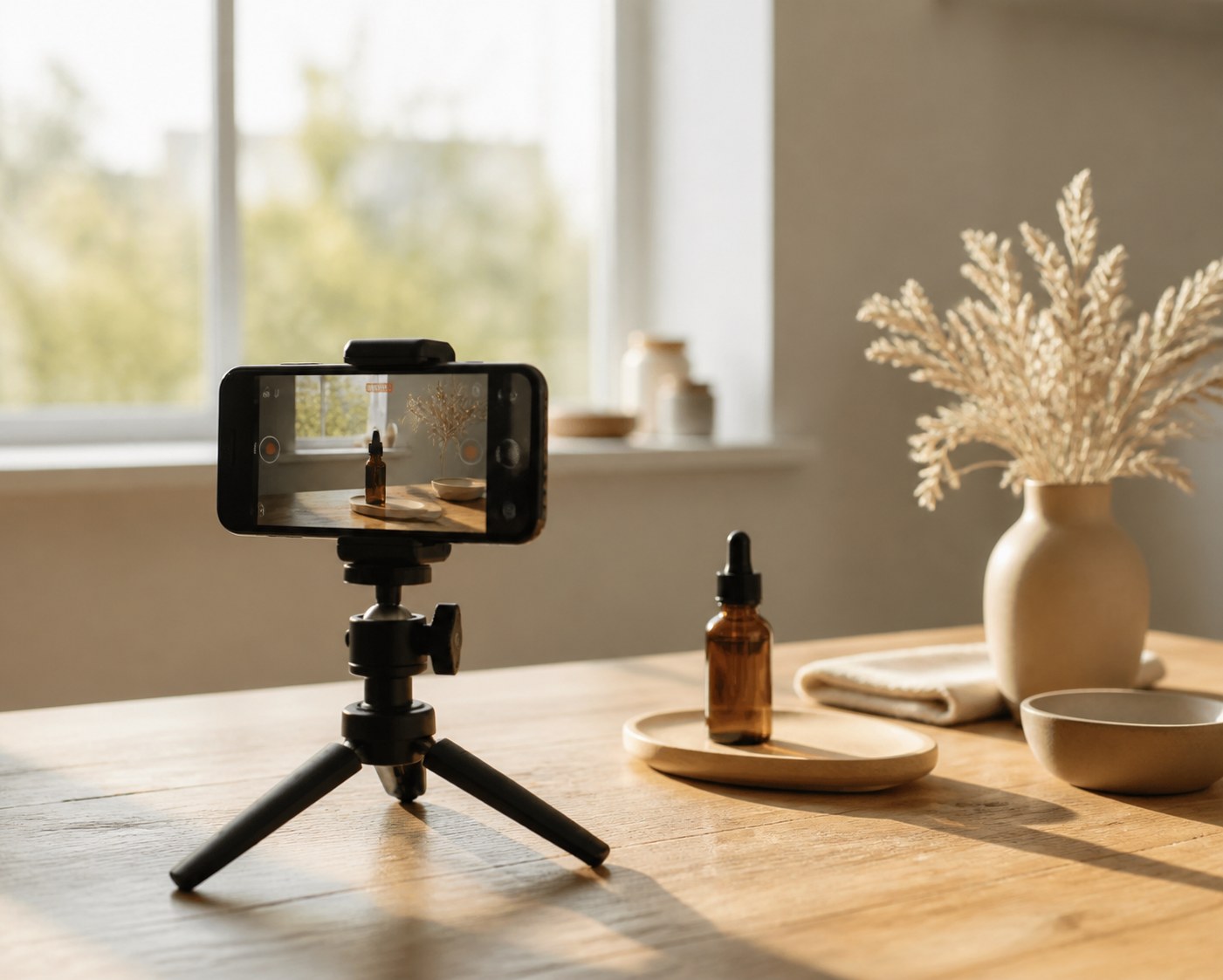
Days 3 through 10, film one 30-second ad per product using three proven structures: a problem-and-solution spot, a first-impression review, and a three-reasons-I-use-this list. Shoot near a window in daylight, prop the phone on anything stable, and keep each take under 45 seconds so editing stays manageable.
Days 11 through 14, edit and publish. CapCut's free tier covers everything a beginner needs. Add captions, trim the dead air, and export in 9:16. Post the three ads on a dedicated TikTok or Instagram account and on a single portfolio page that lists your niche, your formats, and an email address. Mark each piece as a spec ad in the caption so nobody mistakes it for a paid endorsement. Three finished ads in one niche is a portfolio. Twelve half-finished ones is a graveyard.
Quoting prices based on follower count. Brands pay for the content and its usage, not your reach.
Delivering files with no written usage terms. Unsigned scope means the brand can run your video in paid ads forever at organic prices.
Building a portfolio scattered across six niches. Brands hire specialists; three ads in one niche outsells twelve everywhere.
Sending template pitches that name no product. Generic outreach reads as automated and gets deleted unread.
Waiting on marketplace briefs instead of pitching directly, then quitting in week three before the numbers catch up.
Rates and Usage Rights: What to Charge
Price the deliverable, not your follower count. Published guides cluster standard videos around roughly $150 to $300 before add-ons; beginners often quote near or below that band while they build proof, and complex or premium work can land higher. Use the marketplace guides cited above as an anchor: quote from a range, name what it includes, and leave room to negotiate.
Usage rights are where beginners get underpaid. A video for a brand's organic channel is one price. The same video cut into paid ads is another. Unlimited paid usage for twelve months is another still. Before you name a number, decide what the base price covers, then charge multiples for paid ads, exclusivity in the brand's category, and extended durations.
A simple rate card keeps you honest: one line for a 30-second vertical video with two revision rounds, add-on lines for raw footage, extra hook variations, and 30, 90, or 365 days of paid usage. Brands respect a creator who shows up with structure, because it signals you have done this before.
One legal note that is not optional: when a brand pays you to post on your own account, you must disclose it clearly. FTC Disclosures 101 says the disclosure should be hard to miss, use plain language, and sit with the endorsement itself; do not rely on a platform tool alone. Build that habit from your first deal.

Finding Your First Brands: A Pitch System
Marketplaces are the visible path: platforms like Influee, Insense, and Billo post brand briefs that creators apply to. Apply to a few, but do not make them your whole strategy. Popular briefs can fill quickly, and you may be one of many similar applications competing mainly on price and speed.
Direct outreach is where new creators actually break in. Build a list of 30 small brands in your niche: newer direct-to-consumer companies running ads on Meta or TikTok, brands with active social accounts but visibly rough creative. Small brands feel the pain of expensive creative most and move fastest.
Your pitch is three sentences plus a portfolio link. Name the specific product, reference one of their current ads and what you would test differently, and attach the portfolio. A pitch that could be sent to anyone gets ignored; a pitch that proves you watched their content gets replies. If structuring offers and deliverables is new to you, our content brief template shows how to specify formats, revisions, and usage terms so nothing stays vague.
Then make it a volume game you can measure. Five pitches a day for four weeks is more than 100 outreach attempts. Track replies in a simple sheet, follow up once after five to seven days of silence, and treat every no as data: if nobody mentions your portfolio, revise the pitch; if they watch it and pass, revise the ads. Both are fixable in a way that luck is not.
The Quieter Lane: Text-First UGC
Nearly all UGC advice assumes video, but brands with text-heavy channels need written content too. Testimonial-style posts, short written reviews, and native posts for a brand's Threads or X account are real deliverables, and this lane usually draws less creator noise than short-form video.
If writing is your strength, your own account is your portfolio. A Threads feed with sharp, specific short-form writing about one niche is a live demonstration of exactly what a brand would buy. Pair it with two or three written spec posts for products you use, and your pitch writes itself.
Treat production like any UGC work: plan a batch of posts in one sitting instead of drafting one at a time at midnight. Our guide on how to batch content gives you the full production system, and the Free Threads Post Creator handles the formatting side so your spec posts look native rather than pasted in.
Be honest about the trade: the text-first market is smaller, and per-piece rates are often lower than video because production is lighter. What you may get back is less competition, faster turnaround since there is no filming or editing, and a skill that can compound into copywriting, community, and broader content work.
Your First Thirty Days, Week by Week
Week 1, set the foundation. Pick your niche, choose three products you already own, and test your filming setup near a window. Watch ten high-performing ads in your niche and write down the hook each one uses. No purchases required: this entire week is free.
Week 2, produce the portfolio. Film the three spec ads, edit them with captions, and publish them on a dedicated account and a one-page portfolio site. Write your rate card with usage rights tiers now, before anyone asks, so you never answer a pricing email from a position of panic.
Week 3, start the outreach engine. Build the 30-brand list with a contact name for each, send your first 25 pitches, and apply to briefs on two marketplaces. Keep feeding your own account while you pitch; running out of things to post is a solved problem if you follow a social media content ideas system that generates material from questions you already see every day.
Week 4, double down on what responded. Send another 25 pitches, follow up on every silent thread from week 3, and upgrade your weakest spec ad. By day 30 you should know whether the bottleneck is the pitch, the portfolio, or the niche, even if no deal has closed yet. That clarity beats another month of hype threads about quitting your job in ninety days. If you want the wider picture of platform income paths, our piece on how to make money on Threads maps the honest options.
Action checklist
Use this as the practical next pass after reading the guide.
- +Pick one niche and three products you already own
- +Film and edit one 30-second spec ad near a window
- +Publish a one-page portfolio with three finished ads
- +Write a rate card with usage rights tiers
- +Build a 30-brand list with a named contact for each
- +Send five pitches a day, four weeks straight, with one follow-up each
Conclusion
Becoming a UGC creator is a skill business, not a lottery ticket. Three strong spec ads in one niche, a rate card with real usage terms, and a hundred honest pitches give you a clearer path than the shortcuts a hype guide sells you.
Start smaller than feels impressive: one product, one window, one 30-second ad this week. Steady UGC work is built from ordinary first samples, not from a perfect setup day.