
What this guide is really about
Cleaning up your Threads history sounds like a one-button job until you look at the details. Deletion is permanent, replies can outlive your post, and copies shared to other servers may stick around, because Meta can only request that those servers delete them. Pick the wrong tool and you trade a fixable problem for an irreversible one.
This guide sorts the decisions in the right order: what deletion actually removes, when to archive instead, how to clear one post or a thousand, and how the API's 100-per-day cap fits in. You'll finish with a repeatable sweep you can run each quarter instead of a panic purge you regret.
To delete one post, open your profile, tap the three-dot menu next to the post, choose Delete, then confirm. To clear many posts, use manual batches or the API (capped at 100 deletions per 24 hours); there's no native bulk delete. Archive instead when you just want posts off your profile, because it's reversible and deletion isn't. Archive is mobile app only.
Know exactly what deletion removes and what survives it
Use a keep, archive, delete filter before touching anything
Pick the right route for one post, a big cleanup, or an API workflow
Run a twenty-minute quarterly sweep that prevents pileups
Deleting a post makes it no longer visible on Threads, but other people's replies stay up, and screenshots still exist outside the app.
Archive is the safer default: it hides a post from your profile and others on Threads, and you can reverse it by unarchiving. It's mobile app only.
The Threads app has no bulk delete; realistic mass cleanup means manual batches or the API's delete endpoint, capped at 100 deletions per 24 hours per account.
Ghost posts auto-archive after 24 hours and suit unfiltered, in-the-moment sharing, so less of that content sits on your profile later.
Deletion and archive both manage visibility on Threads only; with fediverse sharing on, copies on other servers may persist because Meta can only request their removal.
What Deleting a Threads Post Actually Removes (and What Doesn't)
When Meta documents how to Delete a post on Threads, it says the post will no longer be visible on Threads. That's the honest scope of the button: it takes the post out of Threads as you experience it. What it doesn't do is reach every copy or response that exists outside your own post.
Plenty survives deletion. Other people's replies to your post stay up; they lose the parent post they were answering, but their own text remains. Screenshots live outside Threads entirely. And if you've turned on fediverse sharing, copies of your post on other servers can outlive the original, because Meta can only request that those servers delete them, not force it.
So the practical frame is this: deletion is visibility control on Threads, not total erasure. If your goal is to stop being associated with a bad post, deletion does that job on the platform. If your goal is to make the content vanish from the internet, no button you control can promise that, and planning around that gap saves you false confidence.
Before You Delete Anything: Run the Keep, Archive, Delete Filter
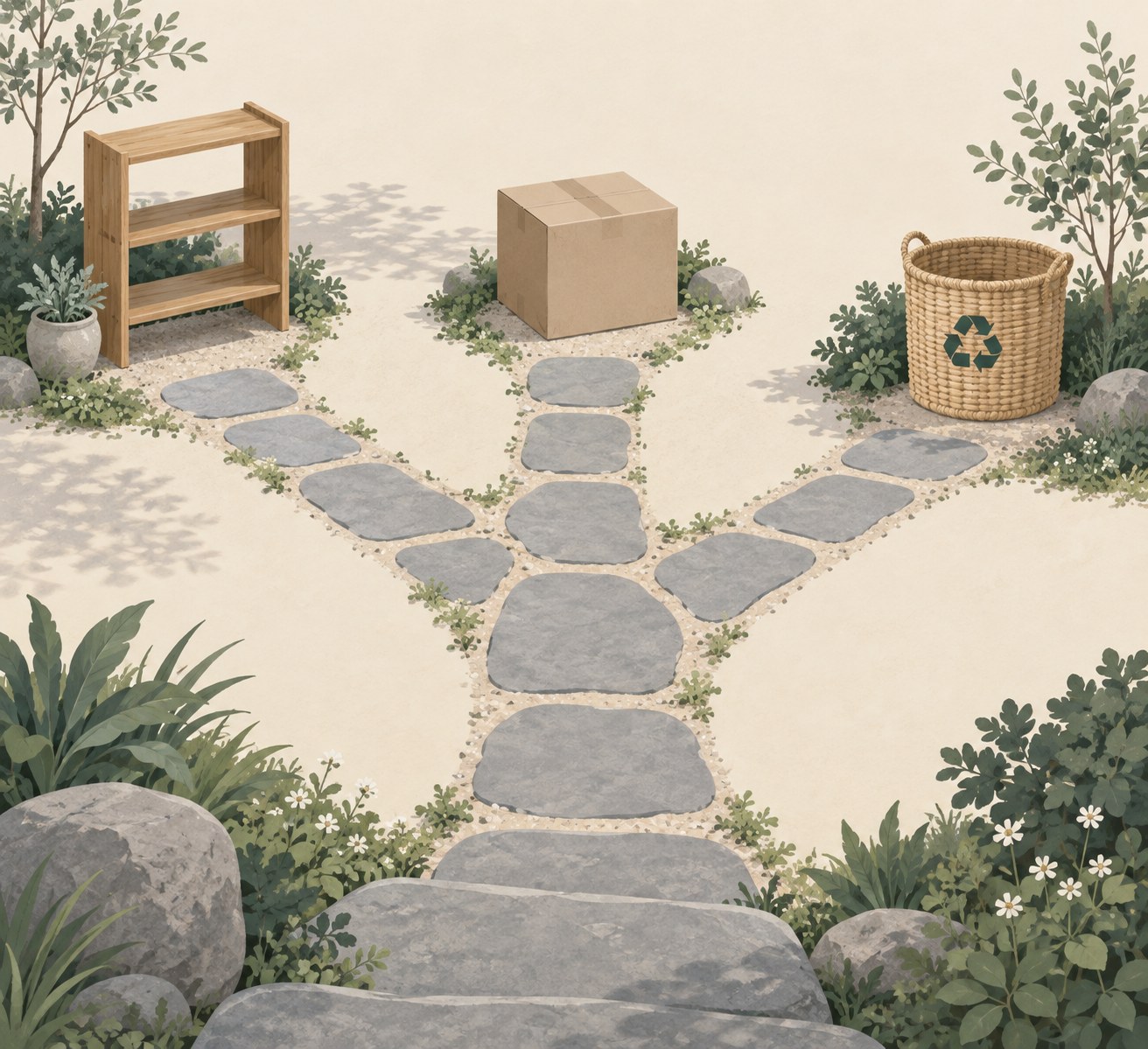
Deletion is the only option in this whole article you can't undo, which is exactly why it comes last in the decision order, not first. A filter takes two minutes per post and stops you from nuking things you'll want back. Run every candidate through five questions: Does it still represent you? Does it confuse new visitors checking your profile? Does it harm anyone? Is it tied to a conversation you want to keep alive? Would you re-post it today?
The answers sort every post into one of three bins. Keep means the post passes, so leave it alone and move on. Archive means you want it out of public view but might want it later; when you archive a post on Threads, it hides from your profile and from others on the app, you can reverse it by unarchiving, and the option is mobile app only. Delete is for posts where the content itself is the problem: it's wrong, harmful, or off-brand in a way time won't fix.
Archive also works well as staging. If a post sits in the gray zone between "eh" and "no", archive it now and decide later. Worst case you delete it in a month; best case you realize you were having a bad day and restore it. That asymmetry, one path reversible and one final, is the entire reason to filter before you touch the delete button.

Delete One Post in Thirty Seconds
The native path is short. Open your profile, find the post, tap the three-dot menu next to it, choose Delete, then confirm Delete again when the app asks. It works the same way on web and mobile, and the second confirmation exists precisely because the action is permanent.
Single-post deletion is the right tool when a specific post is the problem: a wrong claim, a bad take you've thought better of, something that doesn't belong on your profile at all. You've got a scalpel, so use it on the thing that needs cutting.
Two cautions. First, there's no bulk delete button in the Threads app, so don't go in expecting to select twenty posts and clear them in one tap; that's what the next section solves. Second, don't let one bad post turn into a panic purge. Deleting your best work at 1 a.m. because one post aged badly is how people end up hunting for an undelete option. It doesn't exist. If you're unsure, archive.
Deleting when archive would do the job, then realizing the post had context or value you can't restore.
Handing your login or API token to a bulk-delete tool without checking its permissions, storage, pricing, or review history first.
Running a panic purge after one bad post and mass-deleting history you'd have kept with a night's sleep.
Expecting the Threads app to have a bulk delete button, then improvising a rushed workaround at 1 a.m.
Assuming deleting your Threads post also removes the Instagram version, or that it purges fediverse copies and screenshots.
Clear a Lot of History: Three Realistic Routes
Route A is manual batches. Work through your profile oldest-first in a set rhythm, say fifteen minutes a day, applying the filter from earlier as you go. Old posts are the ones most likely to fail the "still represents you?" test, and oldest-first means you fix the worst exposure first. It's unglamorous, but a daily block lets you review history in small passes instead of one panic session, and you judge every post instead of hoping a blanket rule caught the right ones.
Route B is the API, and it's realistic mainly if you already publish through the Threads API or are comfortable running small scripts. The Threads API delete endpoint takes a DELETE request against a media id, but only for posts you created, and it needs two permissions: threads_basic and threads_delete. The hard edge is the cap: 100 deletions per 24 hours per account. You're not guessing at your remaining room, either; the publishing limit endpoint returns delete_quota_usage and delete_config, so you can read exactly how many deletions you have left before you start.
Route C is third-party bulk tools. Sites like redact.dev and deletethreads.net advertise mass deletion for Threads and similar platforms, and they exist as a category, though this guide doesn't endorse any of them. The catch is structural: to delete on your behalf, a tool needs your login or a token, which is full access to your account. Audit before you grant anything. What permissions does it ask for? What does it store on its servers? What does it charge, and do the reviews and account history look like real usage rather than a landing page that appeared last week?
Treat any "delete everything" button with suspicion, and prefer tools that show you a preview of exactly what will be removed before it's gone. Combined with the API's 100-per-day cap, that preview habit is your main safety net. A blind bulk run can still spend the whole daily cap on the wrong posts, and there's no undoing it.
The Instagram Connection: Cross-Posted Content and Cleanups
Threads accounts are built on the Instagram account system, which is why the two feel tangled together and why "remove threads posts from instagram" gets typed into search so often. The mental model that untangles it: your Threads posts live on Threads, your Instagram posts live on Instagram. They're separate content collections on connected accounts, and deleting on one platform does not delete on the other.
That makes the common cleanup two jobs, not one. Say you shared the same photo as a Threads post and as an Instagram post: deleting the Threads copy leaves the Instagram post untouched, and vice versa. Check each platform separately and clean the one that actually bothers you, rather than assuming one delete swept both.
If you want to leave the app entirely rather than prune posts, that's a different job. The guide on how to deactivate or delete your Threads account covers that path. This article stays on post-level cleanup.
Prevent the Next Cleanup: Archive, Ghost Posts, and a Cooling-Off Rule
The cheapest cleanup is the one you never need, and Threads now ships a feature aimed squarely at that. When Meta introduced ghost posts on Threads, it described them as disappearing posts: you toggle the option while composing, the post auto-archives after 24 hours, replies land in your inbox instead of staying public, and only you can see who liked or replied. That design targets the unfiltered, in-the-moment post, the exact category that fills future cleanup lists.
For posts that are already published but just need to leave your profile, the archive tool from earlier is still your friend. It clears the public view without destroying the post or its context, and you can pull anything back out later. Think of ghost posts as prevention and archive as cure: one happens before you post, the other after.
For hot takes specifically, add a personal cooling-off rule: draft it, wait, then decide whether it deserves to exist. Even an hour helps with the posts you'd otherwise be deleting next quarter. A free Threads post creator makes the drafting part easier, since you can write and preview outside the app where posting feels like one impulsive tap. Fewer regretted posts means fewer cleanup projects, and that math compounds in your favor.
A Twenty-Minute Quarterly Sweep That Keeps History Clean
Set a recurring calendar reminder, put a timer on, and give the sweep twenty minutes a quarter. Minutes 0 to 5: skim your profile top to bottom and mark candidates without deciding anything. You're collecting suspects, not convicting them. Minutes 5 to 15: run the keep, archive, delete filter on each candidate. Most will fail mildly, not badly, so archive should absorb the majority and delete only takes the true problems.
Minutes 15 to 20: note the patterns. What kind of post keeps ending up on the candidate list? If the answer is "late-night replies" or "hot takes about my industry", that's an instruction for what to change next quarter, not just a cleanup observation. The sweep's real output is the pattern data, because adjusting what you publish shrinks the next sweep before it starts.
Measure the sweep in posts reviewed and posts removed, not in follower counts or engagement shifts. Visibility hygiene pays off slowly and indirectly, and tying it to metrics it doesn't move is how the habit dies. To go deeper, pair it with a broader social media audit of what's actually working, and set a posting rhythm you can sustain using a guide on how often to post on Threads that favors your own tests over magic numbers.
Action checklist
Use this as the practical next pass after reading the guide.
- +Run every candidate through the five-question keep, archive, delete filter before deleting anything.
- +Delete single posts via profile, three-dot menu, Delete, then confirm, on web or mobile.
- +For big cleanups, pick one route: daily manual batches, the API with its 100-per-24-hour cap, or an audited third-party tool.
- +Check delete_quota_usage via the publishing limit endpoint before starting any API deletion run.
- +Use archive for reversible removals and ghost posts for in-the-moment content, and remember archive is mobile app only.
- +Book a twenty-minute quarterly sweep and record what you regret posting to adjust next quarter's output.

Conclusion
Deletion on Threads is a real but bounded tool: it makes the post no longer visible on Threads, while replies, screenshots, and possibly fediverse copies carry on without it. Once you treat it as visibility control rather than erasure, the right sequence gets obvious: filter first, archive what's merely unwanted, and delete only what's genuinely wrong.
Start smaller than you think. Pick one cleanup route that matches your situation, schedule the quarterly sweep, and let the prevention habits, ghost posts and a cooling-off rule, shrink the backlog for you. Steady pruning beats dramatic purges, and it never costs you something you can't get back.