What this guide is really about
If you write every post yourself, from the same head, on the same day, you do not need a style guide. The moment any of that changes, you do. A social media style guide is the one document that keeps your voice recognizable when you batch three weeks of posts in one sitting, hand a draft to a VA, cross-post to a second platform, or return from a two-week break and can't remember how you sound.
Most advice about style guides is written for brand teams at companies. It assumes a marketing department, a logo grid, and a review chain that ends with legal. A creator's style guide has a different job: capture the voice that already lives in your best posts, on one page, so that anyone who drafts for you, including future you, starts from decisions instead of impressions.
This guide gives you the eight fields that matter for a solo creator or a two-person operation, tone dials adapted from the Nielsen Norman Group's four tone dimensions, a say-this-not-that lexicon, and a handoff test that tells you whether the page actually works.
A social media style guide for creators is a one-page document that records how you sound: three to five voice traits with example sentences, tone dials for humor, formality, respectfulness, and enthusiasm, a say-this-not-that word list, formatting rules, and platform notes. You build it by mining your own top posts for patterns, not by inventing a personality. Test it by having someone draft a post from the guide.
A one-page, eight-field template you can fill in from your own archive this week
Tone dials from the NN/g four dimensions, adapted for posting decisions
A say-this-not-that lexicon format that does more work than any other field
A handoff test that proves whether your guide is usable, plus a quarterly refresh loop
A creator style guide records decisions you already make unconsciously; it does not invent a new personality
One page beats a brand book: eight fields, each earning its place, is the whole document
The NN/g tone dimensions (humor, formality, respectfulness, enthusiasm) turn vague voice adjectives into adjustable dials
A say-this-not-that lexicon is the highest-leverage field because word choice is where ghostwriting drifts first
If a stranger can't draft a shippable post from your guide alone, the guide is a description, not a tool
What a social media style guide is (and what it is not)
A social media style guide is a working document that records how you sound when you post: your voice traits, your tone ranges, your word choices, your formatting habits, and the small platform-specific rules you have settled on. Enterprise versions run ten components deep, covering profiles, grammar, hashtags, multimedia standards, competitor interactions, customer care, and legal review. A creator version can do the same job in eight fields on one page, because you are documenting one voice, not a committee's.
It is not a content strategy (what to post), a content calendar (when to post), or a personal brand identity exercise (who you are and how you are positioned). Identity and positioning belong in a separate canvas; this page only answers: given that we are posting this, how should it sound? Keeping it narrow is what makes it usable. The moment the guide tries to govern strategy, identity, and scheduling too, nobody opens it twice.
It is also not aspirational. If you are dry and direct in real life and your guide says witty and playful, every draft from that guide will read like a costume. The guide's authority comes from describing what your audience already recognizes, not what you wish you were.
Why bother: consistency, handoffs, and coming back
The practical case for a style guide is threefold. First, consistency: the same voice across posts and platforms is what makes your content recognizable in a feed, and recognition is the asset you are actually building. Second, handoffs: the day you hire a VA, a ghostwriter, or a freelancer, the guide replaces weeks of them reverse-engineering your voice from your archive. Third, recovery: creators fall off posting for many reasons, and one of the quiet ones is coming back after a break and feeling like a stranger to your own voice. A page that says how you sound removes that friction.
Voice itself is not decoration. In Nielsen Norman Group research on website copy, varying tone alone changed how people rated an organization's friendliness, trustworthiness, and desirability, and trustworthiness was a strong predictor of willingness to recommend. That study was not about creator feeds, so treat it as evidence that tone shapes perception, not as a growth formula. For a creator, the practical stake is simpler: inconsistent tone makes handoffs, batching, and comebacks harder, and makes your posts harder to recognize.
There is a fourth benefit that matters more every year: AI drafting. If you use any AI tool for first drafts, a concrete style guide, real example sentences, banned words, tone ranges, is what turns generic output into something that sounds like you. The tools do not infer your voice reliably. They follow explicit rules well.

Before the template: mine your own posts first
The biggest mistake is filling in a template from imagination. Instead, run a 20-minute voice mining session on your own archive. Pull your ten best-performing posts of the last six months, the ones with the most replies, saves, or DMs, plus five posts you personally like rereading. You are looking for three things: sentence length and rhythm, recurring word choices, and how you open and close posts.
Look for patterns, not perfection. Maybe your openers are concrete and mid-length, your sentences average under 20 words, you ask one real question per post and never more, and you never use hype words. Write each pattern down as a rule with a quoted example from your own archive. A rule without an example is a wish; a rule with a quote from a post that worked is documentation.
Only after mining should you touch the template below. The difference shows up immediately: guides built from imagination read like brand adjective soup, guides built from mined patterns read like the person.
Filling the template from imagination instead of mining your own top posts for real patterns
Writing a brand-book-sized document nobody, including you, will reopen after week one
Listing voice adjectives without example sentences, so helpers still have to guess
Skipping the say-this-not-that lexicon, the single field that prevents most ghostwriting drift
Never re-running the handoff test, so the guide quietly becomes a museum of your old voice
The one-page template: eight fields
Here is the full template. Each field earns its place by preventing a specific failure; drop any field you will not maintain. To see how a mature public version looks at company scale, the Mailchimp content style guide is worth a skim, less to copy than to see how much of it you do not need.
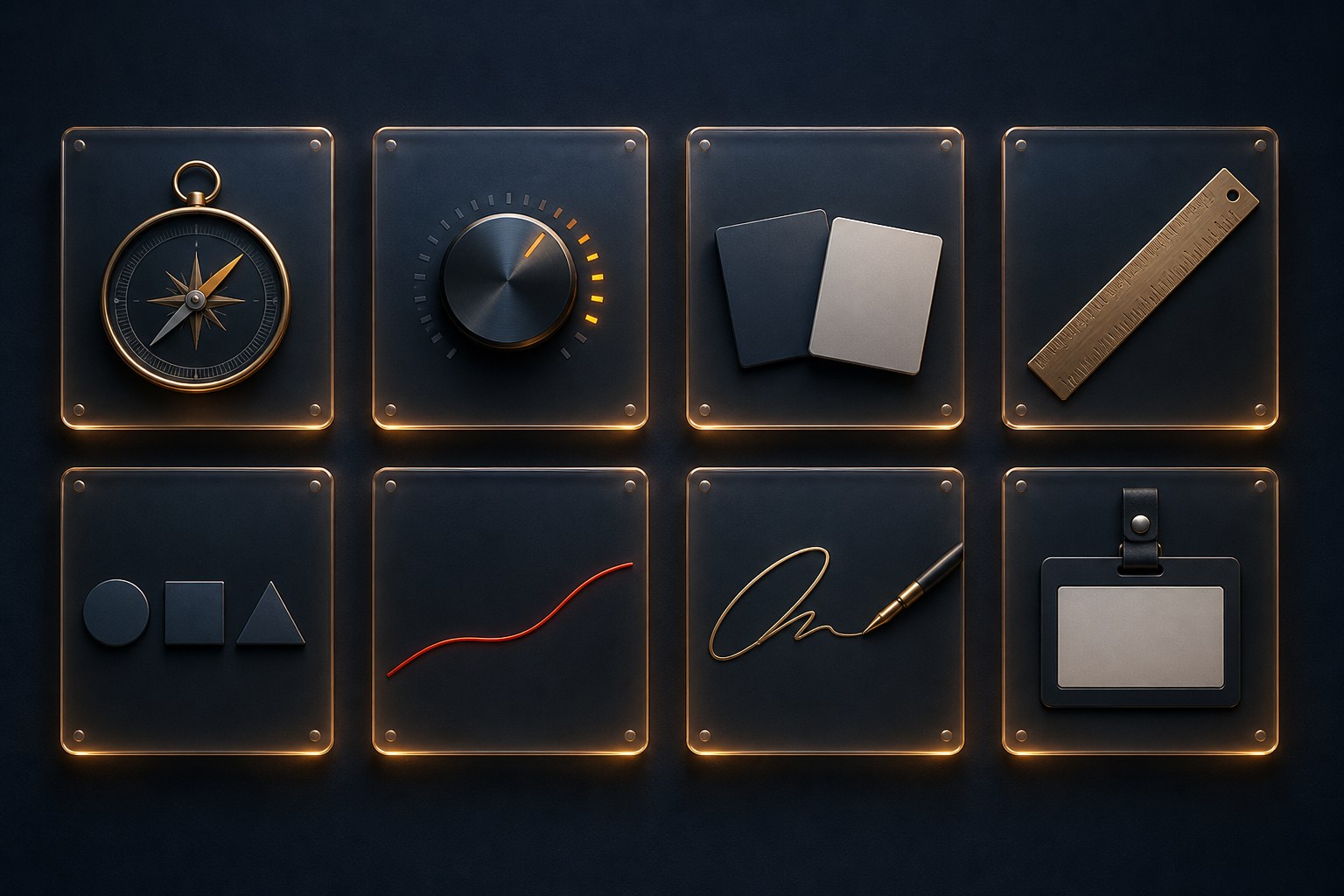
Field 1, Identity line: one sentence for whom the voice serves, like a coach for tired founders, not generic advice. Field 2, Voice traits: three to five adjectives, each backed by one example sentence from your archive. Field 3, Tone dials: where you sit on the four NN/g dimensions (next section). Field 4, Say-this-not-that lexicon: your ten most important word rules. Field 5, Formatting rules: sentence length, paragraph breaks, emoji policy, capitalization of headings, link placement.
Field 6, Platform notes: one line per platform on how the voice flexes. Field 7, Hard lines: topics you never joke about, stances you never compromise, competitor-naming policy, disclosure habits for sponsored posts. Field 8, Signature moves: the recurring elements your audience would miss, like always ending a tips post with the mistake you made first, or opening stories mid-scene. If a field stays empty after a month, delete it. The template shrinks to fit you, not the reverse.
Tone dials and the say-this-not-that lexicon
Voice is stable; tone shifts by situation. The cleanest tool for that distinction comes from the Nielsen Norman Group, which describes tone along four dimensions: humor, formality, respectfulness, and enthusiasm. For a creator, these become four dials with a default setting and a range. Your defaults should come from the archive you mined, not from a generic brand. A common starting pattern looks like this: humor low-to-mid, up in casual posts, zero when the topic is someone's failure; formality mid, down in replies and stories, up in announcements or money posts; respectfulness high and mostly fixed; enthusiasm mid, up for launches and wins, down for explainers, and rarely both extremes in one post.
Dials beat adjectives because they are adjustable. A rule like be friendly tells a helper nothing when a reply gets hostile; a dial setting like respectfulness stays high, enthusiasm drops to low, no sarcasm gives them an exact register. Dials also make your own judgment faster. Most tone mistakes, the excited reply to an angry comment, the flat launch post, are dial errors, not voice errors. Write your dial settings into Field 3 as a compact line each: dimension, default, when it moves, where it never goes. That is four lines that prevent most tone drift.
Pick the ten word rules that carry the most identity. Most lists include some version of: say builds, not hacks; say tested, not proven; say piece, not content; say note, not content upgrade; say because, not content is king. Yours will differ, and that is the point. The lexicon is where your voice becomes concrete enough for someone else to reproduce and for you to stay consistent under time pressure. Word choice is also the first thing to drift when a ghostwriter or AI tool drafts for you, so the lexicon is the field they will consult most.
Keep the list at ten, ranked by how often the word actually appears in your posting, not by how clever the swap is. Add a short why for each rule only when the why is not obvious. Review the lexicon whenever you retire a word or adopt a new one; it is the fastest-changing field on the page. Two boundary cases worth deciding early: jargon and emojis. If your audience is practitioners, some jargon is identity (say ship, not launch if your people say ship). Emojis work best as a policy, one per post max, never in the first line, never decorative, rather than an open question re-litigated per post.
Worked example: a filled-in page (hypothetical creator)
To make the template concrete, here is a filled page for a hypothetical productivity creator, framed as an example, not a recommendation. Identity: a blunt but kind productivity writer for overwhelmed freelancers. Voice traits: direct (short sentences, no hedging), warm (names the reader's frustration before the fix), curious (asks one real question per post), specific (numbers and tools, not vibes). Example openers: You are not lazy. Your system has too many steps. and What I actually do on Monday is shorter than what I teach.
Tone dials: humor low default, up in stories, zero on failure posts. Formality mid default, down in replies, up on money posts. Respectfulness high, fixed. Enthusiasm mid default, up on launch week, down on explainers. Lexicon (first five of ten): builds not hacks; tested not proven; system not routine; note not content upgrade; because not because of the fact that. Formatting: one to three sentences per paragraph, no double line break mid-post, links inline not in bio, no ALL-CAPS except one word for emphasis per week.
Platform notes: Threads is the home voice, first-person, line breaks used for pacing; LinkedIn keeps the same directness with less slang and no more than three line breaks; X gets the trimmed version with the question moved to the end. Hard lines: no client names ever, no politics except workplace-adjacent, every affiliate link disclosed in the post itself. Signature moves: opens with the reader's thought, not a headline; ends tips posts with the mistake made first; quarterly posts a public teardown of own system. Read that page once and you can hear the person. That is the test.
The handoff test and the quarterly refresh
A guide is a tool or it is decoration, and the handoff test tells you which. Give the page to someone who has never drafted for you, a friend, a VA, a freelancer, and ask for one draft post on a topic you choose. Then score three things: could you ship it with light edits (pass), does it need a rewrite of tone (partial pass, tighten traits and lexicon), or does it read like a different person (fail, the guide is describing you instead of equipping them). Run the test before every delegation upgrade and after every quarterly refresh.
The quarterly refresh is 15 minutes: re-mine your top posts from the quarter, retire words and moves you no longer use, add new signature moves that earned their place, and re-run the handoff test. A style guide that is not refreshed becomes a museum of your old voice, and helpers following it will sound like your past.
Where this fits in a larger system: the style guide is the standing voice rules. It sits beside your content briefs (the per-post assignment), your approval workflow (who checks what before shipping), and your batch production sessions. If you already run a personal branding identity canvas, do not rewrite that canvas here; distill only the production-facing voice rules onto this one page. And when you need a fresh Threads draft that still sounds like you, use the free Threads post creator with your niche, audience, and a topic shaped by the guide, then edit the output against your traits, lexicon, and handoff bar before it ships.
Action checklist
Use this as the practical next pass after reading the guide.
- +Pull your 10 best posts plus 5 favorites from the last 6 months for a 20-minute voice mining session
- +Fill the one-page template: identity line, traits with examples, dials, lexicon, formatting, platform notes, hard lines, signature moves
- +Write dial settings as one line each: default, when it moves, where it never goes
- +Give the page to one person and run the handoff test on a single draft post
- +Calendar a 15-minute quarterly refresh and re-run the handoff test after it
- +Store the page wherever drafting happens, next to briefs and the scheduler, not in a separate vault

Conclusion
A style guide is not another strategy document to maintain. It is the one page that keeps your voice recognizable when you batch, delegate, cross-post, or come back after a break, and it takes one mining session plus one filled template to build.
Start with your ten best posts, fill the eight fields, and run the handoff test this week. If a stranger can draft a post that sounds like you, the page works. Refresh it quarterly and let it shrink until every line earns its place.