
What this guide is really about
You have been posting on Threads for weeks. The posts are decent. But the replies section stays quiet, and your follower count barely moves. The problem is probably not your content. It is your reply strategy.
Threads was built for conversation, not broadcasting. The official Threads account says replies account for almost half of all views on the platform. Adam Mosseri told Platformer that the sum of all your replies is about as valuable as the sum of all your posts. And Buffer's analysis of over 128,000 Threads posts found that replying to comments boosts engagement by about 42%, the highest lift of any platform they studied.
This guide breaks replies into a system you can actually run: five reply types, a daily workflow, inbound and outbound tactics, and a measurement plan that tracks inputs you control.
To get more replies on Threads, shift from a post-and-leave habit to a reply-first routine. Reply to comments on your own posts within the first hour. Spend time replying to posts from creators in your niche. Aim for a reply-to-post ratio of at least 3:1. Buffer's study of 128,000 Threads posts found replying boosts engagement by about 42%, and the official Threads account says replies account for nearly half of a...
A five-type reply taxonomy with examples you can use today
A 20-minute daily reply workflow you can repeat
A measurement framework that tracks controllable inputs, not vanity metrics
Replies drive nearly half of all views on Threads, according to the official Threads account.
Buffer's 128,000-post study found replying to comments boosts engagement by about 42% on Threads, the highest of six platforms analyzed.
Adam Mosseri says the sum of your replies is about as valuable as the sum of your posts. A reply-to-post ratio of 3:1 is a practical starting target, not an official platform rule.
Two reply directions matter: inbound (comments on your posts) and outbound (replies you leave on others' posts). Both feed reach.
Measure controllable inputs like replies written per day and conversations started, not just follower count.
Why Replies Are the Core Currency on Threads
Most social platforms treat replies as a secondary activity. You post, people react, and maybe you respond to a few comments. Threads inverts that hierarchy. The reply sits at the same visual level as the original post in the feed, and the ranking system treats conversation as a primary signal of value.
Adam Mosseri explained this design choice to The Verge: elevating the reply to the same level as the original post allows for much more robust, diverse discourse. He told Platformer that if you are really trying to grow your presence, you should reply much more than you post, because the sum of all your replies is about as valuable as the sum of all the value of all your posts. This is why understanding how the Threads algorithm works starts with understanding how it treats conversation.
The official Threads account put a number on it. In a post sharing five growth tips, they wrote that replies account for almost half of the views on Threads. That is not a vanity metric. It means roughly half the impressions the platform generates come from reply interactions, not standalone posts.
Buffer's data scientist Julian Winternheim put this to the test. His analysis of over 128,000 Threads posts used a fixed-effects regression model to compare each account against its own baseline, controlling for follower count, niche, and posting frequency. Posts where the creator replied to comments showed about 42% higher engagement on average. About two-thirds of profiles in the study saw positive effects. The study is correlation rather than guaranteed causation, but the consistency across 128,000 posts and six platforms makes the pattern hard to dismiss. You can read the full methodology in Buffer's analysis of over 128,000 Threads posts on their blog.
The Five Reply Types and When to Use Each
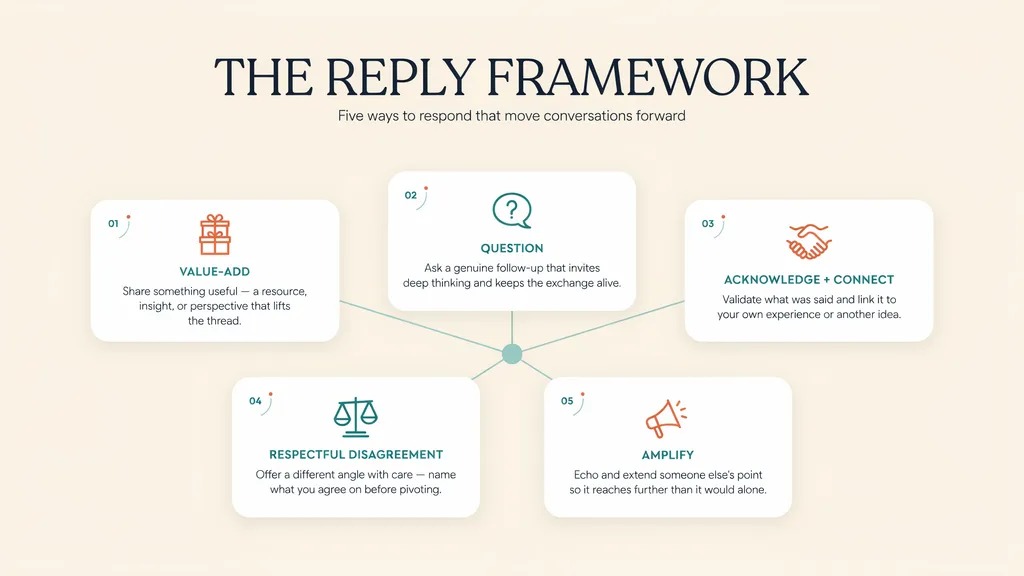
Not every reply is the same. If you reply with a thumbs-up emoji to every comment, you are technically replying, but you are not building conversations. The goal is to choose the reply type that fits the moment and keeps the thread alive. Here are five types that cover most situations.
The first type is the value-add reply. Someone comments on your post about content batching. Instead of saying thanks, you add a related insight: a specific tool that helps, a mistake you see people make, or a follow-up question. This type extends the conversation and gives other readers a reason to join in. Use it when a comment gives you something to work with.
The second type is the question reply. You turn a statement into a conversation by asking something back. If someone says they struggle with posting consistency, ask what their biggest obstacle is. Questions are the most reliable way to generate a reply to your reply, which deepens the thread and signals ongoing conversation to the algorithm. Use this when a comment is brief but genuine.
The third type is the acknowledge-and-connect reply. Sometimes a simple, specific acknowledgment is enough. But instead of a generic thanks, reference what they said and connect it to something bigger. If someone says your post reminded them to schedule content, reply that scheduling is the single highest-leverage habit for busy creators, and link it to a related idea. Use this for positive but shallow comments. The fourth type is the respectful disagreement reply. Threads rewards thoughtful debate more than agreement loops. If someone challenges your point with a real argument, engage with it directly. Restate their position fairly, then explain where you differ and why. This type often generates the longest threads and the most visibility. Use it when the disagreement is substantive, not when someone is just trolling. The fifth type is the amplify reply. You quote or reference what someone else said in their own post and add your perspective. This works especially well as an outbound reply on other people's posts. It shows you are paying attention to your community and gives the original creator a reason to engage back. Use this when you genuinely have something to add to someone else's point.
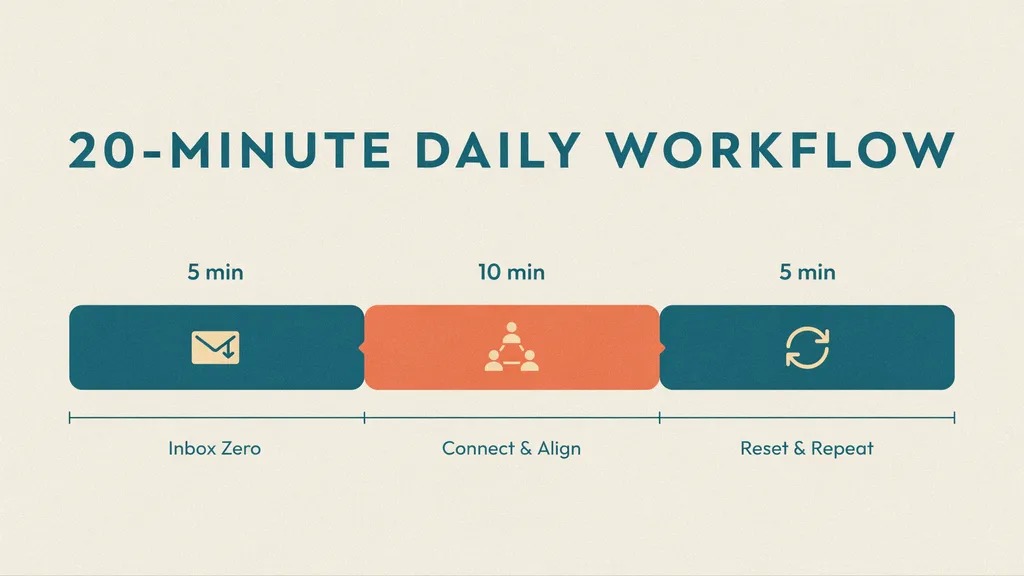
Your Daily Reply Workflow: A 20-Minute Session
Consistency beats intensity. A 20-minute daily reply session will outperform a two-hour marathon once a week, because ongoing conversation keeps your posts circulating. Here is a structure you can run every day.
Start with five minutes of inbound replies. Open your notifications and respond to every comment on your posts from the last 24 hours. Prioritize posts published in the last 48 hours, since that is when the algorithm is still deciding how far to push them. The first hour after you post matters most, so if you published something today, reply within that window whenever possible.
Spend the next ten minutes on outbound replies. Go to posts from five to ten creators in your niche. Leave a substantive reply on at least three of them using the reply types above. The goal is not to blanket the platform with your name. It is to show up in conversations where your ideal audience already hangs out. Pick accounts whose followers overlap with your target audience.
Use the final five minutes for conversation maintenance. Check whether any threads you participated in yesterday have new replies. If someone responded to your reply, continue the conversation. Each ongoing thread is a compounding visibility asset. Also scan for any comments you missed and handle those. If you want to go deeper on timing, learn how the single highest-impact habit for busy creators is scheduling, because it frees up the blocks you need for consistent replies. Track your reply-to-post ratio. If you posted twice today, aim for at least six meaningful replies. That 3:1 ratio aligns with Mosseri's guidance to reply much more than you post. You can adjust the ratio based on what your threads analytics show over a few weeks.
Posting and leaving without replying to comments in the critical first hour after publication.
Replying to every comment with the same generic phrase instead of referencing what the person actually said.
Using outbound replies as a dumping ground for links to your own content instead of adding genuine value.
Posting five times a day but replying to only a handful of comments, ignoring the 3:1 ratio target.
Responding to spam or hostile comments instead of using Threads' controls to filter noise.
Inbound Strategy: Turning Comments on Your Posts Into Conversations
Inbound replies are the ones you leave on comments attached to your own posts. This is where the 42% engagement lift from Buffer's study comes from. The key is speed and specificity.
Reply as early as you can, ideally within the first hour after publishing. The Threads algorithm is actively evaluating your post in that window based on the interactions it receives. When it sees active conversation, that contributes to the signals that influence how widely the post is shown. A post that collects likes but goes quiet tells the ranking system the conversation is over.
Match your reply length to the comment. A one-line comment deserves a one-to-three line reply. A thoughtful paragraph deserves a thoughtful response. The goal is proportional engagement, not performative effort. If someone wrote three sentences, a single-word reply can feel dismissive.
Use replies to add information the original post did not cover. If your post was about content pillars and someone asks how many pillars to choose, your reply can explain the trade-off between breadth and depth. That reply becomes part of the post's value for every future reader who scrolls into the comments. Do not reply to every comment with the same energy. If a comment is spam, low-effort, or hostile, you can ignore it or use Threads' built-in controls to manage who can reply. The platform gives you tools to control who can reply to your posts and to filter specific words. Use them to protect the quality of your conversations rather than engaging with noise.
Outbound Strategy: Getting Noticed by Replying to Others
Outbound replies are the ones you leave on other people's posts. This is how you get discovered by audiences that do not follow you yet. When you leave a valuable reply on a post from a creator in your niche, their audience sees it. If it is good, some of them click through to your profile.
Build a list of ten to twenty accounts whose audiences overlap with yours. These should be creators who are a step or two ahead of you in size, not accounts with millions of followers where your reply will vanish. Mid-size accounts in your niche are the sweet spot. Their engagement is active enough that your reply gets seen, and the creator is more likely to engage back.
Leave replies that add genuine value. Do not parrot what the original post said. Do not drop a link to your content. Add a perspective, a specific example, or a useful question. If you consistently show up in someone's replies with substance, they notice. Their audience notices. And the algorithm notices the connection forming between your accounts.
Time your outbound replies for when the original post is fresh. If you reply within the first hour of a post going live, your reply rides the wave of that post's distribution. If you reply three days later, almost no one will see it. Following accounts actively and checking their latest posts is more effective than scrolling the algorithmic feed randomly. Use the Free Threads Post Creator to draft reply-worthy posts of your own. If your own posts generate better conversation hooks, your inbound and outbound strategies compound. Outbound replies bring new eyes to your profile, and inbound replies keep them engaged once they arrive. This is one of the core ways to understand how to grow on Threads: conversation compounds when you treat it as the primary activity.
Measuring Reply Impact: Track Inputs, Not Vanity
The biggest mistake creators make with replies is measuring the wrong thing. Follower count is a lagging indicator that tells you what already happened. Reply success is better measured by controllable inputs you can adjust today.
Track four signals. First, replies written per day. This is your core input. If you aim for a 3:1 ratio and post twice, you need six replies. Second, conversations started. Count how many of your outbound replies generated a response from the original poster or others. This tells you whether your replies are good enough to spark dialogue. Third, reply-to-post ratio. This confirms you are spending more time in conversations than broadcasting. Fourth, profile visits per week. This is an early leading indicator that your outbound replies are driving curiosity.
Check these signals weekly, not daily. Daily numbers fluctuate too much to be meaningful. Look at the trend over four weeks. If your replies written per day is climbing but conversations started is flat, your replies need more substance. If profile visits are rising, your outbound strategy is working.
Cross-reference with your Threads insights. The platform shows you views, replies, and profile visits per post. If posts where you replied to comments early show higher views than posts where you did not, that aligns with the 42% lift Buffer found. Use that pattern to prioritize the first-hour reply window.
Reply Mistakes That Quietly Hurt Your Account
Several common habits sabotage reply strategy without creators realizing it. The first is the post-and-ghost pattern. You publish a post and disappear for the rest of the day. The algorithm evaluates your post in the first hour, and silence in the comments signals a dead conversation. Even thirty minutes of active replying after posting changes the signal.
The second mistake is generic replies. Responding to every comment with a thumbs-up or thanks tells the algorithm the conversation is closed. It also tells real humans you are not actually interested in what they said. Replace generic acknowledgments with specific references to what the person commented.
The third mistake is treating outbound replies as free advertising. Dropping links to your own posts in someone else's comments is the fastest way to get flagged as spam. It damages your reputation and teaches the algorithm to discount your activity. If your reply is good enough, people will click your profile on their own.
The fourth mistake is over-replying to low-quality comments. You do not need to respond to every single comment. Buffer's study found that about two-thirds of accounts saw positive effects from moderate engagement. Focus your energy on comments that give you something to work with. Use the reply-type framework to decide whether a comment deserves a value-add, a question, or a simple acknowledgment. The fifth mistake is ignoring the ratio. If you post five times a day but reply to two comments, you are operating against the grain of how Threads works. Flip the ratio. Post fewer times and reply more. Your posts will likely perform better individually because they get the conversation they need. If volume is the problem, rethink how often you should post on Threads and shift time from extra posts into replies instead.
Action checklist
Use this as the practical next pass after reading the guide.
- +Build a list of 10 to 20 niche accounts whose audiences overlap with yours for outbound replies.
- +Run a 20-minute daily reply session: 5 minutes inbound, 10 minutes outbound, 5 minutes maintenance.
- +Aim for a reply-to-post ratio of at least 3:1 every day.
- +Reply within the first hour after publishing a new post whenever possible.
- +Track replies written, conversations started, ratio, and weekly profile visits for four weeks.
- +Replace generic replies with specific references using the five-type framework.

Conclusion
Replies are not a side activity on Threads. They are the platform's core mechanic for distribution. Buffer's 128,000-post study found a 42% engagement lift when creators reply to comments, and the official Threads account says replies account for nearly half of all views.
The strategy is simple to understand and harder to sustain. Build a daily reply habit. Use the five-type framework to choose quality over quantity. Maintain a 3:1 ratio. Measure the inputs you control. Adjust based on what your insights show over four weeks, not what a single post does on a single day.
If you are already scheduling your Threads posts, add reply time to the same calendar block. The two practices work together: good posts start conversations, and active replies extend them.