What this guide is really about
One day the profile is there. The next, search comes up empty, your reply has vanished, and your DM sits unread. Threads never sends a notice, so you're left guessing whether you've been blocked, ignored, or just caught an app glitch.
You can get close to an answer. Meta documents what a block does on Threads, but not every effect is a test you can run on your own screen. This guide uses the effects you can observe, says which ones need another person, and separates a block from a restrict and from a profile that's missing for everyone.
Threads never notifies you when someone blocks you, so you test for it. Search their @username logged in, then again in a private window. A profile missing for you but visible logged out matches the documented one-person hide. Add a direct visit and a mention attempt. You can't open their posts to check likes, and no single test is proof.
The block effects Meta documents, split into what you can see yourself and what only other people can confirm.
Five checks in order, including which signs you can see yourself and which ones need another person.
A way to separate a block from a restrict, and from a profile that's missing for everyone, without naming states the help page doesn't define.
A next step that makes sense whether the answer is yes or no, without tracker apps or confrontation.
Threads doesn't notify the blocked person. The block page doesn't show you a list of who blocked you.
The effects you can test yourself are a hidden profile and content, failed mentions and tags, and a direct message you can't send. Removed likes and hidden replies show up for other people, not on a post you can open.
Compare logged in and logged out. Missing for you but visible logged out matches the documented one-person hide. Missing for everyone is not what that page describes as a block.
Restrict isn't a block. You can still see the profile and reply. Replies may be hidden from others or held for approval, and new messages go to Requests.
No tracker app can reveal who blocked you, and DM delivery status isn't documented block evidence, so never treat either as proof.
What a Threads Block Actually Does
According to the Threads Help Center page on blocking, a blocked person can't find the blocker's profile or content on Threads, can't see their posts, replies, or reposts, and isn't notified. Mentions and tags fail even after a username change. The page ties that username line to mentions and tags, not to every other effect. A normal message is blocked too, with one exception: if you're in a shared group chat and the blocker stays, you can still see each other's messages there.
Likes the blocked person left on the blocker's posts are removed, and unblocking doesn't restore them. Replies they wrote on those posts can't be seen by others. The page doesn't say the replies are deleted, and it doesn't say you can open those posts to check. A block hides that content from you, so a missing like isn't a test you run on your own screen.
A block isn't a restrict. Meta's page on restrict behavior on Threads says a restricted person can still see the content and reply. Those replies may be hidden from others or need approval, and their messages move to Requests, where they can be read without the sender knowing. The restricted person isn't told. If you can still open the profile, you're not looking at the block effects above. We compare restrict versus block on Threads elsewhere if you're choosing a control yourself, and if the worry is your own reach rather than one profile, run a shadowban check instead.
Five Checks, Fastest First
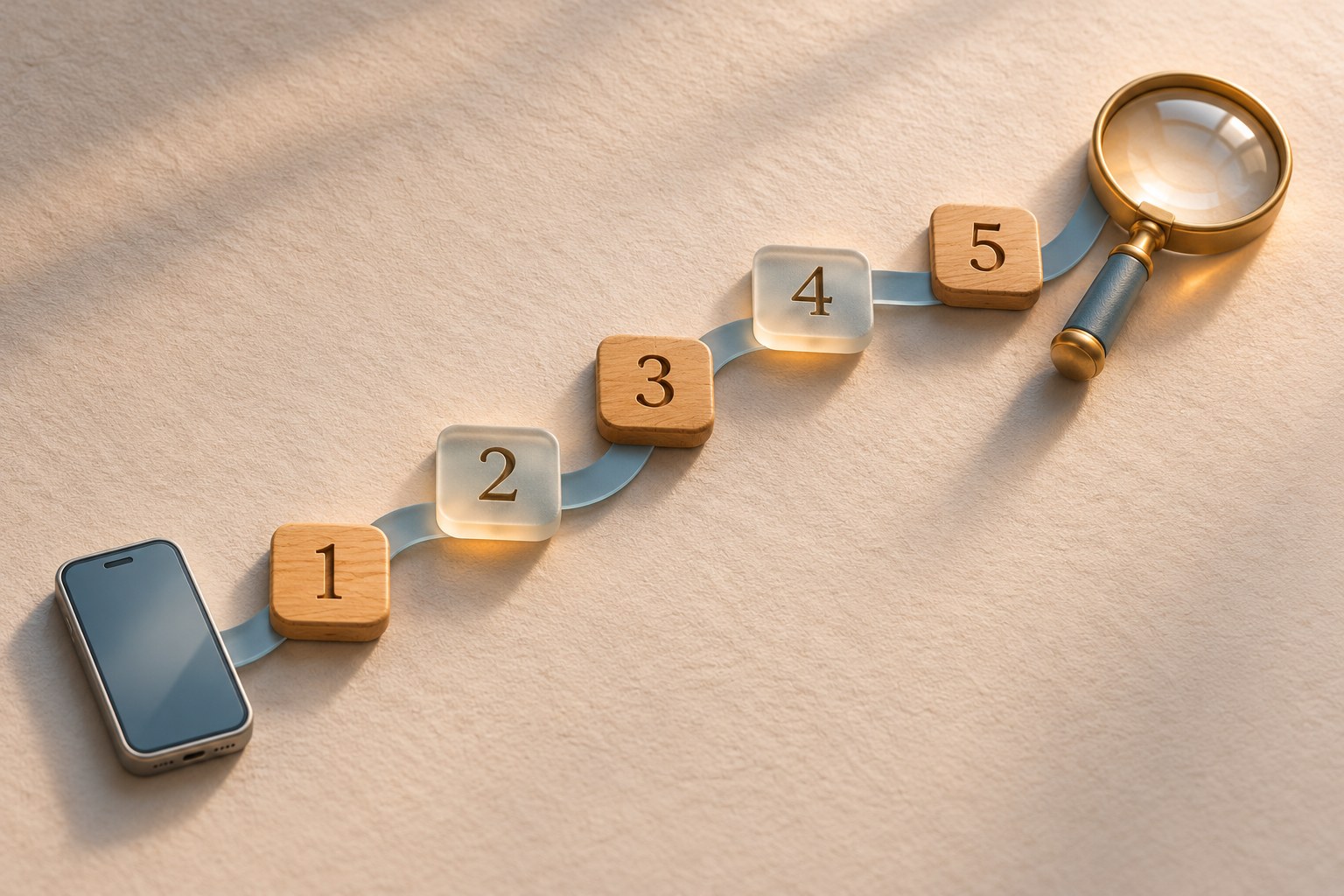
Work down this list in order. Each check takes seconds and tracks a documented effect you can actually observe. First, search their @username from your logged-in account. A block hides that profile from the blocked person, so a blank search is a signal. It's weak alone. A wrong handle, including a missed digit, dot, or underscore, fails the same way, and a profile missing for everyone isn't the one-person hide the block page describes.
Second, open their profile URL in the same logged-in session. The block page doesn't describe a special exception for direct links. If the page won't load for you, that fits the same hide as a failed search. If it loads, a search miss alone isn't a block. Third, type their handle into a draft and watch mention suggestions. Blocked people can't mention or tag the blocker, even after a username change, so a handle that never resolves fits. A rename breaks old mentions too, so this check supports a block only when the logged-in search is also empty.
Fourth, try a new one-to-one message, and don't overread it. Meta documents that blocked people can't message the person who blocked them. A chat you can't start is supporting evidence, not a verdict. A group chat is the documented exception: if the blocker stays in the group, you can still see each other's messages there, so a live group chat doesn't clear them. Threads also doesn't document delivery ticks or read receipts for blocks. An unread message proves nothing.
Fifth, don't audit likes by opening their posts. If the block is real, those posts are hidden from you, so you can't see whether your like was removed. Ask someone who can still view the profile whether your like is gone and whether your reply is hidden from them. Those are the documented effects, and they show up for other people, not as a screen you can open. If search, the direct link, the mention, and a new one-to-one message all work, those block effects aren't showing. If the real problem is an unwanted follower on your own account, you can remove a follower without blocking anyone at all.
The Decisive Test: Logged-In vs Logged-Out
A block, as documented, hides the blocker's profile and content from the blocked person. It isn't written as a takedown that removes the profile for everyone. That difference is testable, even though the help page doesn't name this test. Open a private window, or use a browser where you're fully logged out, and search the same handle that failed on your account.
Read the comparison narrowly. Missing for you, visible logged out: that matches the documented one-person hide, and it's the strongest practical sign you'll get. It still isn't proof by itself. Missing for the logged-out search too: that doesn't match a block. The block page doesn't label the other causes, so don't call a universally missing profile a deactivation, a deletion, or a suspension from this test alone.
Two cautions keep the comparison honest. Use a private window or a separate browser so Threads doesn't reuse your session, and search the same handle back to back. Refresh once before you treat a blank screen as final. A single stale page isn't a documented block effect.
Trusting who-blocked-me apps and websites. The block page doesn't show you that list, so a site promising one isn't using a documented Threads feature.
Calling one vanished post or a missing profile a block. Accounts deactivate, posts get deleted, and the app glitches. A block is a pattern across several checks, never a single symptom.
Assuming a Threads block and an Instagram block are the same event. The block page doesn't document that. Check each app separately.
Reading delivery status or read receipts as proof. Threads doesn't document how messages behave around blocks, so the message test is supporting evidence at most.
Using a second account to confront them. That doesn't undo the block, and the block page describes no appeal that a second login would unlock.
Not a Block? Restrict, or Missing for Everyone
A profile that's missing for a logged-out viewer is outside what the block page describes. That page never says a block hides the profile from everyone, and it doesn't define deactivation, deletion, or suspension. Treat a universally missing profile as not this documented block, not as a named account state you can diagnose from a blank search.
Restrict is the lookalike that doesn't hide the profile. Meta's restrict documentation says the restricted person can still see the content and can still reply. Replies may be hidden from others or held for approval, and new messages go to Requests. The other person can read those messages without you knowing they saw them, so silence doesn't mean the message is unread. You're not notified of a restrict either. If you can open the profile, reply, and still find it logged out, a block doesn't fit.
Sort what you can actually see. A profile strangers can open and you can't matches the block page's one-person hide. A profile you can still open doesn't. A profile nobody can open isn't a block you can confirm here. If the missing profile is your own, or you're the one locked out, our account recovery guide walks through the disabled, hacked, and deleted states step by step.

What a Block Doesn't Mean
A block is narrower than people assume. The block page says people aren't notified when you block them, so if you're the blocked person you won't get an alert. It doesn't say the blocker is notified of what you do next, and it doesn't describe a report or a strike. Don't add those effects.
Don't import Instagram into the result. The block page doesn't say a Threads block also blocks someone on Instagram, or the reverse. Silence on Instagram isn't Threads evidence. Cross-app separation is documented for restrict, not for block, on the pages this article cites. Check each app on its own.
A block also doesn't document an erase of old chats. The listed effects stop a new one-to-one message and hide the blocker's Threads content. They don't say prior direct messages are deleted, so older messages may still be on the other side. The group-chat exception cuts the other way: if they stayed in a shared group, those messages remain visible to both of you. If you want the limits of deleting a sent message, see how to unsend a message. That's separate from a block.
What to Do Next
If the checks point to a block, leave it. The block page only describes the other person undoing it, from their side. It describes no request you can send and no appeal. A second account doesn't undo the block, and the page doesn't offer a tracker that watches for an unblock.
If the checks point somewhere else, don't treat a blank search as a waiting period. A profile missing for everyone isn't a block you can confirm, and this article can't tell you it will come back. A restrict that still lets you open the profile isn't yours to undo. The useful part is the split: you can see them, or you can't.
If the change is across your posts rather than one profile, measure that instead of hunting a block. One missing profile isn't an engagement report. Run your profile through our engagement rate calculator for a baseline from the followers who stayed. It doesn't tell you who blocked you.
Action checklist
Use this as the practical next pass after reading the guide.
- +Search the person's @username from your logged-in Threads account and note whether the profile appears.
- +Paste their profile URL into the same session and record what loads.
- +Repeat both checks in a private browsing window while fully logged out.
- +Try an @mention in a draft and one new one-to-one message. Log both as supporting evidence only. A live group chat isn't a clear.
- +Ask someone who can still see their posts whether your like is gone and whether your reply is hidden from them.
- +Skip tracker apps entirely, then decide if the answer even changes your next move.

Conclusion
Threads won't send the blocked person a notice. The effects you can probe yourself are a hidden profile, failed mentions, and a direct message you can't start. Removed likes and hidden replies need another viewer. The logged-out comparison is a practical sign, not proof.
Don't chase the result with a second account, and don't hand your login to a tracker site. The block page describes no appeal. If the profile is simply missing for everyone, that isn't a block you can confirm here.