What this guide is really about
Threads crossed 350 million monthly active users in early 2026, and the brands winning there aren't the ones broadcasting polished campaigns. They're the ones replying, joking, and showing up like someone you'd actually want to follow. If your last Threads strategy was to repurpose Instagram captions, you're leaving real money on the table.
This guide walks through a complete Threads marketing strategy built for 2026. You'll learn how the conversational algorithm works, how to structure a four-layer funnel, what content mix drives growth, and how to measure what actually matters. By the end, you'll have a repeatable system you can run weekly without burning out.
A winning Threads marketing strategy in 2026 starts with understanding the conversational algorithm, building a 4-layer funnel (awareness, engagement, trust, conversion), posting a 40/30/20/10 content mix (conversational, educational, cultural, promotional), and tracking replies, profile visits, and link clicks instead of vanity metrics. Schedule with a tool like JoltSage, post 3 to 5 times daily, and focus on sta...
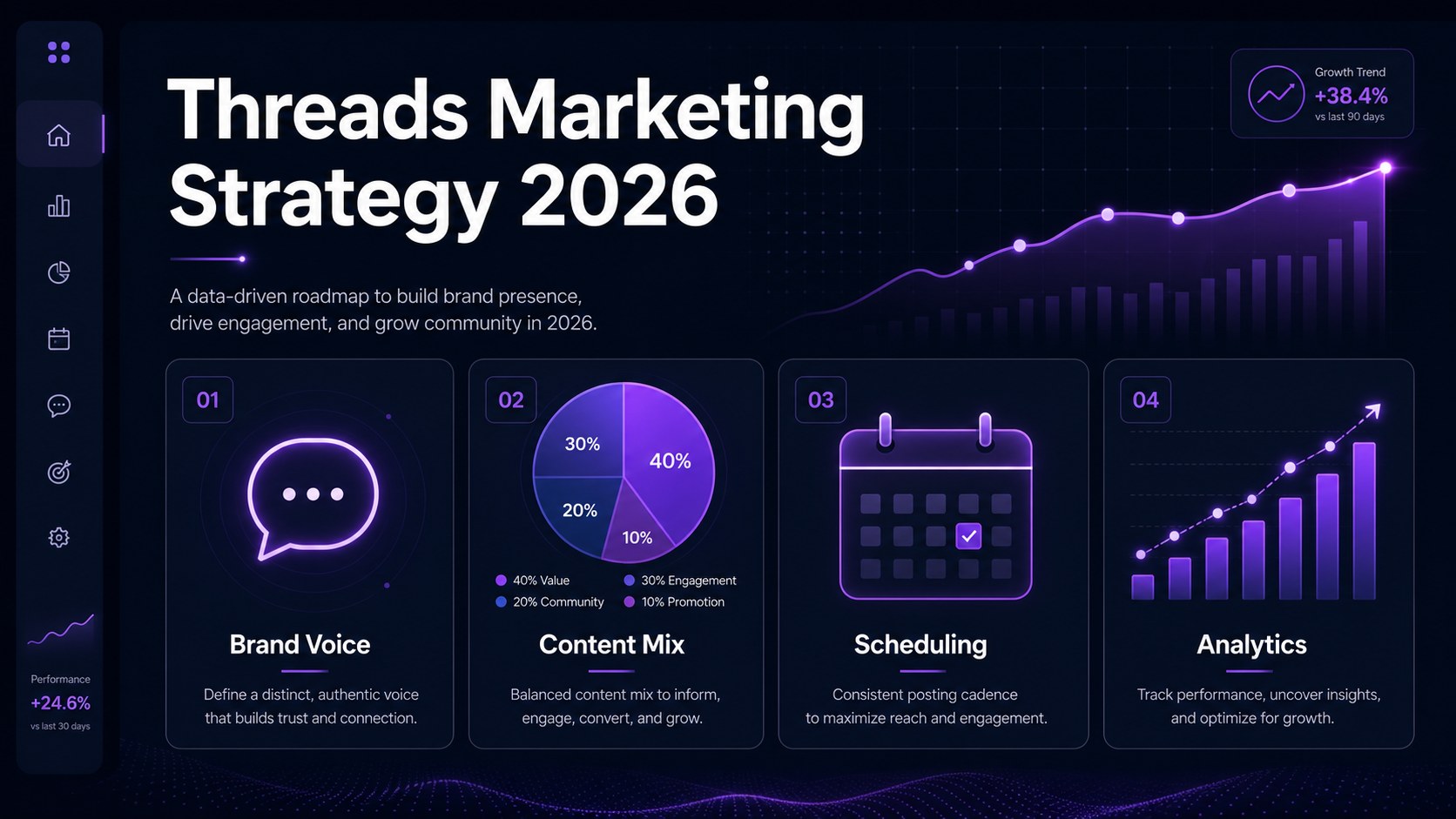
By the end of this guide, you'll have a complete Threads marketing strategy you can implement today.
You'll know exactly what content to post, when to post it, and how to measure what works.
You'll understand why most Threads marketing fails and how to avoid the same traps.
Threads has 350M monthly users and its algorithm prioritizes replies and conversations over likes and impressions.
A 4-layer funnel (awareness, engagement, trust, conversion) maps directly to Threads' conversational format.
The 40/30/20/10 content mix keeps your feed human while still driving business results.
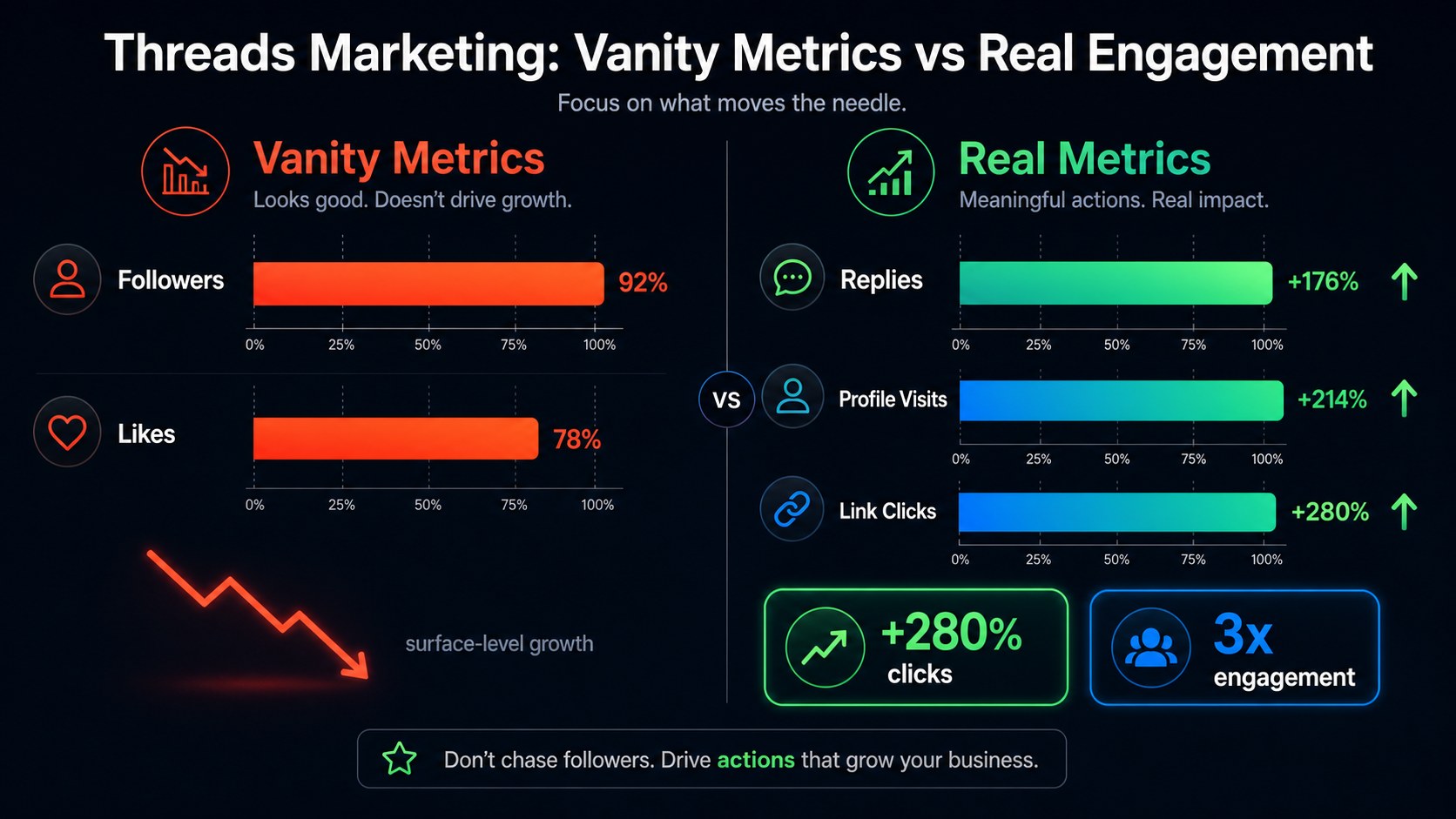
Track replies, profile visits, and link clicks. Followers and impressions are lagging indicators.
JoltSage lets you schedule Threads posts, track engagement, and adjust your mix without switching between five different tools.
Threads at 350 Million Users: Why the Window Is Still Open
Threads hit 350 million monthly active users in early 2026. That's not Instagram scale yet, but it's past the tipping point where a platform becomes unavoidable for marketers. More importantly, the audience skews toward real conversation. People open Threads to talk, not to scroll passively through polished feeds. That behavioral difference changes everything about how you should show up.
The brands seeing the best results aren't the ones with the biggest budgets. They're the ones who treated Threads like a group chat from day one. A DTC skincare brand I spoke with last month started posting raw, unedited thoughts about ingredient sourcing on Threads. No graphics, no hashtags, no links. Just text. Within six weeks, their Threads posts were driving more profile visits than their Instagram Reels, and their weekly newsletter signups from Threads link clicks had tripled.
The opportunity right now is that most brands still haven't figured Threads out. They cross-post, they broadcast, and they wonder why engagement is flat. If you build a real strategy now, you're competing against a thinner field than you'd face on Instagram or TikTok. That won't last forever. For a deeper look at the platform's growth trajectory and what it means for your brand, check our guide to Threads growth strategy.
How the Conversational Algorithm Actually Works
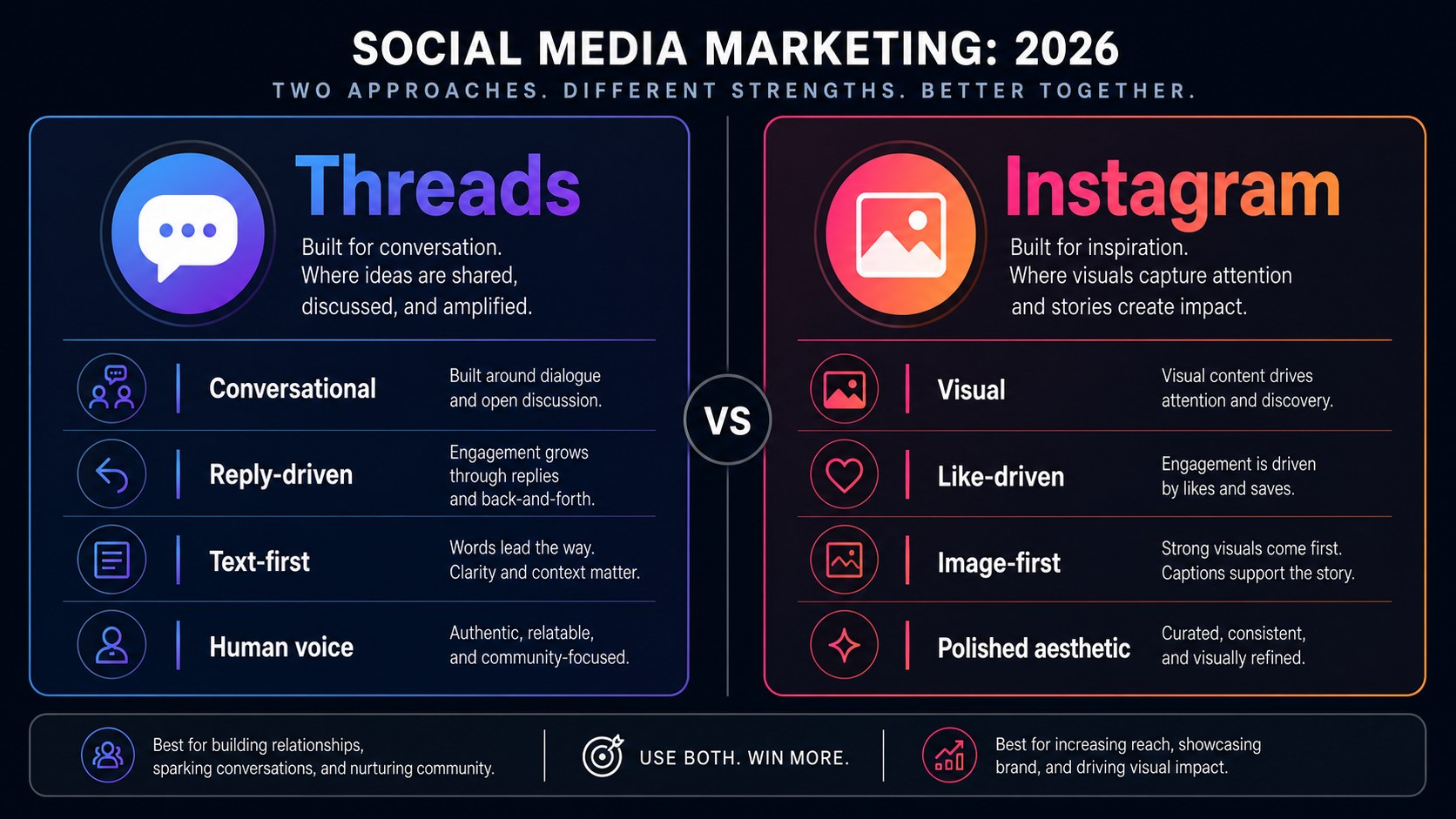
Threads runs on what Meta calls a conversational algorithm. Unlike Instagram, where likes and saves dominate, Threads prioritizes replies. If someone replies to your post, the algorithm treats that as a strong signal that your content sparked something real. Posts that generate back-and-forth conversation get pushed to more feeds. Posts that get likes but no replies fade quickly.
This means your goal isn't to go viral. It's to start conversations. A post with 40 replies will typically outperform a post with 400 likes and 2 replies in terms of reach. The algorithm also weighs reshares, but only when they come with added commentary. A bare reshare does almost nothing. A reshare with a thoughtful take amplifies both accounts.
Practically, this changes how you write. Every post should invite a response. Ask questions. Share opinions that people can agree or disagree with. Post takes that feel like they belong in a group chat, not a press release. If you want to dig deeper into the mechanics of writing posts that trigger replies, our guide to writing Threads posts breaks down specific hooks and formats that work.
The 4-Layer Threads Funnel
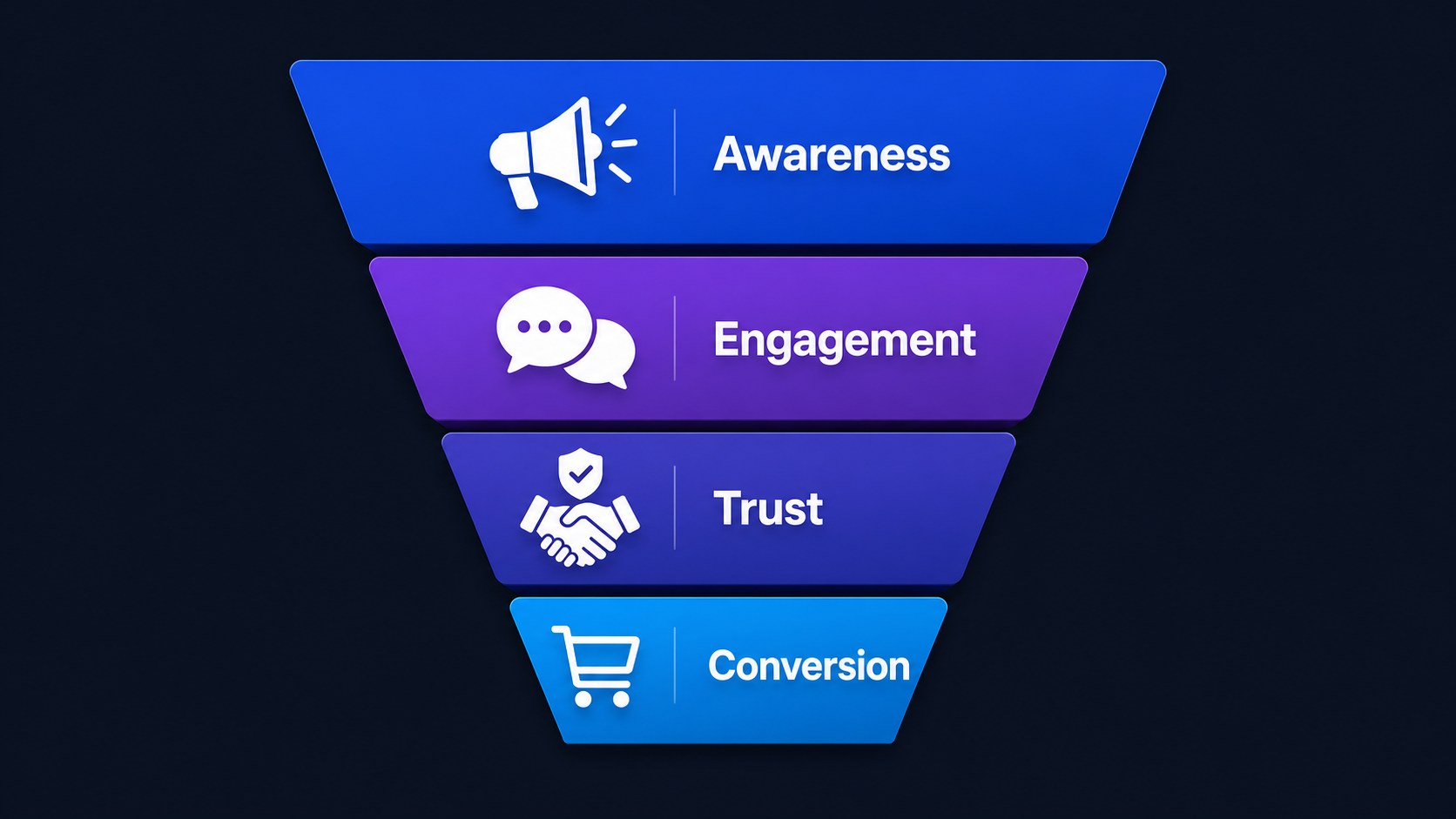
Most brands treat Threads as a top-of-funnel awareness channel. That's a mistake. Threads can carry people through every stage of a buying journey if you structure your content intentionally. We use a four-layer funnel: awareness, engagement, trust, and conversion. Each layer has a specific content type and a specific metric you're optimizing for.
Awareness is about getting discovered. Conversational posts, cultural commentary, and trending topic responses put you in front of new people. The metric here is reach and new follower rate. Engagement is where most Threads activity lives. You're starting conversations, replying to others, and building a recognizable voice. Track replies per post and reply rate. Trust is the layer most brands skip. This is where you share behind-the-scenes content, customer stories, and honest takes that make people feel like they know you. Track profile visits and saves.
Conversion is the bottom layer, and it's where Threads quietly excels. When someone has been engaging with your posts for weeks, a well-placed link in a relevant thread can drive meaningful traffic. We've seen brands get 3x higher click-through rates on Threads links compared to link-in-bio Instagram traffic, simply because the audience already trusts the voice behind the link. Track link clicks and downstream conversions. For the full breakdown of how to map content to each funnel stage, see our Threads funnel strategy guide.
Treating Threads like Instagram. Cross-posting polished Reels captions or link-dropping without context will kill your reach. Threads rewards conversation, not broadcasts.
Posting too many links too early. If every post links to your website, the algorithm and your audience will tune you out. Earn the right to share links by building a conversational feed first.
Ignoring replies. When someone takes the time to reply, responding within a few hours signals to the algorithm that your content is sparking real interaction. Ghosting your own comment section is the fastest way to flatten your reach.
Optimizing for followers instead of engagement. A 2,000-follower account with high reply rates will outperform a 20,000-follower account that gets silence. Chasing follower count leads to strategies that don't drive business results.
Posting inconsistently. Threads rewards accounts that show up daily. A burst of 10 posts followed by a week of silence resets your momentum every time. Use scheduling to stay consistent.
The 40/30/20/10 Content Mix
To keep your Threads feed balanced, we recommend a 40/30/20/10 content mix. This framework ensures you're not over-indexing on any one type of content and that your feed feels human, not like a scheduled drip campaign. Here's how it breaks down.
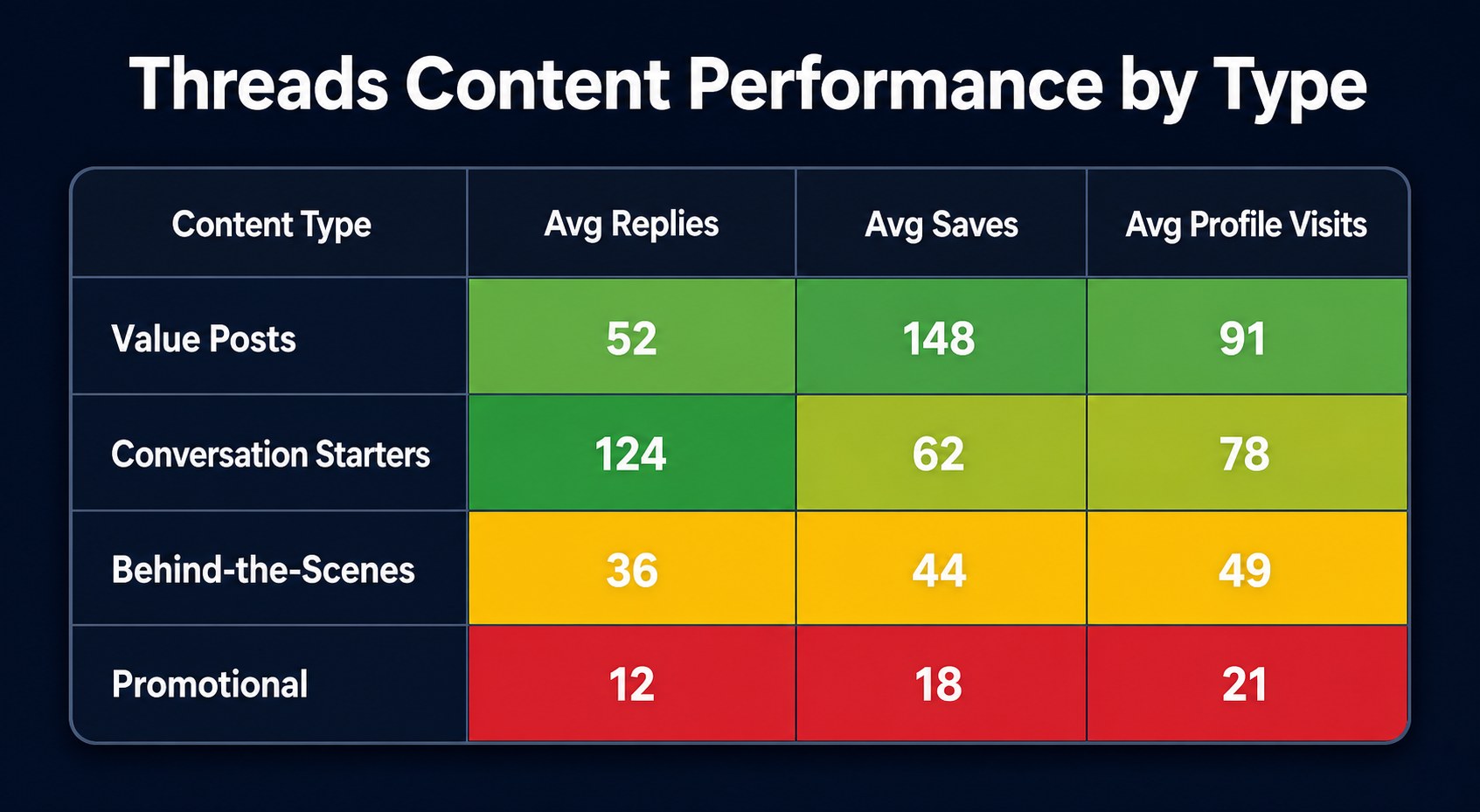
Forty percent conversational. These are your text posts, hot takes, questions, and casual observations. They're the engine of your Threads presence. Thirty percent educational. Share what you know. Break down industry trends, explain how something works, or share a lesson from a recent project. Educational posts build authority and give people a reason to follow you specifically. Twenty percent cultural. React to what's happening in your industry or the wider world. Cultural posts show that real humans are behind your account, not a content calendar robot. Ten percent promotional. Yes, only ten percent. Links to your product, newsletter signups, and launches go here. When the other ninety percent of your feed is genuinely worth following, your promotional posts land harder because they don't feel like the whole point.
A B2B SaaS company we worked with shifted from 80% promotional to this 40/30/20/10 mix. Their reply rate went up 4x in the first month. Their link clicks went up too, even though they were posting fewer links. The lesson is simple: when you stop selling constantly, people start listening when you do. To figure out the right rhythm for this mix, our guide to Threads posting frequency walks through daily and weekly cadence recommendations.
Finding Your Brand Voice on Threads
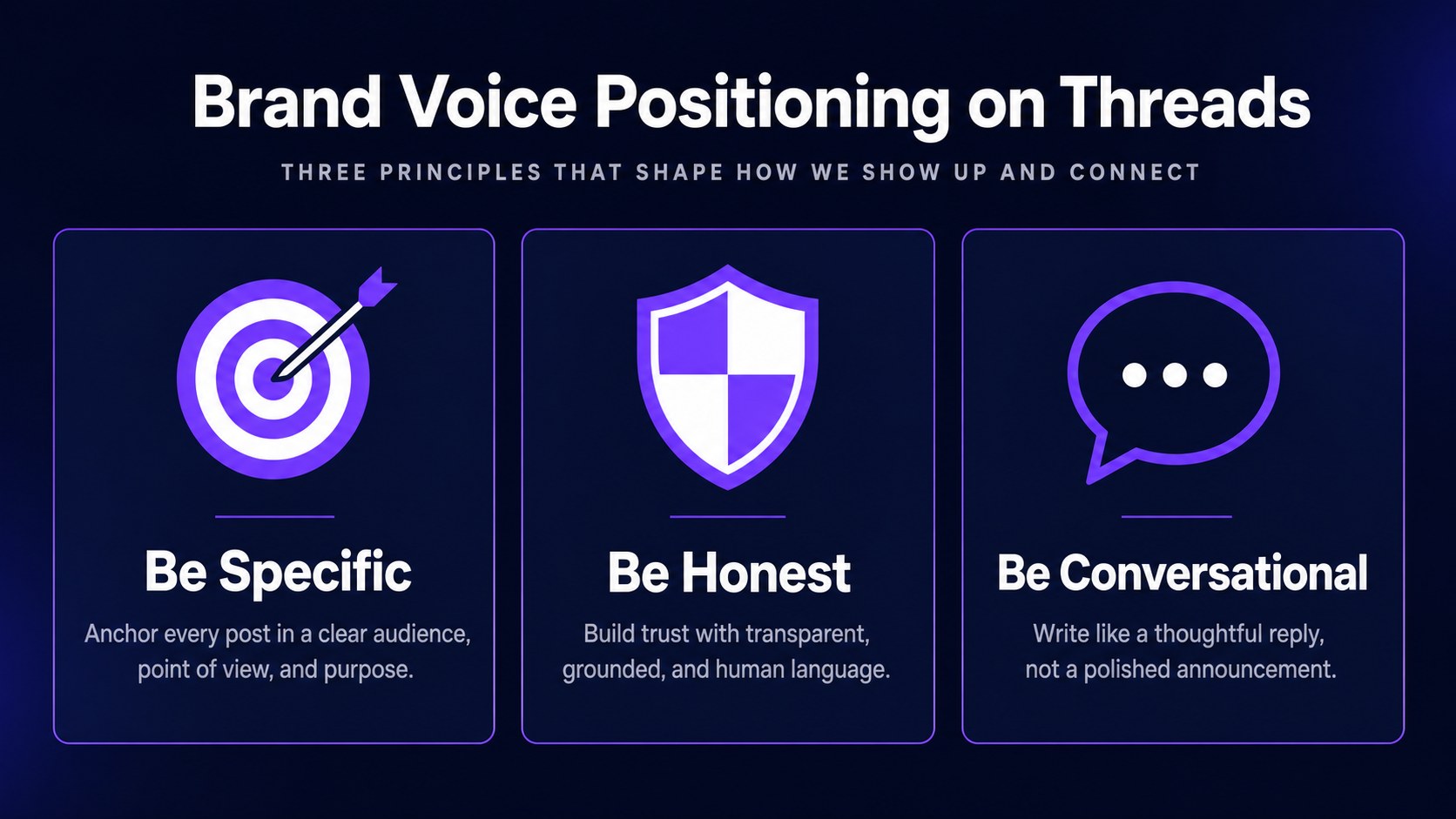
Threads rewards voice more than any other platform right now. Because the format is text-first and conversation-driven, a generic brand voice disappears into the feed. The accounts that stand out sound like a specific person, not a marketing department.
Developing your Threads voice doesn't mean being funny or edgy if that's not authentic to your brand. It means being consistent, opinionated, and human. Write the way you'd text a smart colleague. Use contractions. Share incomplete thoughts sometimes. Let people see your process, not just your polished conclusions. A fitness brand that posts a generic line about believing in sustainable training will get scrolled past. A fitness brand that posts about how your morning workout doesn't need to be 90 minutes and 20 focused minutes beats an hour of zombie cardio will get replies.
Voice also means knowing what you won't post. Set boundaries early. If your brand shouldn't weigh in on politics, say so internally. If you want to avoid jargon, make that a rule. Constraints make your voice sharper, not weaker. For tactical advice on crafting posts that sound like you, our guide to writing Threads posts includes voice exercises and before-and-after examples.
Scheduling and Analytics with JoltSage
Consistency is the single biggest factor in Threads growth, and consistency requires scheduling. You can't rely on inspiration to strike three to five times a day. You need a system that lets you batch content, schedule it, and track what happens after it goes live. This is where JoltSage comes in.
JoltSage lets you plan your week of Threads content in one sitting. You can draft posts, assign them to your 40/30/20/10 categories, and schedule them across the times your audience is most active. Instead of guessing when to post, JoltSage analyzes your historical engagement and recommends optimal windows. You can also manage multiple brand accounts from a single dashboard, which matters if you're running Threads for more than one project.
On the analytics side, JoltSage surfaces the metrics that actually matter on Threads: replies, profile visits, and link clicks. It tracks how each post performs across your content mix, so you can see whether your conversational posts are driving more engagement than your educational ones, or whether your promotional posts are generating clicks. The dashboard also flags your best-performing posts so you can identify patterns and replicate what works.
For figuring out when your specific audience is most active, our guide to the best times to post on Threads has platform-wide benchmarks. For building a sustainable weekly schedule, our Threads scheduling guide walks through a batch-creation workflow that pairs naturally with JoltSage. And for understanding the analytics side, our Threads analytics guide explains which metrics to track and which to ignore.
Your Weekly Threads Workflow
Here's what a sustainable Threads week looks like. On Monday, batch-write 15 to 20 posts across your 40/30/20/10 mix. On Tuesday, load them into JoltSage and schedule them across the week. Wednesday through Friday, spend 20 minutes a day replying to comments, engaging with other accounts, and posting one or two spontaneous reactions to what's happening in your industry. On Friday, check your analytics. Which posts got the most replies? Which drove profile visits? Adjust next week's batch based on what you learned.
The weekly review is where the strategy compounds. Most brands post blindly and never look back. If you spend even fifteen minutes a week analyzing what worked, you'll improve faster than 90% of accounts on the platform. Over a quarter, that compounds into a noticeably sharper content strategy.
Action checklist
Use this as the practical next pass after reading the guide.
- +Audit your current Threads account. Count your last 20 posts and categorize them. Are you close to 40/30/20/10, or are you heavy on promotional?
- +Write 10 conversational posts this week. No links, no CTAs. Just opinions, questions, and observations that invite replies.
- +Set up a JoltSage scheduling workflow. Batch your content on one day and schedule across the week.
- +Track three metrics only: replies per post, profile visits per week, and link clicks per week. Ignore follower count for the first 30 days.
- +Reply to every comment on your posts within 24 hours for the next two weeks. Treat your comment section like a group chat.
- +Run a weekly review every Friday. Note your top 3 posts, identify what they had in common, and adjust next week's batch.
Frequently asked questions
How often should I post on Threads in 2026?
Most brands see the best results posting 3 to 5 times per day on Threads. The platform rewards consistency and recency, so spacing posts throughout the day works better than dumping them all at once. Our Threads posting frequency guide has detailed benchmarks by industry.
What is the Threads algorithm in 2026?
The Threads algorithm prioritizes replies and conversations over likes and impressions. Posts that generate back-and-forth discussion get pushed to more feeds. Reshares with added commentary also boost reach, while bare reshares and link-only posts tend to underperform.
Can Threads drive real business results?
Yes. Threads drives business results through profile visits, link clicks, and relationship building. Brands that focus on conversational content before promotional posts typically see higher click-through rates than they get from Instagram bio links. The key is earning trust before asking for clicks.
What is the best content mix for Threads?
We recommend a 40/30/20/10 mix: 40% conversational, 30% educational, 20% cultural, and 10% promotional. This keeps your feed human while still driving business outcomes. Brands that shift from heavy promotional mixes to this framework typically see reply rates multiply within weeks.
When is the best time to post on Threads?
Engagement peaks during weekday mornings and evenings, but your specific audience may differ. Use JoltSage's scheduling analytics to find when your followers are most active. Our best times to post on Threads guide has platform-wide benchmarks to start with.
Should I cross-post from Instagram to Threads?
Cross-posting occasionally is fine, but it shouldn't be your entire strategy. Threads rewards text-first, conversational content that feels native to the platform. Instagram captions are often too polished or too visual for Threads. Write specifically for Threads whenever possible.
How do I measure Threads success?
Track three metrics: replies per post, profile visits per week, and link clicks per week. These correlate directly with business outcomes. Follower count and impressions are useful for tracking trends over time, but they're lagging indicators. Reply rate is the leading indicator that tells you your content is resonating.
How is JoltSage different from other Threads scheduling tools?
JoltSage combines scheduling, content categorization, and analytics in one dashboard. Instead of just queuing posts, it helps you maintain a balanced content mix, tracks which categories perform best, and recommends optimal posting times based on your actual engagement data. It's built for brands that want a strategy, not just a calendar.
Conclusion
Threads in 2026 is not a secondary channel you can phone in with recycled content. It's a conversational platform where brands that show up like real people can build trust, drive traffic, and create business outcomes that bigger platforms can't match.
Start with the 40/30/20/10 mix, track replies and profile visits instead of vanity metrics, and use JoltSage to stay consistent without burning out. The strategy is simple. The execution is what separates accounts that grow from accounts that stall.
Pick one thing from this guide and do it today. Write your first conversational post. Schedule a week of content. Reply to someone. Momentum builds fast when you stop overthinking and start showing up.