What this guide is really about
You have been posting on Threads for weeks and the view counts are brutal. Single digits on most posts. Maybe nine views on a lucky one. It feels like shouting into a room where nobody is listening.
Here is the part nobody tells you. Almost every low-view account is making the same three fixable mistakes, and once you know what they are, the views start showing up fast.
This guide breaks down nine tactics that actually move the needle on Threads reach in 2026. From the reply ladder to text-first formatting and first-hour velocity, you will get concrete steps plus a day-by-day plan you can run this week.
To get more views on Threads, post text-first (links get suppressed), reply early on bigger accounts in the first 10 minutes, hit first-hour velocity with your own replies, ask open-ended questions, and post 3 to 5 times a day during peak windows. Most zero-view posts fail because of format, timing, or a link drop in the main post, not because the algorithm hates you.

You will understand exactly why your Threads posts get almost no views right now.
You will learn the nine tactics that push posts into more feeds in 2026.
You will get a concrete day-by-day reach plan you can run this week.
You will know which numbers to track and which to ignore.
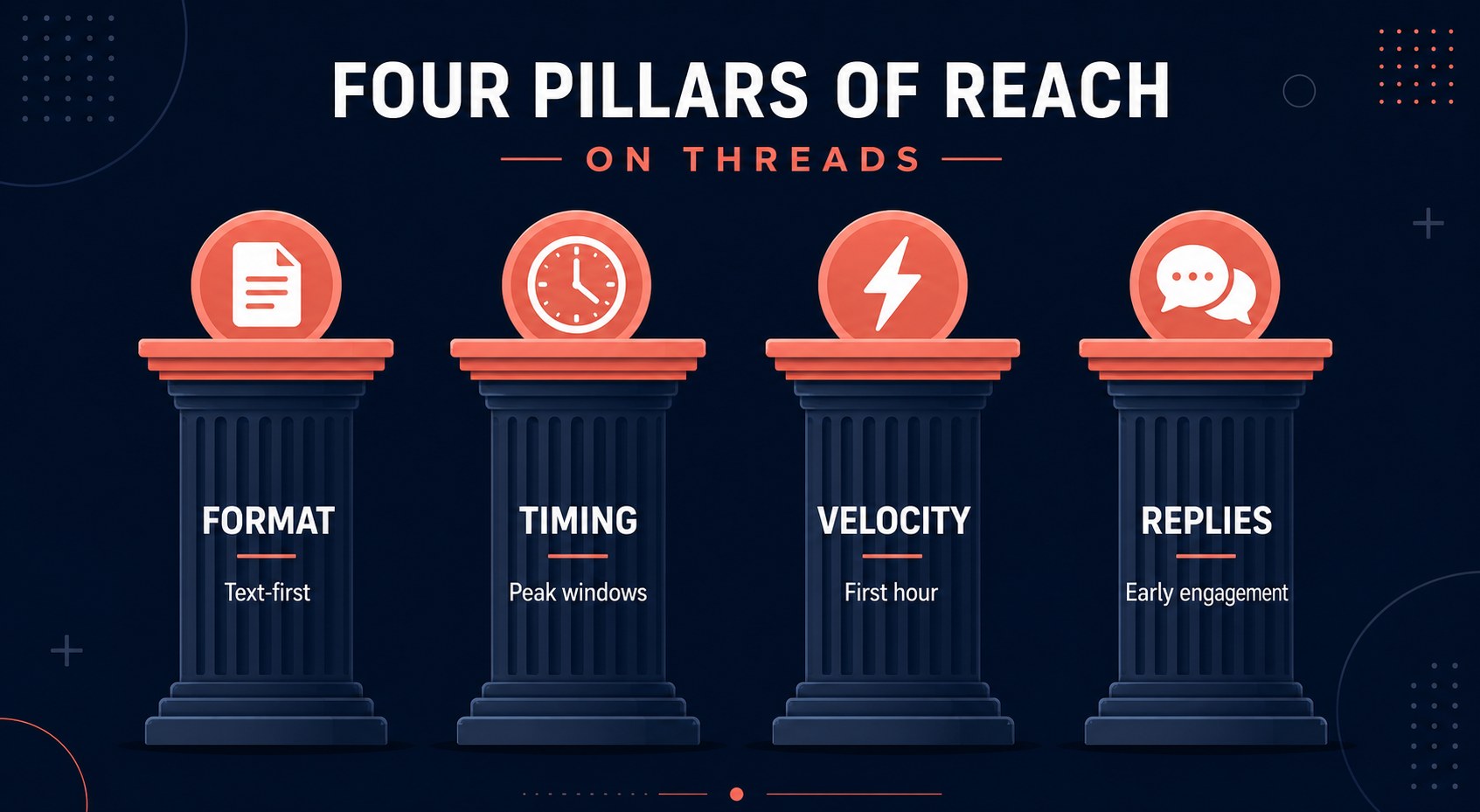
Threads favors plain text posts over link posts. Drop a link in the main post and your reach tanks.
Replying early on bigger accounts is the fastest way to borrow reach when you have almost none.
Post three to five times a day in peak windows instead of once and hoping.
First-hour velocity decides whether a post gets pushed. A post sitting at zero for an hour rarely recovers.
Track total views weekly, not daily. Daily swings are noise.
Why your Threads posts get almost no views (and it is not the algorithm's fault)
You posted for two straight weeks. Checked every single post the moment it went up. Three views. Four views. Maybe nine on a lucky one. It felt like shouting into a void with nobody on the other end of it.
At some point you started to wonder if the app was broken. Maybe the algorithm just hates small accounts. Maybe Threads only shows posts from people who already have a million followers. That is the story everyone tells themselves when the numbers stay flat and nothing seems to land.
Here is the truth. It is almost never the algorithm picking on you. It is three fixable things. The wrong format, the wrong timing, and zero early momentum. That is the whole list, and every one of them is something you can control starting today.
Threads does not need you to be famous to show your posts. It needs signals. When a post gets early replies and people spend time reading it, Threads pushes it to more feeds. No early signals means no push. The rest of this article is the nine tactics that actually create those signals, and most of them take under ten minutes to test.
The format layer: text-first posts and why plain words win on Threads
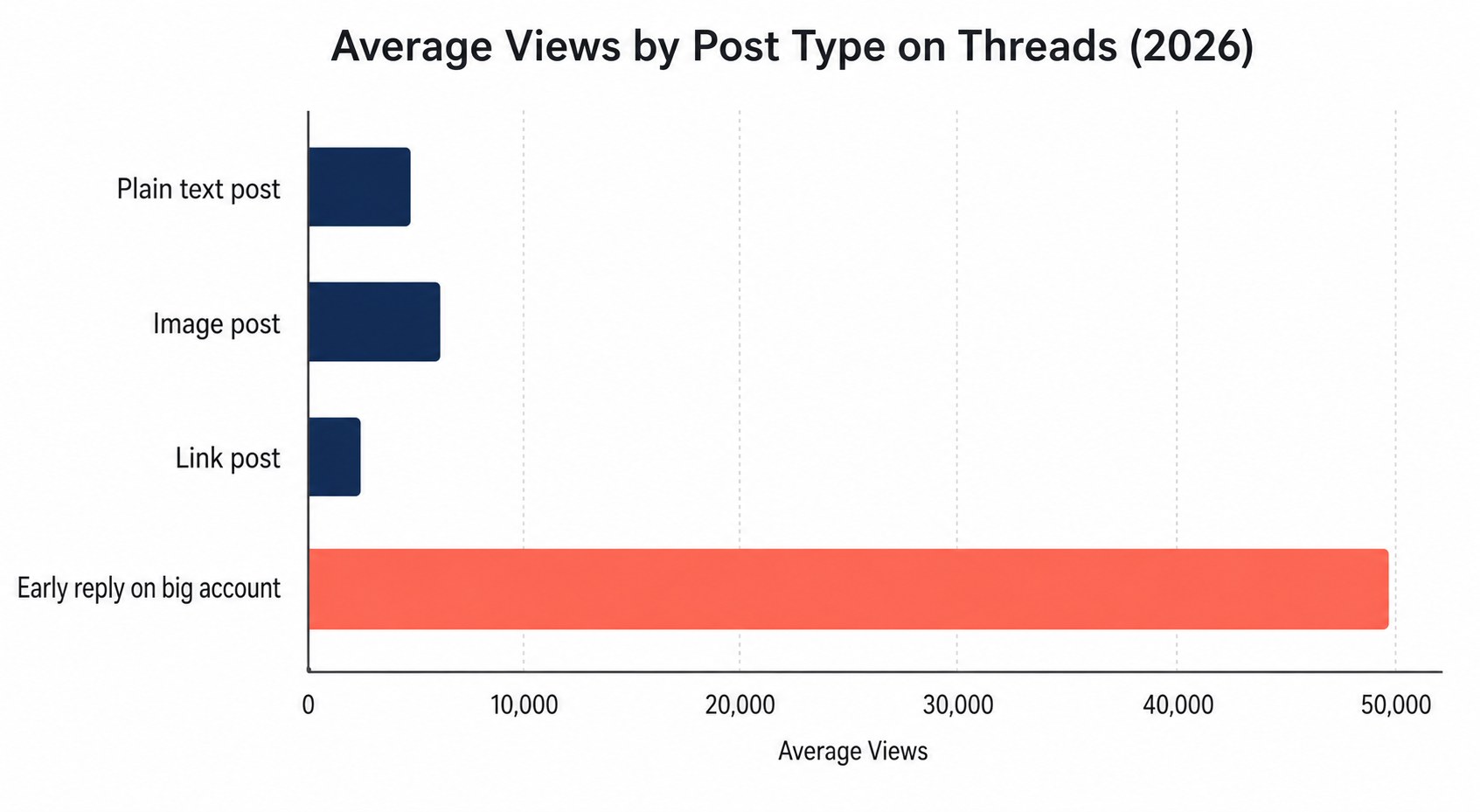
Threads was built for text. The algorithm visibly favors plain text posts over link posts, and this is not subtle. Drop a link in your main post and it gets shown to fewer people almost every single time.
Here is a real example. The same idea posted two ways. As a text post with the link in the first reply, it pulled 40 times the views of the version with the link sitting in the main post. Same words, same account, same time of day. Different format, wildly different reach. That single change is worth more than any hashtag strategy.
The rule is simple. Write the hook in the first line. The first sentence is what shows in feeds before the "more" cutoff. If it is boring, people scroll past and the post dies before it has a chance to build momentum. Spend more time on that first line than the rest of the post combined.
Here is your micro-step. For your next five posts, write the full idea as plain text. If you need a link, put it in the first reply, not the main post. Try it for five posts and watch what happens to the view count. What did you notice after switching?
The reply ladder: how one early reply can beat 50 of your own posts
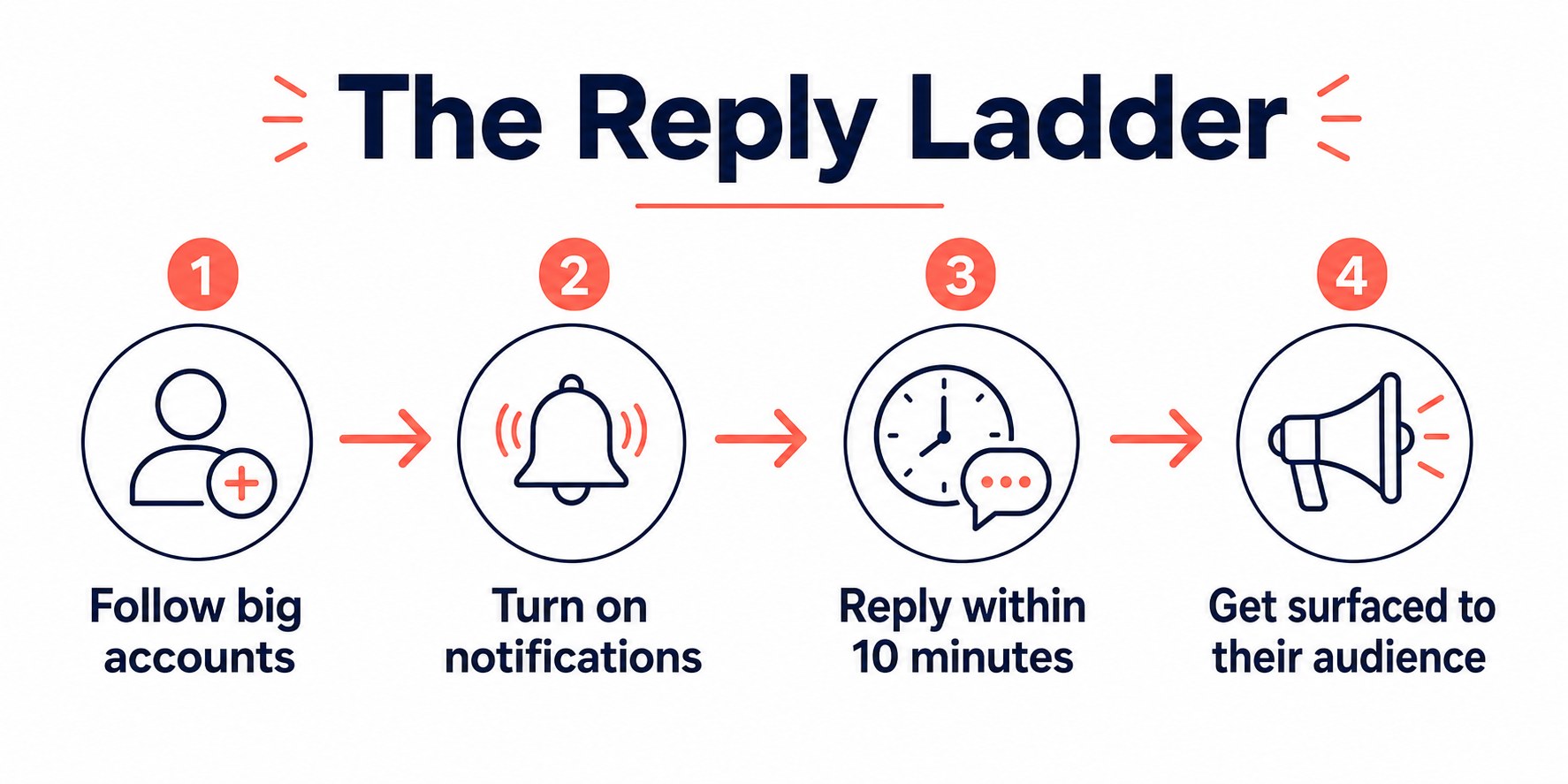
This is the single fastest way to borrow reach when you have none. When you reply to a big account's post in the first 5 to 15 minutes, Threads surfaces your reply to that account's audience, not just your own followers.
A creator with 600 followers replied with twelve words on a 200k-follower account's post within eight minutes. That single reply got 18,000 views in a day. More than their last fifty posts combined. Twelve words, eight minutes, eighteen thousand views. No following required.
Here is why it works. Big posts get a lot of replies, but the earliest ones sit at the top and get the most impressions. Being early matters more than being clever. A decent reply at minute five beats a brilliant reply at minute forty-five, because most people never scroll that far down.
Your micro-step. Turn on post notifications for five big accounts in your niche. When they post, reply with something genuinely useful in under ten minutes. Do this three times today and watch the view count on those replies. Which account in your niche would you start with?
Dropping a link in the main post instead of the first reply.
Posting once a day and waiting for something to happen.
Ignoring replies on bigger accounts because it feels small.
Optimizing for likes instead of views and reach.
Giving up before first-hour velocity has a chance to kick in.
Timing and frequency: peak windows and why 3 to 5 posts beat 1
Views compound with consistency. One post a day gives you one shot at catching a feed. Three to five posts spread across the day gives you five chances. The math is not complicated, but almost nobody does it.
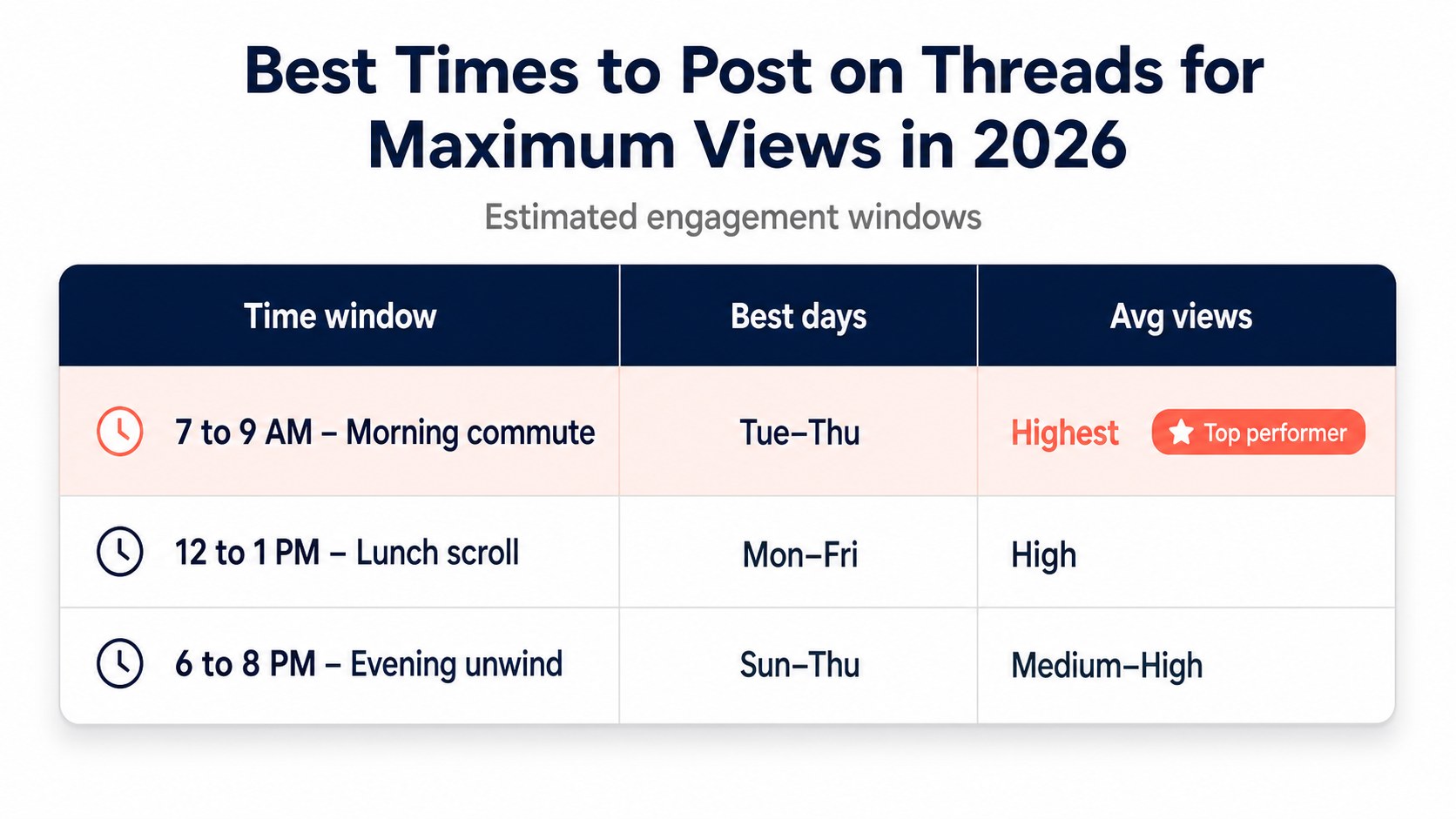
If you want the exact peak windows, the data-backed breakdown is in our best time to post on Threads guide. Weekday mornings, lunch hours, and weekday evenings tend to pull the most views across most niches. The windows are not mysterious, they just require you to actually show up during them.
Here is a quick story. The same short idea posted at 8am caught the morning commute scroll and pulled solid views. The exact same words at 2pm flatlined completely. Timing is not everything, but it is the cheapest win you can get. You do not need better content, you need better timing.
Then there is first-hour velocity. The first 60 minutes after you post are when the algorithm decides whether to push it. Your own reply to extend the thread, an early like from a friend, a quick question in the comments, all of these help. A post that sits with zero engagement for an hour rarely recovers.
The reach multipliers: open questions, voice notes, and self-threading
Posts that invite replies get more distribution because replies are a signal Threads uses to decide what to show more people. An open-ended question is the cheapest way to manufacture that signal from scratch without spending a dime.
A single question post asking "what is the one tool you use every day that nobody talks about" pulled over 200 replies. Each reply pushed the post to that person's followers too. One post, hundreds of free distribution channels working at the same time.
Voice notes are newer on Threads and still get a novelty boost. A 20 second voice note on a topic you know well can outperform the same idea written out. People stop scrolling for audio because it stands out in a feed that is almost entirely text.
Self-threading is the last multiplier. Reply to your own post to continue the thought. It keeps people in your thread longer, which means more dwell time, and it signals to the algorithm that the post has depth worth exploring. Use it whenever a single post cannot hold the full idea you are trying to share.
How to read your view count without drowning in vanity numbers
Views, impressions, and engagement rate are three different things. Views is how many people saw the post. Engagement rate is how many of those people did something about it. You can have huge views and low engagement, or low views and high engagement. Both tell you something useful if you know what to look for.
If you want the full breakdown of what each metric means and which ones to ignore, our Threads analytics explained guide walks through every number on the dashboard and shows you which ones actually matter.
This is also where a tool like JoltSage earns its keep. Instead of clicking into every post to copy view numbers into a spreadsheet by hand, you see all your reach data in one dashboard and spot which post types and times actually perform without the busywork.
What to track weekly. Total views, which post type pulled the most, which time window won. Ignore daily swings because they are noise that will drive you crazy. Look at the weekly trend and adjust from there. Ready to see which of your posts is quietly outperforming the rest?
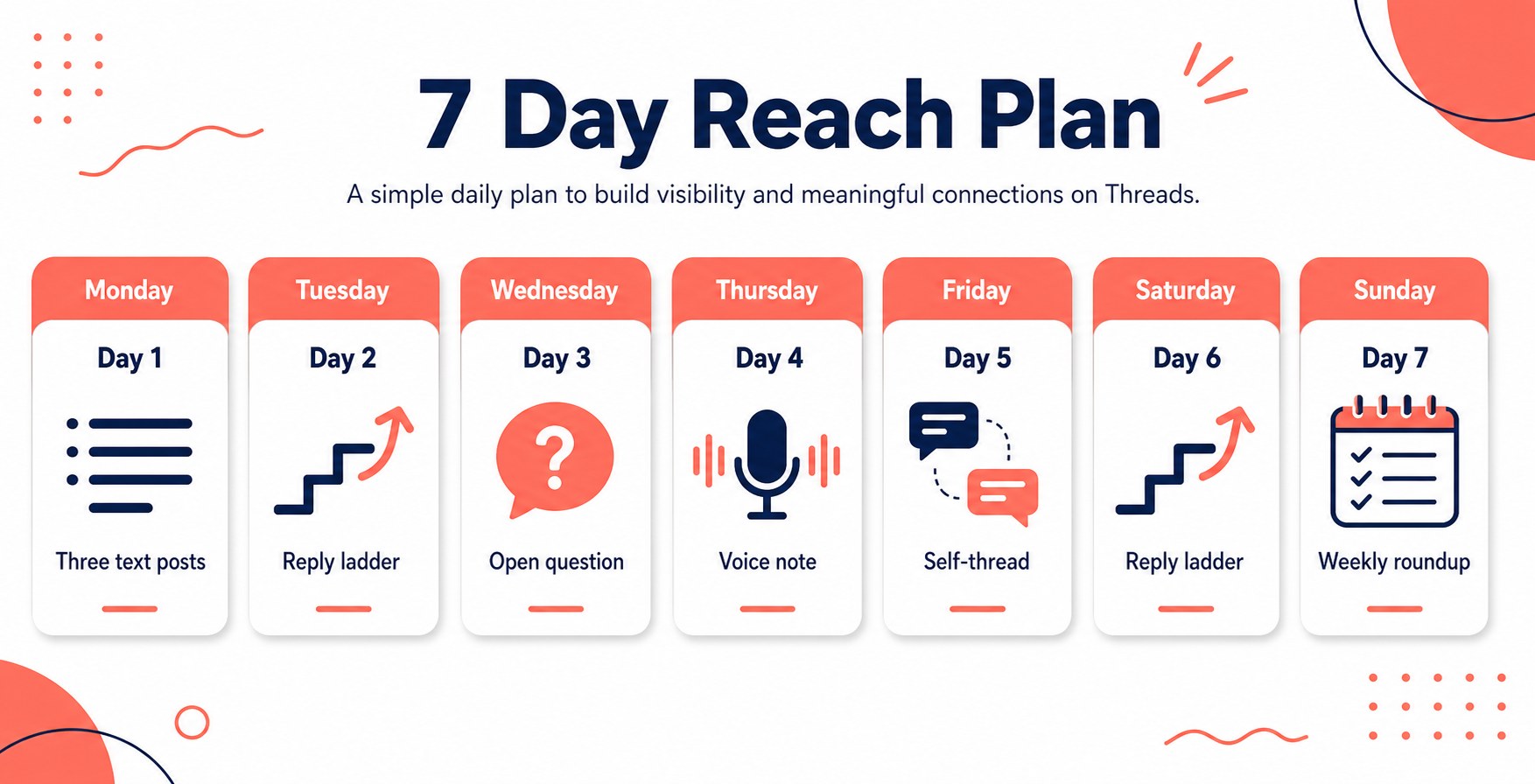
Your first-week reach plan: exactly what to post for 7 days
Here is a concrete day-by-day plan so you can act immediately instead of overthinking it. Run this for seven days straight and track the results at the end of the week.
Day 1: three text-first posts with the hook in the first line. Day 2: the reply ladder, reply early on three big accounts. Day 3: one open-ended question post. Day 4: one voice note on something you know well. Day 5: one text post followed by two self-replies to extend it. Day 6: reply ladder again on five accounts. Day 7: a roundup post of the best thing you learned this week.
A reader who ran this exact week went from under 100 views a day to over 2,000 by day five. Not viral. Just real, repeatable reach from showing up in the right formats at the right times and giving the algorithm the signals it was looking for all along.
The point of the plan is not to go viral. It is to build the habit of showing up in the formats and windows that actually get shown. Consistency compounds. That is the whole game. If you want to batch this whole week in one sitting instead of posting manually every day, that is exactly what JoltSage's free threads scheduler is built for.
Action checklist
Use this as the practical next pass after reading the guide.
- +Switch your next five posts to text-first with the hook in line one.
- +Turn on notifications for five big accounts in your niche.
- +Reply within ten minutes on three big posts today.
- +Batch three posts for your peak window tomorrow morning.
- +Ask one open-ended question per day for a week.
- +Track your total views weekly, not daily.
Frequently asked questions
How many views is good on Threads?
For a new account, 100 to 500 views per post is a solid start. Established accounts often see 1,000 to 10,000. The number that matters is whether it is growing week over week, not the raw total.
Why am I getting zero views on Threads?
Usually one of three things. A link in the main post, posting at a dead hour, or no early replies. Fix the format, post in a peak window, and add your own reply to start the thread.
What is the best time to post on Threads for views?
Weekday mornings around 7 to 9am, lunch at 12 to 1pm, and evenings 6 to 8pm tend to pull the most views. Your own data is the real answer, which is why tracking matters.
Do hashtags increase views on Threads?
Not much. Threads does not rely on hashtags the way Instagram does. One or two can help discovery, but a wall of hashtags will not save a weak post.
Do link posts get fewer views on Threads?
Yes. Threads suppresses outbound links in the main post. Put the link in the first reply and write the idea as plain text in the main post.
How often should I post on Threads to get more views?
Three to five posts a day gives you enough chances to catch feeds without burning out. Quality still matters, so do not post just to hit a number.
Does replying on bigger accounts really increase my views?
Yes, especially in the first ten minutes. Early replies get surfaced to the original poster's audience, which is reach you cannot buy at your follower count.
How long does it take to see more views on Threads?
Most accounts see a noticeable jump within one to two weeks of posting consistently in the right formats and windows. The reply ladder can work the same day.
Conclusion
Views on Threads are not random and they are not reserved for big accounts. They go to the posts that give the algorithm the right early signals.
Start with the reply ladder today. It is the one tactic that needs zero followers and zero tools to test, and it can work the same afternoon you try it.
Then batch your first week and schedule it so you never miss a peak window again. That is how you turn a few scattered views into steady, growing reach.