How to Repurpose Your Content for Threads and grow your Reach significantly in 2026
Last updated: February 10, 2026. Threads features and availability can vary by region, account type, and policy updates.
Struggling to keep up with the Threads algorithm and constantly create fresh content? You're not alone. But what if you could dramatically increase your reach without burning out? Repurposing your existing content is the key. In this guide, we'll show you how to effectively repurpose your content for Threads in 2026 and beyond, allowing you to grow your audience significantly without starting from scratch every time.
The goal is to take content you've already invested time and effort into and give it new life on Threads. This saves you time, reinforces your message, and reaches a wider audience who might not have seen it the first time around.

Why Repurpose Content for Threads?
Before we dive into the "how," let's address the "why." Repurposing content offers significant advantages for Threads creators:
- Saves Time and Resources: Creating original content takes time. Repurposing allows you to leverage existing resources.
- Reaches a Wider Audience: Not everyone follows you on all platforms. Repurposing exposes your content to new viewers on Threads.
- Reinforces Your Message: Repeated exposure to your key messages increases brand recall and audience comprehension.
- Improves SEO (Indirectly): While Threads is a closed platform, consistent content helps build your brand authority which can benefit your overall online presence.
- Extends Content Lifespan: Gives your content a second (or third) life, maximizing its impact.
Understanding the Threads Landscape in 2026
The Threads landscape is constantly evolving. In 2026, we can anticipate:
- Increased Competition: More creators will be vying for attention.
- Algorithm Updates: The algorithm will continue to evolve, favoring engaging and relevant content.
- Shorter Attention Spans: Capturing attention quickly will be crucial.
- Emphasis on Community: Building relationships and fostering engagement will be more important than ever.
- Integration with the Metaverse: Potential for integration with emerging metaverse platforms, requiring content adaptation.
Therefore, repurposing your content strategically to adapt to these trends is critical for success on Threads.
Repurposing Strategies for Threads: The Ultimate Guide
Here are proven strategies for repurposing different types of content for Threads:
1. Turning Blog Posts into Threads
Blog posts are a treasure trove of repurposable content. Here's how to extract value:
- Identify Key Takeaways: Condense each blog post into its core message.
- Break Down into Smaller Threads: Create a series of interconnected posts that build upon each other.
- Use Visuals: Add relevant images or GIFs to each thread to make it more engaging.
- End with a Call to Action: Encourage viewers to read the original blog post for more details.
Example:
Original Blog Post Title: "5 Ways to Improve Your Email Marketing Open Rates"
Threads Series:
Thread 1: "Struggling with low email open rates? You're not alone! 😔 Start by optimizing your subject lines. #emailmarketing #marketingtips"
Thread 2: "Tip #1: Personalize your subject lines. Use the recipient's name or mention something relevant to their interests. 📧 #emailtips"
Thread 3: "Tip #2: Keep it short and sweet! Subject lines should be concise and to the point. Aim for under 50 characters. ✍️ #subjectlines"
Thread 4: "Want more email marketing tips? Read the full blog post here: [Link to Blog Post] 🚀 #marketing #email"
2. Converting YouTube Videos into Engaging Threads
YouTube videos are another goldmine for repurposing. Here's how to translate them into Threads:
- Transcribe Your Video: Use a transcription service or YouTube's auto-transcription feature.
- Extract Key Quotes and Soundbites: Identify the most impactful moments in your video.
- Create Text-Based Threads: Share those quotes and soundbites as individual threads.
- Embed Video Snippets: If possible, create short video clips (under 60 seconds) and upload them directly to Threads (if the platform allows).
- Use Visuals: Screenshots from the video can also work well.
Example:
Original YouTube Video Title: "How to Build a Strong Brand Identity"
Threads Series:
Thread 1: "Building a strong brand isn't just about a logo. It's about creating an emotional connection with your audience. ❤️ #brandidentity #branding"
Thread 2: "🔑 Key takeaway from my latest video: Your brand values should be reflected in everything you do. Authenticity is key! #authenticity"
Thread 3: "As I mentioned in the video, consistency is crucial. Use the same fonts, colors, and messaging across all platforms. 🎨 #brandconsistency"
Thread 4: "Watch the full video on YouTube for more in-depth tips on building a killer brand: [Link to YouTube Video] #youtube"
3. Transforming Podcasts into Bite-Sized Threads
Podcasts offer a unique opportunity to share audio snippets and insightful quotes on Threads:
- Identify Key Topics: What are the main themes discussed in your podcast episode?
- Extract Compelling Quotes: Highlight impactful statements from your guests or yourself.
- Create Audio Snippets: Share short audio clips (under 60 seconds) directly on Threads (if supported).
- Design Visually Appealing Quote Cards: Create graphics with your quotes overlaid on visually appealing backgrounds.
- Engage with Listeners: Ask questions related to the podcast episode and encourage discussion.
Example:
Original Podcast Episode Title: "The Future of Remote Work"
Threads Series:
Thread 1: "Just released a new podcast episode on the future of remote work! 🎧 We discussed the challenges and opportunities for businesses in 2026. #remotework #podcast"
Thread 2: "Guest speaker @RemoteWorkExpert said: 'Remote work isn't a trend, it's the future of work.' Do you agree? 🤔 #futureofwork"
Thread 3: "[Quote Card Image: A visually appealing image with the quote: 'Remote work allows companies to tap into a global talent pool.'] #talentacquisition"
Thread 4: "Listen to the full episode for more insights on remote work trends and best practices: [Link to Podcast Episode] #business"
4. Adapting Infographics for Threads
Infographics can be easily broken down into visually appealing Threads posts:
- Isolate Key Data Points: Identify the most important statistics and insights from your infographic.
- Create Individual Visuals: Design smaller graphics for each data point, using similar branding to the original infographic.
- Tell a Story with Data: Arrange the individual posts to create a narrative flow.
- Include Context: Add brief explanations and insights to each data point.
- Link to the Full Infographic: Provide a link to the original infographic for those who want more detail.
Example:
Original Infographic Title: "The State of Social Media Marketing in 2025"
Threads Series:
Thread 1: "Sharing some key stats from our State of Social Media Marketing report! 📊 #socialmediamarketing #marketingstats"
Thread 2: "[Image: A graphic showing the statistic: '85% of marketers plan to increase their social media budget in 2026.'] Investment in social media is still growing! 💰 #socialmedia"
Thread 3: "[Image: A graphic showing the statistic: 'Video content will account for 82% of all internet traffic in 2026.'] Video is king! 👑 #videomarketing"
Thread 4: "Want to see the full report and dive deeper into these trends? Download it here: [Link to Infographic] #marketingreport"
5. Reimagining Case Studies for Threads
Case studies are powerful for showcasing results. Repurpose them into concise Threads that highlight key achievements:
- Identify the Core Problem: Briefly describe the challenge the client faced.
- Highlight the Solution: Explain how you helped the client overcome their challenge.
- Showcase Measurable Results: Quantify the impact of your work using specific data points.
- Include a Client Testimonial: Add a short quote from the client expressing their satisfaction.
- Focus on One Success Metric Per Thread: Break the case study into a series of threads each showcasing a specific result.
Example:
Original Case Study Title: "How We Increased Website Traffic by 200% for a Local Business"
Threads Series:
Thread 1: "We helped a local business increase their website traffic by 200%! 🚀 Here's how we did it. #casestudy #marketingresults"
Thread 2: "The challenge: Low website traffic and limited online visibility. 😞 #businesschallenges"
Thread 3: "Our solution: Implemented a comprehensive SEO strategy, focusing on keyword optimization and link building. 📈 #seostrategy"
Thread 4: "Result #1: Website traffic increased by 200% in just 3 months! 🥳 #websitetraffic"
Thread 5: "Client testimonial: 'We've seen a significant increase in leads and sales since working with them!' - [Client Name] #clienttestimonial"
Thread 6: "Want to see the full case study? Read it here: [Link to Case Study] #marketing"

6. Repurposing Webinars into Engaging Content
Webinars contain valuable information and insights that can be effectively repurposed for Threads:
- Identify Key Insights and Talking Points: Review the webinar recording and identify the most important takeaways.
- Create Short Video Clips: Extract engaging video snippets (under 60 seconds) from the webinar.
- Develop Text-Based Threads: Share key insights and actionable tips from the webinar.
- Use Polls and Questions: Encourage audience participation by asking questions related to the webinar topic.
- Offer a Webinar Replay: Provide a link to the webinar recording for those who want to watch the full session.
Example:
Original Webinar Title: "The Future of E-Commerce in 2026"
Threads Series:
Thread 1: "Recapping our recent webinar on the future of e-commerce! 🛍️ Here are some key predictions for 2026. #ecommerce #webinar"
Thread 2: "[Video Clip: A short clip from the webinar discussing the rise of AI in e-commerce.] #ai #artificialintelligence"
Thread 3: "Key Insight: Personalization will be crucial for success in e-commerce. Customers expect tailored experiences. 🎯 #personalization"
Thread 4: "What are your thoughts on the future of e-commerce? Share your predictions in the comments! 👇 #futureofecommerce"
Thread 5: "Missed the webinar? Watch the replay here: [Link to Webinar Replay] #marketingwebinar"
7. Giving Old Tweets a Second Life on Threads
While you might think of starting from scratch, successful tweets can be a source of inspiration:
- Identify High-Performing Tweets: Look for tweets that received high engagement (likes, retweets, replies).
- Expand on the Original Tweet: Elaborate on the topic and provide more context.
- Add Visuals: Include relevant images or GIFs to make the thread more engaging.
- Engage with Your Audience: Ask questions and encourage discussion.
- Update the Information: Make sure the information in the tweet is still accurate and relevant.
Example:
Original Tweet: "Content is king! 👑 #contentmarketing"
Threads Series:
Thread 1: "Remember the saying 'Content is king'? It's still true in 2026, but the rules of the game have changed. 👑 #contentmarketing"
Thread 2: "Now, it's about creating valuable, engaging, and relevant content that resonates with your target audience. ❤️ #audienceengagement"
Thread 3: "Think quality over quantity. Focus on creating content that solves problems and provides value. 💡 #contentstrategy"
Thread 4: "What type of content are you creating in 2026? Share your thoughts in the comments! 👇 #marketing"
8. Repurposing User-Generated Content (UGC)
Leverage the power of your community by repurposing user-generated content:
- Request Permission: Always ask for permission before sharing someone else's content.
- Highlight Positive Reviews and Testimonials: Share positive feedback from your customers.
- Showcase Customer Creations: Feature images or videos of customers using your products or services.
- Run Contests and Challenges: Encourage users to create content related to your brand.
- Give Credit: Always give proper credit to the original creator.
Example:
Original User Post (Instagram): "[Image of a customer using your product] I'm loving this product! It's made my life so much easier. #productname #customerlove"
Threads Series:
Thread 1: "We love seeing our customers using our products! ❤️ Check out this awesome photo from @CustomerName. #customerlove #productname"
Thread 2: "[Image of the customer using your product - same as the Instagram post] #customerreview"
Thread 3: "Want to be featured on our Threads? Share your photos and videos using #brandhashtag! 📸 #community"

Tips for Successful Content Repurposing on Threads
To maximize the impact of your repurposed content on Threads, keep these tips in mind:
- Optimize for Mobile: Threads is primarily a mobile platform, so ensure your content is easily viewable on smartphones.
- Use High-Quality Visuals: Invest in visually appealing images and videos that capture attention.
- Keep it Concise: Threads is designed for short-form content, so keep your posts brief and to the point.
- Engage with Your Audience: Respond to comments and questions promptly.
- Use Relevant Hashtags: Use relevant hashtags to increase the visibility of your content.
- Track Your Results: Monitor your engagement metrics to see what's working and what's not.
- Adapt to the Algorithm: Stay up-to-date on the latest Threads algorithm updates and adjust your strategy accordingly.
- Maintain Brand Consistency: Ensure your repurposed content aligns with your overall brand identity and messaging.
- Schedule Your Posts: Use a scheduling tool to plan and automate your content posting.
- Test and Iterate: Experiment with different repurposing strategies to see what resonates best with your audience.
Conclusion: Maximize Your Threads Presence Through Smart Repurposing
Repurposing your content is a smart and effective way to grow your reach on Threads in 2026 and beyond. By leveraging existing resources, you can save time, reach a wider audience, and reinforce your message. Remember to adapt your content to the Threads platform, optimize for mobile, use high-quality visuals, and engage with your audience.
Next Steps:
- Audit your existing content library (blog posts, videos, podcasts, etc.).
- Identify content that is suitable for repurposing on Threads.
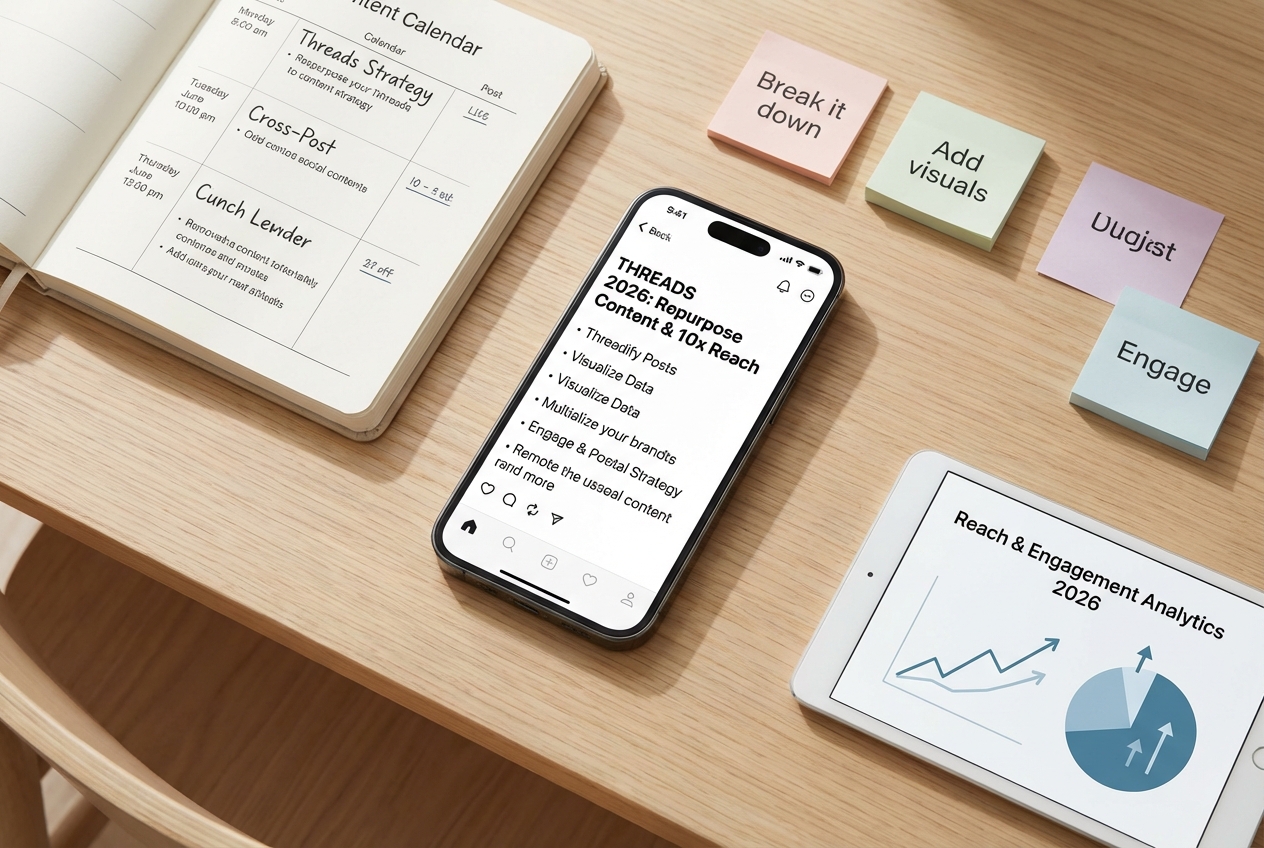
- Create a content calendar outlining your repurposing strategy.
- Start creating and sharing repurposed content on Threads.
- Track your results and adjust your strategy as needed.
By implementing these strategies, you can grow your reach significantly on Threads and achieve your marketing goals in 2026 and beyond.