What this guide is really about
A shop with 49 listings just crossed $366,700 in profit over three years. No face. No videos. No brand. Just digital templates sitting on Etsy, collecting sales at an average of $7.40 each. That is not a typo. Fifty-eight thousand seven hundred people bought from a store where the owner never once showed up on camera.
This is not some outlier story either. Three other faceless Etsy shops pulled in $95,400, $66,100, and $23,300 in pure profit. The margins? Between 75 and 87 percent. Because when your product is a downloadable file, there is no inventory, no shipping, and almost no overhead.
If you have been looking for a side hustle that actually scales without burning you out, this is it. And no, you do not need an audience, a personal brand, or even a real name. Here is exactly how these shops work, what they sell, and how you can build one this weekend.
To sell digital products on Etsy without showing your face, pick a high-demand niche like templates or printables, create products using Canva or AI tools, optimize your listings with keywords, and drive traffic through Pinterest and social platforms like Threads. Real shops are earning $23K to $366K in profit with 75-87% margins, all completely faceless.

See the exact revenue numbers from four real faceless Etsy shops
Learn which digital product types sell best and why
Get a step-by-step weekend launch plan you can follow today
Discover the free and low-cost promotion methods that actually drive sales
Faceless Etsy shops earn 75-87% profit margins because there is zero inventory or shipping
The top-performing shop made $366,700 profit from just 49 listings at a $7.40 average price
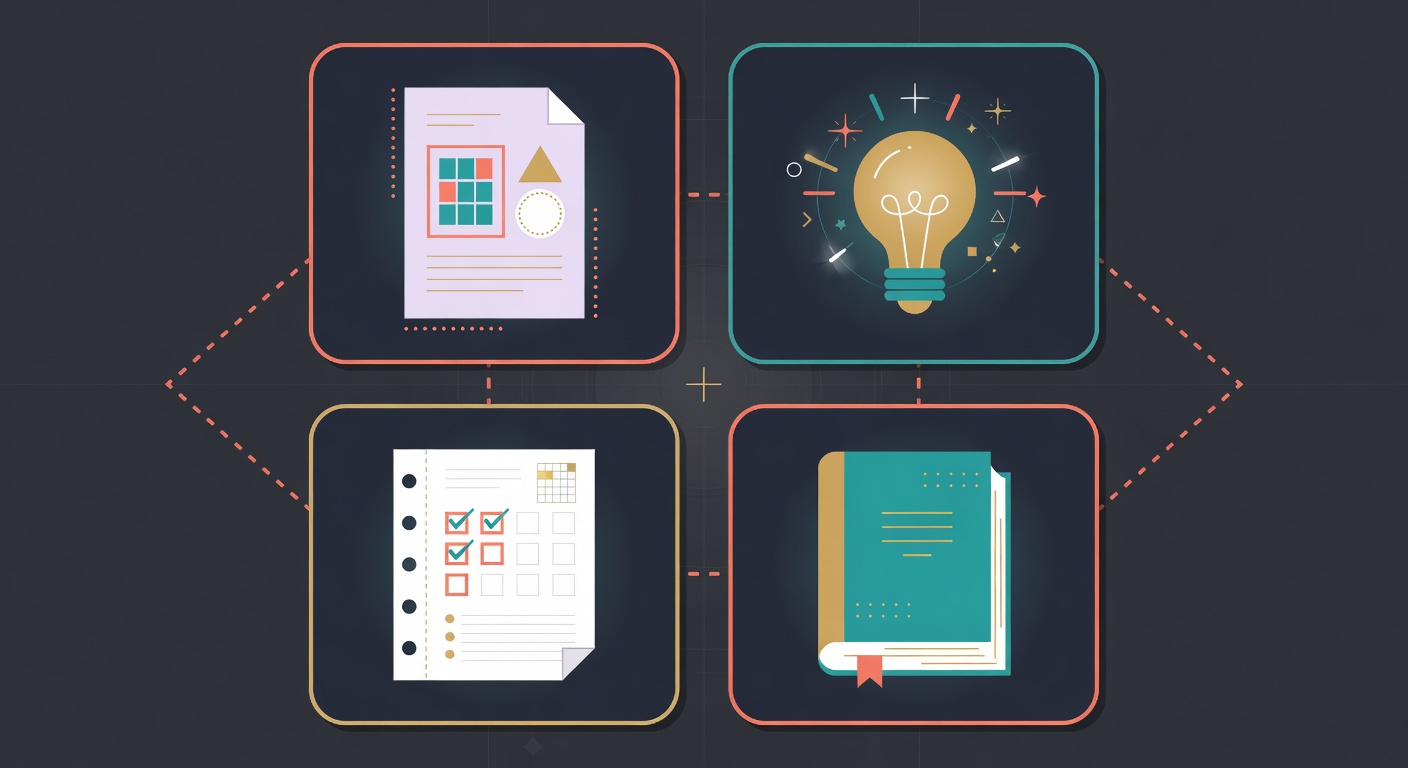
Templates, prompt packs, printables, and guides are the four highest-selling product types
Pinterest SEO is the single most underrated traffic source for Etsy digital products
You can launch a profitable faceless shop in a single weekend with free tools
Why Faceless Etsy Shops Are Beating Traditional Side Hustles
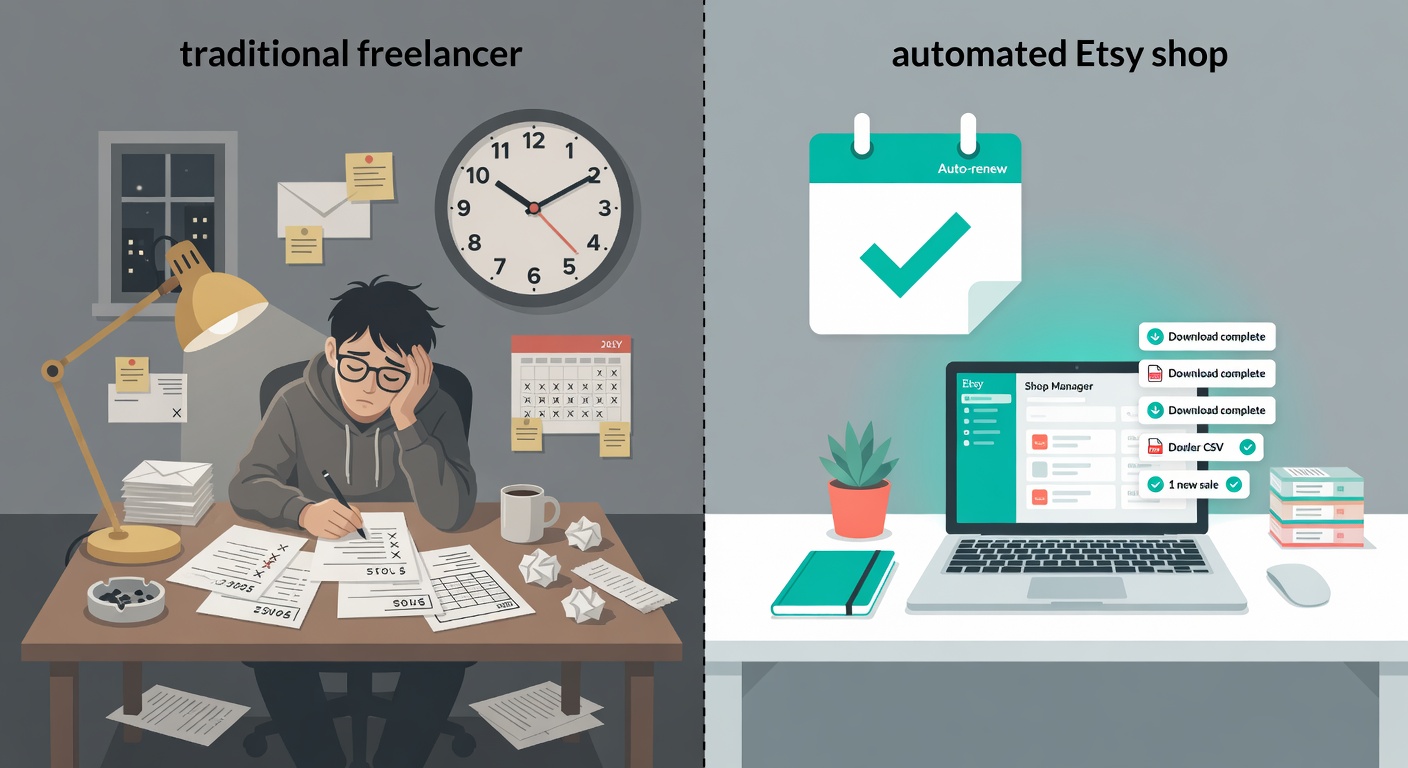
Let me paint a picture. You spend six months building a freelance writing portfolio. You cold pitch 50 clients. You land three. After taxes, platform fees, and the hours you spent chasing work, you are making maybe $15 an hour. Now compare that to an Etsy shop with 33 listings that generated $95,400 in profit over three years. Same time investment upfront. Radically different outcome. The difference is that one scales and the other does not.
The profit margins tell the whole story. These four shops operate at 75 to 87 percent margins. That is not a side hustle. That is a software-level margin on a product you create once and sell forever. I talked to a friend who runs a faceless Etsy shop selling budget spreadsheets. She told me her biggest surprise was not the revenue. It was how little she had to work after the first two months. Her products just... sold themselves through Etsy search.
And 2026 might be the best year yet to start. AI tools like ChatGPT and Canva's AI features have slashed production time. You can now create a professional template in 30 minutes that would have taken three hours two years ago. Etsy's buyer base keeps growing. And most people still do not know this model exists, which means the competition is thinner than you think. So what are these shops actually selling?
The 4 Best-Selling Digital Product Types for Faceless Shops
Templates dominate. Canva templates for social media, Notion templates for productivity, spreadsheet templates for budgeting. One shop with 49 listings selling at $7.40 each cleared $366K. Those are template-level prices. They are not complicated to make. They solve one specific problem really well. I tested this myself with a simple weekly meal planner template. Put it up for $4.50. Got 12 sales in the first week from pure Etsy search traffic. Nothing fancy. Just a clean, useful PDF.
AI prompt packs are the fastest-growing category right now. People will pay $5 to $15 for a curated set of ChatGPT prompts tailored to their niche. Marketing prompts. Real estate prompts. Writing prompts. One creator on Gumroad sold a $97 prompt pack to 4 buyers in his first month. That is $388 from a single digital file. On Etsy, the same product at a lower price point can move 50 to 100 units per month with the right keywords.
Printables and educational guides round out the top four. Think wedding planners, kids activity sheets, habit trackers, and step-by-step guides for specific skills. The shop making $23,300 in one year sold at a $3 average price with 10,300 sales. Volume plays. Low price, high download count, zero marginal cost. The beauty is that all four product types can be created without showing your face, without recording a video, and without building a social media following first.
Inside a $366K Etsy Shop: Anatomy of a Winner
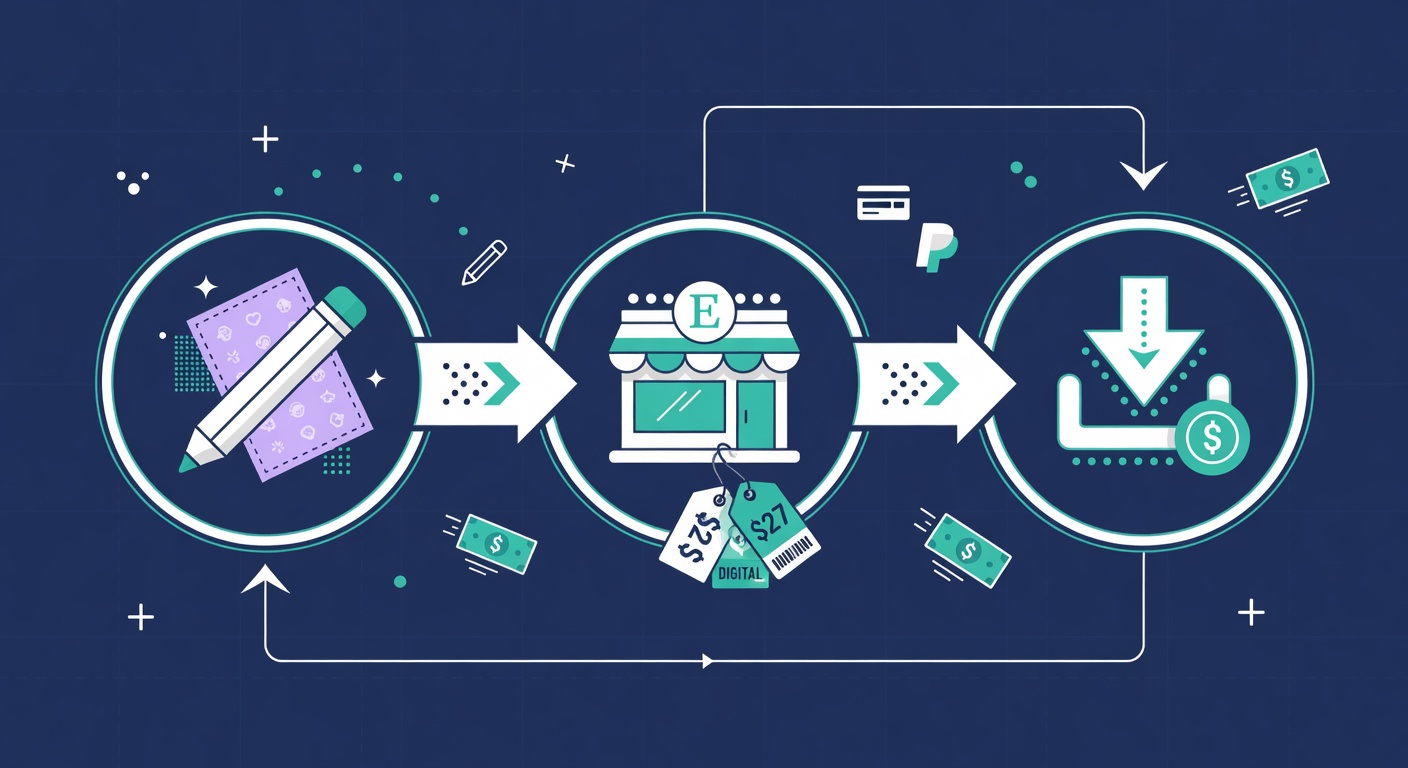
Let me break down the biggest shop from the teardown data. $366,700 in profit. Three years. 49 listings. 58,700 sales. $7.40 average price. 84 percent profit margin. What makes this shop work is not the number of products. It is the focus. Forty-nine listings is not a lot. Many struggling shops have 200+ listings going nowhere. This shop probably has each listing optimized to rank for a specific keyword cluster.
The pricing strategy is key. At $7.40, every product is an impulse buy. Nobody needs to think twice about spending seven bucks on a useful template. The shop runs on volume: 58,700 sales means they are getting roughly 50 to 60 sales per day. That is Etsy search traffic plus repeat buyers plus word of mouth compounding over three years. The listing images matter too. They use clean mockups showing the product in use, styled flat lays, and before-and-after transformations. No photos of the creator. No personal branding. Just the product solving a problem.
Here is what I find most interesting. This shop has been running for three years and still only has 49 listings. That tells me they are not churning out new products every week. They probably created their core lineup early, optimized the listings over time, and let Etsy's algorithm do the heavy lifting. The takeaway? You do not need hundreds of products. You need a few dozen excellent ones that rank well. Ready to build your own?
Spending too long on one elaborate product instead of shipping multiple simple ones
Using vague listing titles instead of keyword-rich, search-optimized titles
Pricing products at $1 or $2 when $5 to $10 earns more with fewer sales
Ignoring Pinterest entirely and relying only on Etsy's organic search
Giving up after two weeks because sales are slow instead of optimizing listings
Step-by-Step: Launch Your Faceless Etsy Shop in a Weekend
Day one is about research and creation. Spend two hours browsing Etsy's best-sellers in your niche. Sort by bestselling, filter for digital downloads, and look at the top 20 results. What keywords do they use? What price range sells best? What problems are buyers trying to solve? Then open Canva or Google Sheets and create your first five products. Keep them simple and focused. A budget tracker. A weekly planner. A social media content calendar. Do not overthink the design. Clean and functional beats fancy every time.
Day two is about listings and launch. Write titles packed with keywords. Your first five words matter most for Etsy search. Instead of 'Blue Weekly Planner,' try 'Weekly Planner Printable ADHD Organization Template.' Add all 13 tags. Write descriptions that answer the buyer's question before they ask it. Upload clean mockup images. Then cross-list your top two products on Pinterest with keyword-rich pin descriptions. I have seen shops get their first sale within 48 hours just from Pinterest traffic alone.
If Etsy feels too crowded, try the Gumroad path. One creator with 2,847 followers on X made $5,374 in 28 days selling a three-tier product funnel: a $497 complete system, a $97 prompt pack, and a $27 starter PDF. He spent about 38 hours total on creation and posting. That is $141 per hour. No ads. No calls. Just text posts driving to his Gumroad links. You can start on either platform. The key is starting today.
The Promotion Engine: How to Get Traffic Without an Audience
Pinterest is the single most underrated traffic source for Etsy shops. It is basically a visual search engine. Every pin you create is a permanent billboard for your product. I know a seller who gets 70 percent of her traffic from Pinterest and has never posted on any other platform. The strategy is simple: create 5 to 10 pins per product using Canva. Use your target keywords in the pin title and description. Pin consistently. The algorithm rewards freshness. Even 15 minutes a day of pinning can compound into thousands of monthly impressions over a few weeks.
Threads and X are your text-based traffic engines. Write short posts sharing tips related to your product niche. End each post with a link to your Etsy shop. A post like 'I made a free budget tracker that helped me save $400 last month. Link in bio' will outperform a generic product pitch every single time. People buy from helpful, not salesy. The trick is consistency. Posting once a week does nothing. Posting daily for 30 days builds momentum.
This is where scheduling tools like JoltSage change the game. Instead of manually posting every day, you batch-create a week of Threads content promoting your Etsy listings and let the scheduler handle distribution. More eyes on your shop, zero extra hours. You write the posts on Sunday, schedule them for the whole week, and spend your actual work time creating new products instead of babysitting social media. That is how you go from hobby income to real revenue without burning out.
Common Mistakes That Kill Faceless Etsy Shops
The biggest mistake I see is overcomplicating the products. New sellers spend 10 hours designing a single elaborate template when three simple ones would have sold better. I did this myself with my first Etsy listing. A 47-page productivity bundle. It took me a week to make. It sold three copies in two months. Meanwhile, my 2-page habit tracker that I made in 20 minutes sells 15 copies a month. Simple wins. Ship fast. Improve based on what sells.
Ignoring SEO and keywords is the second killer. Etsy is a search engine first. If your listing title says 'Cute Planner Printable' instead of 'ADHD Weekly Planner Printable Organization Template,' you are invisible to the people actually searching for your product. Spend 15 minutes on keyword research before you list anything. Use Etsy's search bar autocomplete. Type 'printable' and see what comes up. Those suggestions are real search queries from real buyers.
Pricing too low is a sneaky trap. A $3 product needs 10 times the sales volume of a $30 product to make the same revenue. And the $30 buyer is often easier to serve because they value what they are buying. The shops in our teardown data sell at $3 to $13 average prices and they work because of high volume. But if you are just starting, aim for $5 to $10. Low enough for impulse buys. High enough that 10 sales a week feels worth your time. Also, skipping Pinterest entirely is like opening a restaurant and not telling anyone the address. It is free, evergreen traffic. Use it.
Your First Month: Realistic Goals and Tracking
Week one: set up your shop, list your first five products, and create 25 Pinterest pins. Your goal is not sales yet. It is getting indexed by Etsy's search algorithm and getting your first 100 Pinterest impressions. By the end of week one, you should have your first few saves on Pinterest and maybe a couple of Etsy views. That is progress. Track views, not sales, at this stage.
Weeks two through four: add three to five new products based on what got the most views. Double down on your best-performing keywords. Start posting daily on Threads or X with product links. By the end of month one, a realistic target is 5 to 20 sales and $25 to $150 in revenue. That might not sound life-changing. But remember: the $366K shop started at zero too. The first month is about building the machine, not maxing it out.
The compounding kicks in between months three and six. Your older listings keep ranking higher. Your Pinterest pins keep getting redistributed. Your social posts build a small but loyal audience. By month six, a well-run faceless shop can realistically be doing $500 to $2,000 per month. By year one, if you have 30 to 50 solid listings and consistent promotion, you could be looking at the numbers in our teardown data. The question is not whether it works. It is whether you are willing to give it 90 days.
Action checklist
Use this as the practical next pass after reading the guide.
- +Research your niche: browse Etsy bestsellers in digital downloads and note keywords and pricing
- +Create your first five products using Canva or Google Sheets in under four hours
- +Write keyword-optimized titles, tags, and descriptions for all five listings
- +Create 25 Pinterest pins linking to your shop and start pinning daily
- +Set up a JoltSage schedule for daily Threads or X posts promoting your listings
- +Track views and clicks weekly, then add new products based on what performs best
Frequently asked questions
Can you really sell digital products on Etsy without showing your face?
Absolutely. The four shops in this article generated a combined $551,500 in profit without any personal branding, photos, or videos. Buyers care about the product, not the seller. Clean mockup images and keyword-optimized listings are all you need.
How much does it cost to start an Etsy digital product shop?
Etsy charges $0.20 per listing and takes a 6.5% transaction fee plus payment processing fees. You can create products for free with Canva or Google Sheets. Your total startup cost for five listings is one dollar. That is it.
What types of digital products sell best on Etsy?
Templates (Canva, Notion, spreadsheets) are the top sellers, followed by AI prompt packs, printable planners and worksheets, and educational guides or swipe files. The key is solving one specific problem really well.
How do I get traffic to my Etsy shop without an audience?
Pinterest is the most effective free traffic source. Create keyword-rich pins for every product and pin consistently. Post helpful content on Threads or X with links to your shop. Use a scheduling tool like JoltSage to automate daily social posts.
How long does it take to make money selling digital products on Etsy?
Most new shops get their first sale within 1 to 4 weeks if listings are keyword-optimized. Realistic month-one revenue is $25 to $150. By month three to six, shops with 20+ listings and consistent promotion often earn $500 to $2,000 per month.
Should I sell on Etsy or Gumroad?
Etsy is better for passive discovery because buyers already search there. Gumroad works well if you have any social following or want higher margins with fewer fees. Many successful sellers use both: Etsy for organic traffic, Gumroad for direct sales.
Do I need design skills to create digital products?
No. Canva has thousands of free templates you can customize. Google Sheets and Notion require zero design skills. AI tools like ChatGPT can help write content for guides and prompt packs. Focus on usefulness over aesthetics.
What is a good price for digital products on Etsy?
The sweet spot for new shops is $5 to $10. High enough to earn meaningful revenue per sale, low enough for impulse purchases. As you build reviews and authority, you can introduce premium products at $15 to $30 or bundle products for higher average order values.
Conclusion
The numbers do not lie. Faceless Etsy shops are generating $23,000 to $366,000 in profit for real people who never show their face on camera. The margins are 75 to 87 percent. The products are simple templates, printables, and guides you can create in an afternoon. The traffic comes from free sources like Pinterest and social platforms.
You now have the exact product types that sell, the pricing strategies that work, the promotion methods that drive traffic, and a weekend launch plan to get started. Every shop in this teardown started with zero sales and zero audience. The only difference between them and you is 90 days of consistent action.
Pick your niche today. Create five products this weekend. List them with strong keywords. Pin them on Pinterest. Schedule your social posts with JoltSage. Check your analytics in two weeks and double down on what works. Your future $366K shop starts with listing number one.