What this guide is really about
Most people think you need 10,000 followers before you can make a single dollar selling digital products. That's just not true. I believed it too, honestly. Spent months trying to grow an Instagram account before I realized the game was completely different from what I'd been told. The reality is that marketplaces like Etsy, Gumroad, and Amazon already have millions of buyers typing in their credit cards right now. You don't need to convince anyone to follow you. You just need to show up where they're already searching.
Here's something that surprised me when I dug into the data. Faceless creators, people with no personal brand, no selfie posts, no audience at all, now make up 38% of new creator monetization ventures. That's not a fringe thing anymore. It's becoming the default way people start selling digital products. Free traffic channels like Threads, Pinterest, and Reddit do the heavy lifting. Marketplace search algorithms bring buyers to you. And in this post, I'm going to show you exactly how it all works.
You can sell digital products without any audience by listing on marketplaces with built-in buyers (Etsy, Gumroad, Amazon KDP), optimizing for their search algorithms, and using free traffic from Threads and Pinterest. Creators earn $1k to $10k per month starting from zero followers by choosing the right platform, creating search-optimized listings, and posting value-first content.

You will learn the 4 best platforms to sell on when you have zero followers
You will see real revenue numbers from creators who started with no audience
You will get a step-by-step free traffic playbook for digital products
You will discover how Threads and Pinterest can drive buyers to your products for free
Marketplaces like Etsy and Gumroad have millions of built-in buyers searching for products right now
SEO on these platforms replaces the need for a personal audience completely
Threads and X content marketing drives free, high-intent traffic to digital product listings
Pinterest is an underrated goldmine for digital product traffic, especially printables and templates
Creators earning $1k to $10k per month without followers focus on listing volume and search optimization
Why You Don't Need an Audience to Start Selling
There are two completely different approaches to selling digital products. The first is audience-first selling. That's where you spend months (or years) building a following on social media, hoping that someday those followers will buy something from you. It works, eventually, but it's slow and exhausting. The second approach is product-first selling. You create a product, list it on a marketplace where buyers are already searching, and let the platform's algorithm connect you with customers. No followers required. No content calendar from hell.
The numbers back this up. That 38% figure I mentioned? It comes from creator economy reports tracking new monetization in 2025 and 2026. Platforms like Etsy (with over 96 million active buyers), Gumroad (millions of monthly visitors), and Amazon KDP (the world's largest bookstore) all have built-in traffic. These aren't platforms where you need to bring your own audience. Buyers are already there, typing in search terms, ready to purchase.
I know a creator, let's call her Sara, who made $3,200 her first month selling printable budget planners on Etsy. She had zero social media presence. No Instagram. No TikTok. Nothing. What she did have was 12 well-optimized listings with keyword-rich titles and descriptions that matched exactly what buyers were typing into the Etsy search bar. That's it. The Etsy algorithm did the rest.
So if audience size doesn't matter, what does? That's exactly what the rest of this guide covers. The specific platforms, the exact SEO strategies, and the free traffic methods that are working right now in 2026.
The 4 Best Platforms When You Have Zero Followers
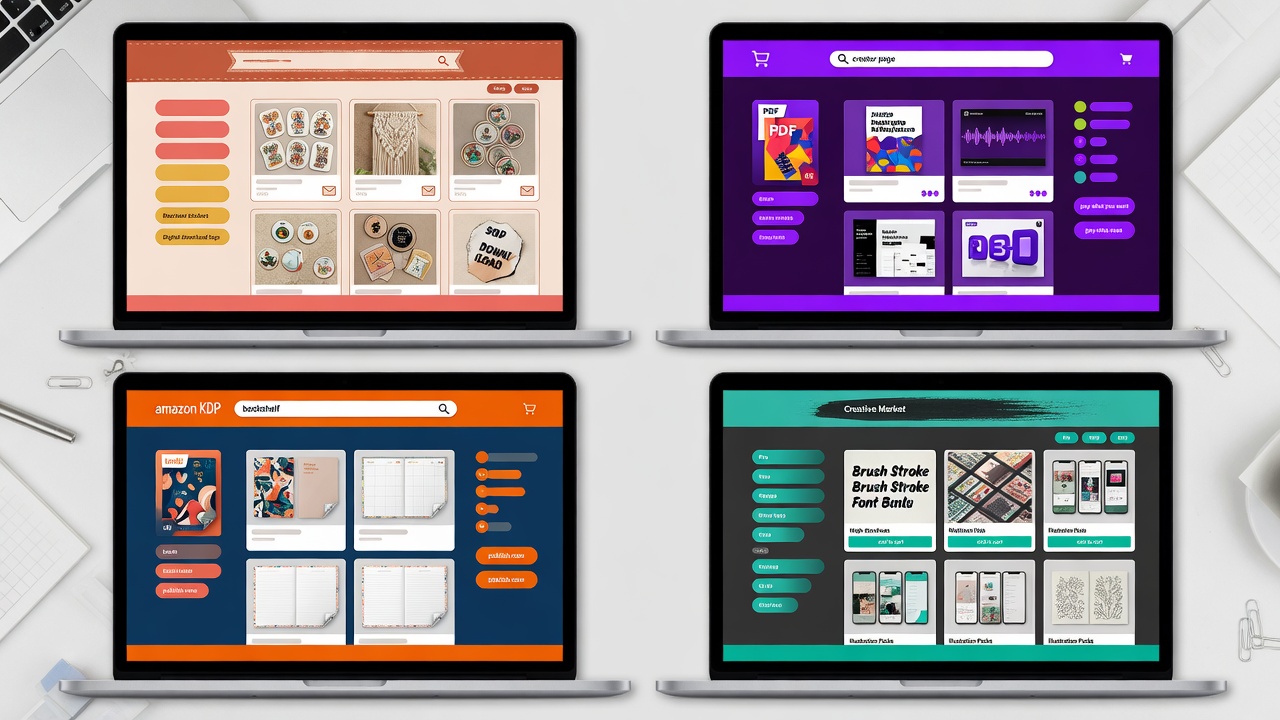
Let's break down your four main options. Etsy is the king of printables, planners, templates, and any visual digital product. Listing fee is $0.20 per item, and they take about 6.5% of each sale. The huge advantage is that Etsy has 96 million active buyers who are already in shopping mode. They're not scrolling for entertainment. They're searching for things to buy. Gumroad is best for ebooks, Notion templates, courses, and software tools. They take 10% flat, no monthly fees. Discovery is growing, and their audience skews toward tech-savvy buyers who spend money on digital tools. Amazon KDP works for low-content and medium-content books like journals, coloring books, and workbooks. It's free to publish, and Amazon takes 30-60% depending on your pricing. The advantage is Amazon's massive search engine. Creative Market is ideal for fonts, graphics, templates, and design assets. They take a 30% commission, but their audience of designers and marketers has high purchasing intent. Think of it this way. Etsy is for products that help people organize their lives. Gumroad is for products that help people build or learn something. KDP is for physical-feeling products in a book format. Creative Market is for products that help other creators create. Each platform has its own buyer psychology, and matching your product to the right platform is half the battle.
A creator I followed started out listing Notion templates on Etsy. Made about $400 in two months and thought the whole digital product thing was overhyped. Then he moved those same templates to Gumroad, rewrote the listings for a more technical audience, and doubled his revenue in the first month. Same products, different platform, different buyers. The lesson is that where you list matters almost as much as what you create. My recommendation for beginners: start with Etsy if you're selling anything visual or organizational (printables, planners, templates). Start with Gumroad if you're selling anything educational or tool-based (ebooks, courses, Notion templates). You can always expand to other platforms later once you know what sells.
Marketplace SEO: How Buyers Find You Without You Posting Anything
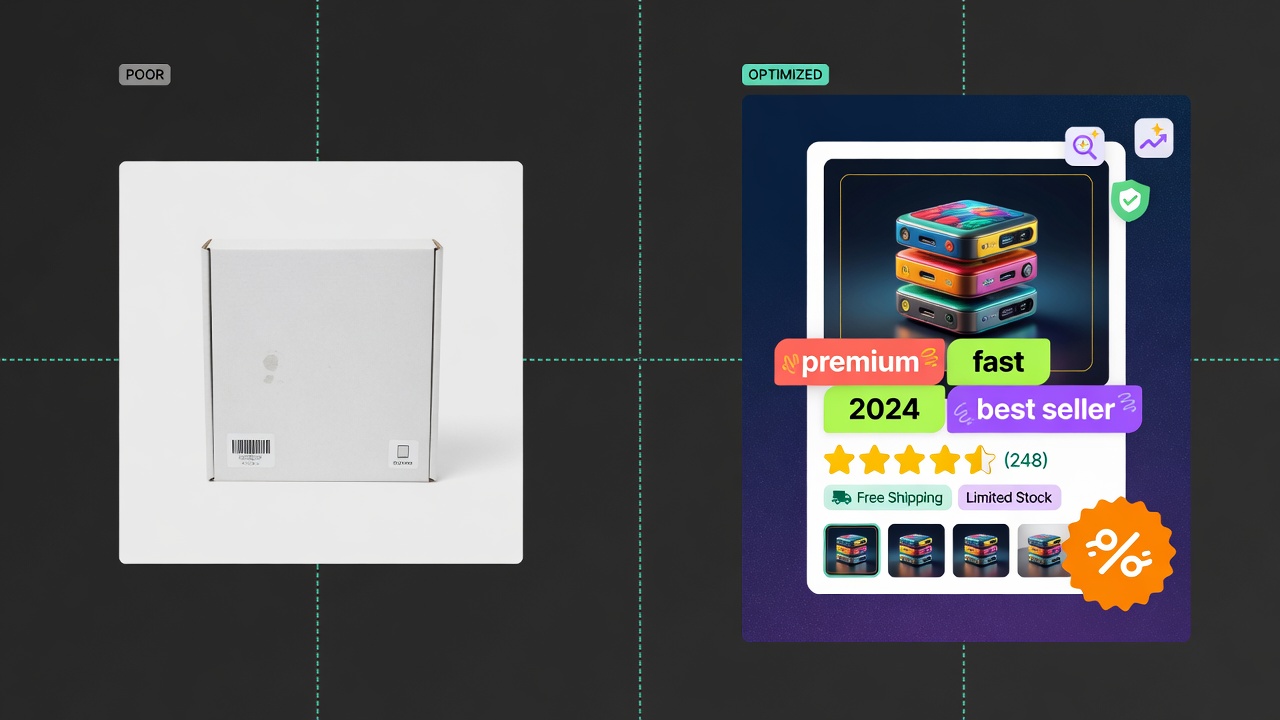
Here's the thing most people don't understand about Etsy, Amazon, and Gumroad. Their search algorithms are basically matchmakers. A buyer types in "budget planner printable," and the algorithm finds every listing with those keywords and ranks them by relevance, quality, and sales history. If your listing matches what the buyer searched for, you show up. No followers needed. No social proof required. Just good keyword placement.
Let me walk you through a real example. Say you're creating a printable budget planner to sell on Etsy. You hop over to eRank (a free Etsy keyword tool) and type in "budget planner." You'll see related long-tail keywords like "monthly budget planner printable 2026," "budget planner A4 printable," "simple budget tracker PDF," and "family budget planner template." These are the exact phrases real buyers are typing in. Your job is to pick 3-5 of these keyword phrases and weave them into your title and description naturally. Here's a before and after. Bad title: "Budget Planner." Good title: "Monthly Budget Planner Printable 2026, Simple Budget Tracker PDF, A4 Family Budget Template, Instant Download." See the difference? The first one matches one search term. The second one matches a dozen different search queries. In your description, you'd write something like: "Stay on top of your finances with this monthly budget planner printable for 2026. This simple budget tracker PDF includes income tracking, expense categories, and savings goals. Available in A4 and US Letter sizes for instant download." Every sentence includes keywords that real people search for.
I've seen this play out over and over. Ten well-optimized listings will outperform a hundred lazy ones every single time. Quality of optimization beats quantity of products. So take the extra 15 minutes per listing to do your keyword research. It's the highest-return activity you can do as a new seller with no audience.
Trying to build an audience first instead of listing products on marketplaces. You don't need followers to sell. List today, build an audience later if you even want one.
Using generic titles and descriptions that don't match what buyers search for. "Budget Planner" will never rank. "Monthly Budget Planner Printable 2026, A4 PDF, Instant Download" will.
Creating only 1-2 products instead of 10-20 for maximum visibility. One product is a test. Ten products is a business.
Ignoring Pinterest because it feels old-school. Pinterest drives 30-50% of traffic for top Etsy sellers. You can't afford to skip it.
Giving up before 90 days. SEO takes time to build. Pinterest takes time to compound. The sellers who succeed push through the first quiet weeks.
Using Threads and X to Drive Free Traffic to Your Products
Threads and X (Twitter) are the secret weapons that most digital product sellers completely ignore. The idea is simple: you post "value threads" that teach something useful, and at the end, you link to your product as a natural next step. People read your thread, find it helpful, and a percentage of them click through to buy. No audience needed. The algorithms on both platforms are designed to surface good content to people who don't follow you yet.
Here's a concrete example of a 5-tweet thread that sells without being salesy. Tweet 1 (Hook): "I made $3k last month selling printable planners on Etsy. Here's the exact process I used, starting with zero followers." Tweet 2 (Value): "Step 1: Pick a niche where people are already spending money. Budgeting, fitness, wedding planning. Don't get creative, get profitable." Tweet 3 (Value): "Step 2: Research what people are actually searching for on Etsy using eRank. Find long-tail keywords with low competition." Tweet 4 (Value): "Step 3: Create a product that directly solves one problem. Not ten problems. One. Make it good and price it between $3-$9." Tweet 5 (CTA): "If you want to see the exact templates I use, I've packaged my best-selling planner as a customizable template. Link in my profile." That's it. No hard sell. Just value, then a soft invitation.
I've seen creators get 20,000 to 50,000 impressions on threads like this, and those impressions turn into real sales. One creator I tracked posted a revenue breakdown thread about her Etsy shop and made $700 in direct sales from that single thread over the next 48 hours. She had fewer than 200 followers at the time. The algorithm did the work. Now, the hard part about this strategy is consistency. You need to be posting threads regularly, which takes time and planning. That's where JoltSage comes in. JoltSage helps you plan, schedule, and automate your thread content so you're consistently driving traffic to your products without spending hours each day writing tweets. Think of it as your content calendar on autopilot.

Pinterest: The Underrated Traffic Machine for Digital Products
Pinterest is not social media. I know it looks like one, but it's actually a visual search engine. And that distinction changes everything. When you post on Instagram or TikTok, your content has a shelf life of about 24 hours. Maybe 48 if you're lucky. When you pin something on Pinterest, it can drive traffic for months. Literally months. I've seen pins from a year ago still getting clicks because Pinterest's algorithm keeps surfacing relevant content to new searchers.
Creating pins that link to your digital products is straightforward. Let's say you sell a printable meal planner on Etsy. You'd create a tall, eye-catching image (1000x1500 pixels is ideal) with text overlay like "Free Weekly Meal Planner Template" or "Plan Your Meals in 10 Minutes." The pin links directly to your Etsy listing. When someone searches "meal planning printable" on Pinterest, your pin shows up, they click, and they land on your product page. Simple, but incredibly effective.
The numbers speak for themselves. Pinterest drives 30-50% of total traffic for many successful Etsy sellers. And it compounds. Month one, you might get 50 clicks from Pinterest. Month two, 200. Month three, 500. By month six, you could be getting thousands of monthly clicks from pins you created months ago. It's the closest thing to passive traffic I've ever seen. Here's your action step: create 5 different pins for each product you list. Use different text overlays, different colors, and different angles. Pin them consistently over the first 60-90 days. Use Pinterest's free scheduler to space them out. Then watch your analytics. You'll see which pins perform best, and you double down on those styles. It takes patience, but the compound effect is real.
Real Revenue Numbers From Creators Who Started at Zero
Let's talk real numbers, because I know "you can make money" is vague and unhelpful. Here are specific examples from creators who started with no audience. A printable seller on Etsy making $3,000/month after 4 months, selling budget planners and habit trackers. A faceless content creator earning $9,000/month selling digital templates and guides through Gumroad. Someone who made $31,000 in their first 90 days selling Notion templates and ebooks. A Gumroad seller pulling in $5,000/month from a small collection of resume templates and career guides.
What do these creators have in common? A few things. First, they all focused on one platform instead of trying to be everywhere. Second, they published consistently. Not one product and then wait. They created 10, 20, sometimes 50 products in their first few months. Third, they optimized every listing for search. They didn't just throw something up and hope. They researched keywords, wrote strong titles, and tested different pricing.
These aren't cherry-picked outliers either. Across the creator communities I follow, the consistent range for sellers who put in real effort is $1,000 to $5,000 per month within 3-6 months of starting. That's not "quit your job" money for most people, but it's real, recurring income from digital products that required zero audience building. The only thing that separates these creators from everyone reading this post is that they actually started. They didn't wait until they had a perfect product. They didn't wait until they had 1,000 followers. They created something, listed it, and iterated based on what sold. That's the whole formula.
Your 30-Day Launch Plan (No Audience Required)
Week 1: Pick your niche and platform. If you're going with Etsy (recommended for most beginners), create your shop and list your first 3 products. Don't overthink the products. A simple printable, a basic template, or a short ebook is fine. The goal is to get something live and start learning the platform.
Week 2: Go back to every listing and optimize it for search. Use a free tool like eRank for Etsy or the search bar autocomplete on your platform to find long-tail keywords. Rewrite your titles and descriptions with those keywords. Then set up a Pinterest business account (free) and create 15 pins, 3-5 for each of your products. Schedule them to post over the next two weeks.
Week 3: Start posting value threads on Threads and X. Write one thread every other day. Share tips related to your niche, link to your products naturally, and engage with anyone who replies. Don't worry about follower count. The algorithms will push your content to the right people if it's good. Week 4: Look at your numbers. Which products are getting views? Which pins are getting clicks? Which threads got the most impressions? Double down on what's working. Create more products in your winning niches. Make more pins in the style that's performing. Write more threads on topics that resonated. And if you want to make this whole process easier and more scalable, JoltSage can automate your content scheduling, thread planning, and Pinterest posting so you can focus on creating products instead of managing a content calendar.

Action checklist
Use this as the practical next pass after reading the guide.
- +Choose one platform (Etsy recommended for beginners) and set up your shop
- +Research 20 long-tail keywords buyers actually search for in your niche
- +Create your first 5-10 digital products with optimized titles and descriptions
- +Set up a Pinterest business account and create 3-5 pins for each product
- +Write and post your first value thread on Threads/X linking to your product
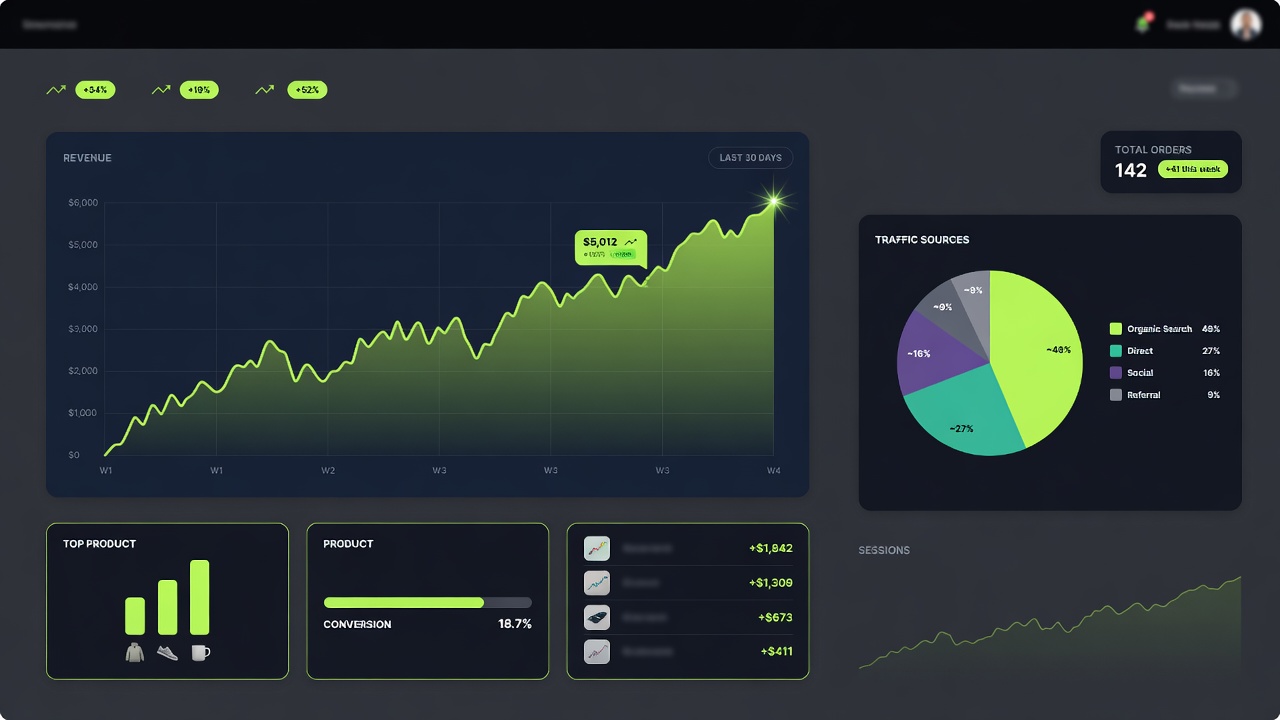
- +Track your traffic sources and revenue weekly, adjusting your strategy based on data
Frequently asked questions
Can you really sell digital products with zero followers?
Yes. Marketplaces like Etsy and Gumroad have millions of built-in buyers who find products through search, not through following creators. If your listing matches what they're searching for, you'll get sales regardless of your follower count.
What digital products sell best for beginners?
Printables, templates, planners, and short ebooks are the top performers for new sellers. They're simple to create, have low competition in specific niches, and solve clear problems that buyers are actively searching for.
How long does it take to make your first sale?
Most sellers who optimize their listings properly get their first sale within 2-4 weeks. If you're using Pinterest and Threads alongside marketplace SEO, you can speed that up significantly.
Do I need to pay for ads to get traffic?
No. SEO optimization on your marketplace, free Pinterest traffic, and organic Threads/X content are more than enough to generate consistent sales. Many successful sellers have never spent a dollar on advertising.
Which platform is best for someone starting from scratch?
Etsy is best for physical-adjacent products like printables and planners. Gumroad is best for digital downloads like ebooks, templates, and courses. Start with whichever one matches your product type, and expand later.
How many products should I list before expecting consistent sales?
Aim for 10-20 listings minimum. More listings means more search visibility, more entry points for buyers, and more data on what's working so you can double down on your winners.
Can I do this completely anonymously?
Yes. You can use pen names on Etsy and Gumroad, create Pinterest pins without showing your face, and post threads from accounts that don't use your real name. Many top sellers are completely faceless.
How does JoltSage help with selling digital products?
JoltSage automates your content scheduling across Threads, X, and Pinterest. It helps you plan value threads, schedule pins, and organize your product launches so you can focus on creating products instead of managing a content calendar day by day.
Conclusion
You don't need anyone's permission to start selling digital products. You don't need a blue checkmark, a viral video, or a newsletter with 10,000 subscribers. What you need is a product, a marketplace listing, and the willingness to optimize and iterate. The 30-day plan above is your roadmap. Follow it, and you'll be ahead of 90% of people who talk about selling digital products but never actually list anything.
The strategies in this post are what's working right now, in 2026. Marketplace SEO, Threads content, and Pinterest traffic aren't hacks or loopholes. They're sustainable, free methods that compound over time. Start with one platform, one product type, and one traffic source. Expand from there.
And if you want help automating the content side of this, whether that's scheduling Threads, planning your Pinterest pins, or organizing your product launches, JoltSage is built exactly for that. It handles the repetitive stuff so you can focus on creating products and growing your income. Check it out at joltsage.com.